
UNALASKA — As senators gathered at the Capitol last month to debate legislation to allow President Donald Trump to zero out funding for public broadcasting, a siren and public service message rang out more than 4,000 miles away in this small town in the Aleutian Islands.
“Attention: A tsunami warning has been issued for this area,” the message said. “Move to high ground immediately. Tune to your local radio station for details.”
Residents of Unalaska, Alaska, hopped into their cars and tuned to KUCB, the only local station on the island, to listen for live updates as they drove uphill and away from danger.
The next day, the Senate passed the bill, acceding to Trump’s demand to cancel funding for the Corporation for Public Broadcasting, which provides money for KUCB and stations like it all over the country that serve listeners in remote areas — many in Alaska reachable only by plane, boat or, in the winter, ice bridge.
That has left 245 public broadcasting grantees in rural communities — including 27 stations in Alaska — at risk of going off the air. It has also pointed to a profound shift in Congress, where for decades lawmakers would regularly wheel and deal on major legislation, going up against their own president if necessary, to protect their constituents.
That was the case this summer for Sen. Lisa Murkowski, R-Alaska, who defied Trump and tried unsuccessfully to salvage the public broadcasting funding, and then when she failed, broke with her party to vote against the bill.
But in a Senate remade by Trump’s threats of political retribution, Murkowski found herself in a lonely fight, with her fellow Republicans declining to join her in moving to protect funding for stations that serve as a lifeline of communication for many rural Americans.
In an interview, Murkowski said Republicans’ fear of the president’s wrath apparently overrode their concern for their own constituents, prompting them to oppose her efforts. And she agreed with Alaskans who said the public broadcasting fight had prompted them to wonder whether Congress could even work at all.
“They’re right,” she said.
It has also raised questions about whether someone like Murkowski can still be effective in Trump’s Senate.
“You had, I think, a blind allegiance to the president’s desires when it came to the Corporation for Public Broadcasting,” she said. Murkowski said she was not averse to scaling back federal spending, but “what I do object to is when we, as the authorizers and the appropriators, do our job, and then we have the White House come around and say: ‘We don’t care what you did. We want you to do this.’”
Now public radio stations across the country are cutting staff and scaling back services to keep from going dark. Many Alaska stations depended on the grants for more than 50% of their annual budget.
At KUCB, which lost a more than $289,000 federal grant it was expecting this year, station manager Lauren Adams has scaled back the number of reporters in the newsroom and is examining “every nickel and dime on that budget sheet,” even considering eliminating her own position after more than two decades with the station.
But to report local news or go live on air during an emergency requires in-person staff. With KUCB down to just one reporter on the island full time, Adams said she did not know how the station would continue doing so in the event of a possible tsunami, flood or even volcanic ash fall.
“I worry about what will happen when we have an emergency alert situation,” Adams said.
When the president went to war with public broadcasting, he accused the Public Broadcasting Service and National Public Radio of liberal bias and said taxpayers should not be forced to fund them.
“Any Republican that votes to allow this monstrosity to continue broadcasting will not have my support or Endorsement,” Trump wrote on social media in July.
But the Corporation for Public Broadcasting spent a majority of its budget on grants for local stations, many of which have little in common with the larger ones that have drawn the ire of Trump and Republicans.
“We are not NPR,” Adams said. “We are an independent nonprofit that’s providing a super-localized service to a very small community very, very, very far away from Washington.”
Unalaska, where eagles nest in the hillsides, is home to about 4,200 year-round residents, but the town also boasts the largest fishing port in the United States by volume, and its population swells with seasonal workers in the high season.
Even in the age of cellphones and Wi-Fi, residents said radios here were constantly tuned to KUCB, which brings them local news and emergency alerts as well as City Council meetings, high school basketball games and public health programs on topics ranging from the seasonal flu to suicide prevention.
“None of that is political or trying to hurt Republicans,” said Greg Walter, a nurse practitioner at the only medical facility on the island. “It’s a necessary resource for a small, isolated community.” Walter said he relied on KUCB having him on the air to share medical advice to prevent conditions that are hard to treat on the island.
During the COVID-19 pandemic, Sierra Tucker was pregnant with her first child. With no obstetrician in Unalaska, she had to travel to the mainland for care. She closely tracked travel restrictions, case counts and changes to quarantine rules. “And you only got that through KUCB,” she said.
Ben Knowles, the director of fire and emergency medical services in Unalaska, depends on KUCB for his emergency response plans.
“In my line of work, redundancy is something that is one of the top three things that we talk about when it comes to preparedness,” Knowles said. “So the more channels that you can have to get a message out — whether that be a lockdown, whether that be a hazardous materials release in the area or an evacuation notice — the more you’re going to capture.”
Theo Greenly, who reports for KUCB and partner stations in Sand Point and St. Paul, said KUCB’s newsroom was the only one in the Aleutian and Pribilof region with reporters on the ground to cover not only natural disasters but also the major regional fisheries and international shipping corridor.
“You’re not just giving up stories about a school bake sale,” he said “We’re necessary.”
Several station managers across Alaska said they worried their station would end up with nothing more than an antenna to rebroadcast content created in Juneau, Anchorage or elsewhere in the country.
“That robust coverage that you need in the event of an emergency — that won’t be there,” said Kristin Hall, the station manager at KYUK in Bethel, Alaska, which broadcasts in both English and Yup’ik, an Indigenous language commonly spoken in the region. Raising donations to keep stations on the air in rural Alaska, where some households still collect human waste in “honey buckets,” is not realistic, she added.
Margaret Sutherland, a reporter at KDLG in Dillingham, Alaska, said the radio was “a basic mode of communication” for some residents in the area who did not have cellphones or reliable service. But with only two people on staff, the station is as “bare bones as we can be” without shuttering, Sutherland said.
Murkowski was not the only Republican to express concern about the public broadcasting cuts. Sen. Mike Rounds of South Dakota also warned that the reductions would negatively affect emergency alerts for rural regions, including among Native Americans in his home state.
But he ultimately voted against Murkowski’s bid to protect public broadcasting money for local stations, and in favor of the bill. Rounds said he did so after securing a pledge from the White House to redirect $9.4 million in unspent climate funds to tribal radio stations. Alaska’s other Republican senator, Dan Sullivan, was also involved in securing that commitment, his office said.
But neither senator nor any Trump administration official has provided details on which stations could be eligible for that funding or how it would be distributed. The Interior Department said in a statement that it could award the first set of grants by the end of the 2025 fiscal year or by early in the 2026 fiscal year.
A network of Native radio and television stations had pleaded with Rounds not to vote for the federal cuts, warning the deal he struck was “impractical.” Brian Wadsworth, the chief operating officer of Native Public Media, said the organization was warning stations that the money may never materialize.
Murkowski called the deal Rounds struck a “Band-Aid,” and said she had been unable to obtain any information from the administration on how it would work.
When Congress returns next week, Rep. Mark Amodei, R-Nev., the co-chair of the Public Broadcasting Caucus, said he planned to introduce an amendment to a spending bill for next year to restore some money for public broadcasting.
He voted in July for the measure that canceled the funding, but Amodei said he and other House Republicans were concerned about the impact, especially when looking at where some stations fell on the electoral map.
“Jesus crackers — these people voted for the president,” he said.
In the Senate, the spending bill that would typically include funding for public broadcasting advanced out of committee in August without even a vote on a Democratic bid to add money for the Corporation for Public Broadcasting next year.
Some short-term funding is cropping up in Alaska to help stations weather the initial impact of the federal cuts.
Report for America has agreed to finance two reporters, including Desiree Hagen at KOTZ in Kotzebue, Alaska, in the Arctic Circle. But Hagen said the station, where she is the only reporter on staff, still had a budget shortfall.
She said Sullivan had visited KOTZ in the past and “looked me in the eye and told me about how important rural radio stations are in Alaska.”
Now, Hagen said she would want to tell Sullivan: “You could have just done something when you had the chance.”
Murkowski said stations in Alaska — where the governor has vetoed bipartisan funding for public broadcasting since 2018 — and across the country needed a long-term source of funding. She said she had tried to work with a fellow Republican, Sen. Shelley Moore Capito of West Virginia, to include some money for stations in the 2026 spending bill making its way through the Senate.
“But the reality is the political push was just making things not be possible,” Murkowski said.
Murkowski is not up for reelection until 2028. But the episode has only underscored questions about her political future, and whether there is still a place for someone like her in Congress.
When questioned recently about whether she would enter the governor’s race in Alaska next year, she did not rule it out. In the interview, when asked if she could govern more effectively as governor than from Capitol Hill, Murkowski said she was actively considering that question.
“I weigh that, because the responsibilities here are so important,” she said of her state. “But I also recognize that I have achieved a level of seniority and tenure that matters in Washington, D.C.”
She also suggested that she was reluctant to leave Congress given that she is one of the few remaining Republicans who openly criticize Trump.
Her voice in Washington, she said, “is important for my constituents here, but I think it’s important for the broader discourse as well.”
This article originally appeared in The New York Times. c.2025 The New York Times Company
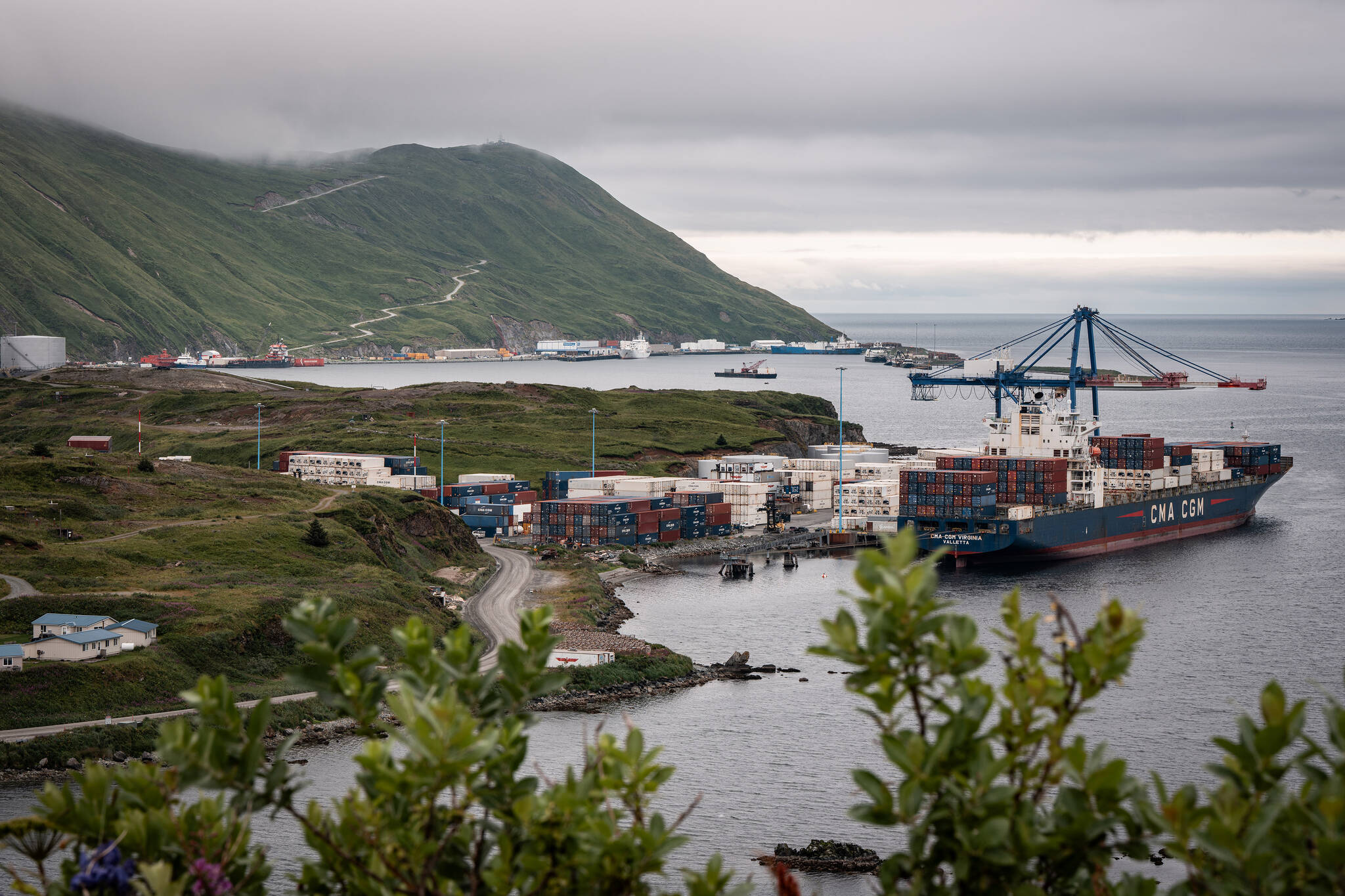
A container ship docks at Dutch Harbor in Unalaska, Alaska, August 13, 2025. Threatened by the president with political retribution, Republicans agreed to defund public broadcasting, imperiling a lifeline of communication in rural Alaska. (Haiyun Jiang/The New York Times)
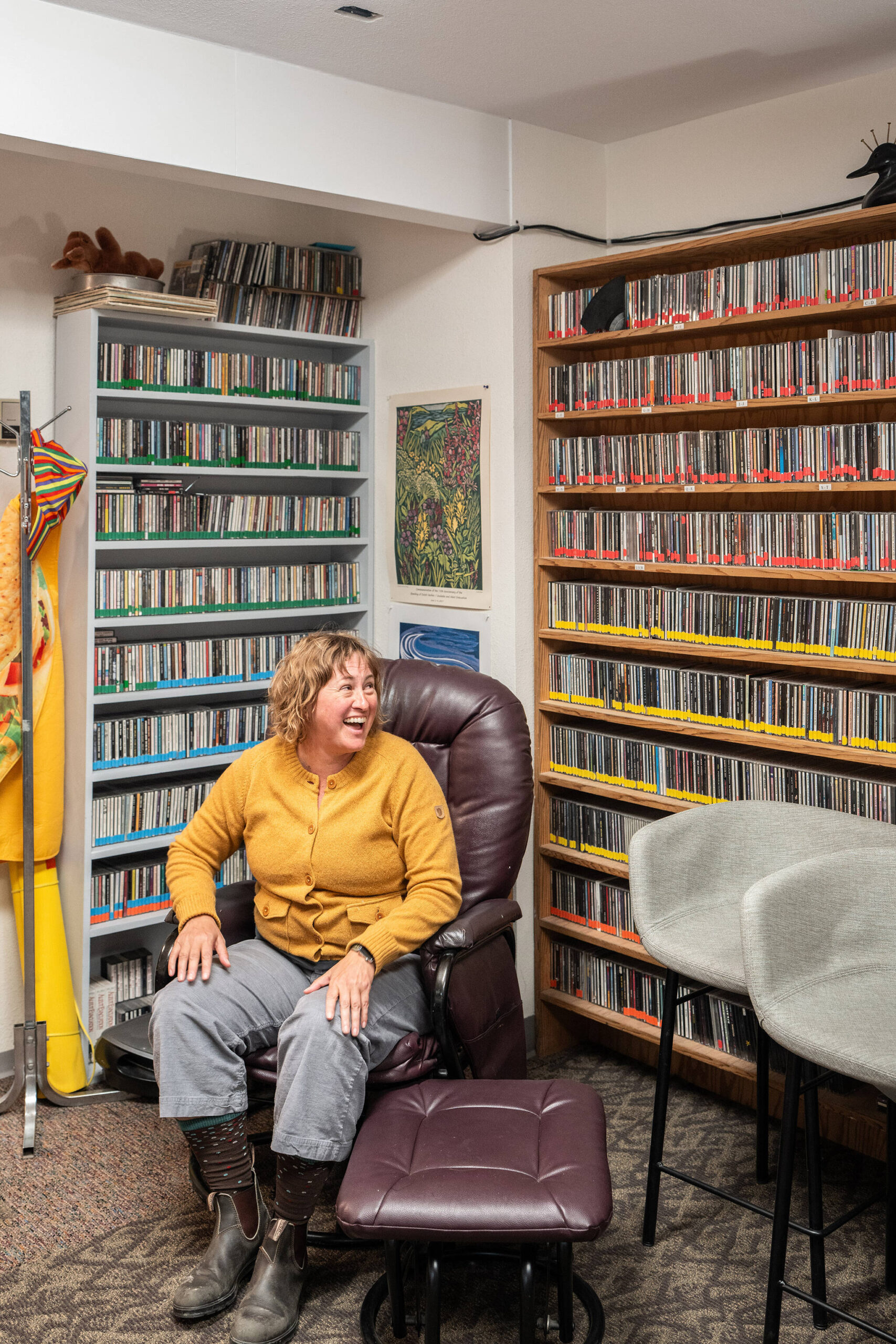
Lauren Adams, Station Manager at KUCB in Unalaska, Alaska, Aug. 13, 2025. Threatened by the president with political retribution, Republicans agreed to defund public broadcasting, imperiling a lifeline of communication in rural Alaska. (Haiyun Jiang/The New York Times)
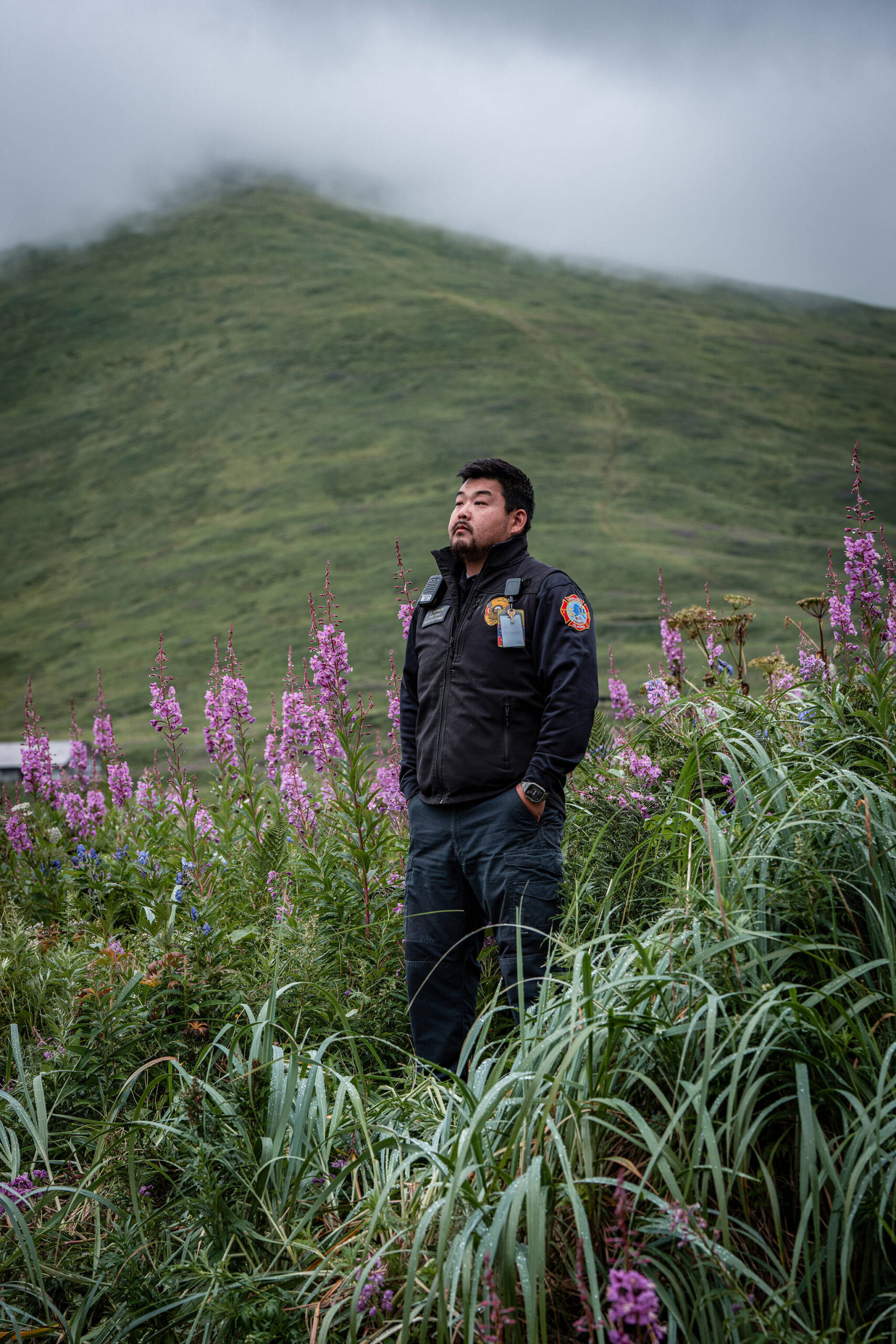
Ben Knowles, Fire Chief of Unalaska Fire Department, Alaska, near the fire station, Aug. 13, 2025. Threatened by the president with political retribution, Republicans agreed to defund public broadcasting, imperiling a lifeline of communication in rural Alaska. (Haiyun Jiang/The New York Times)
