
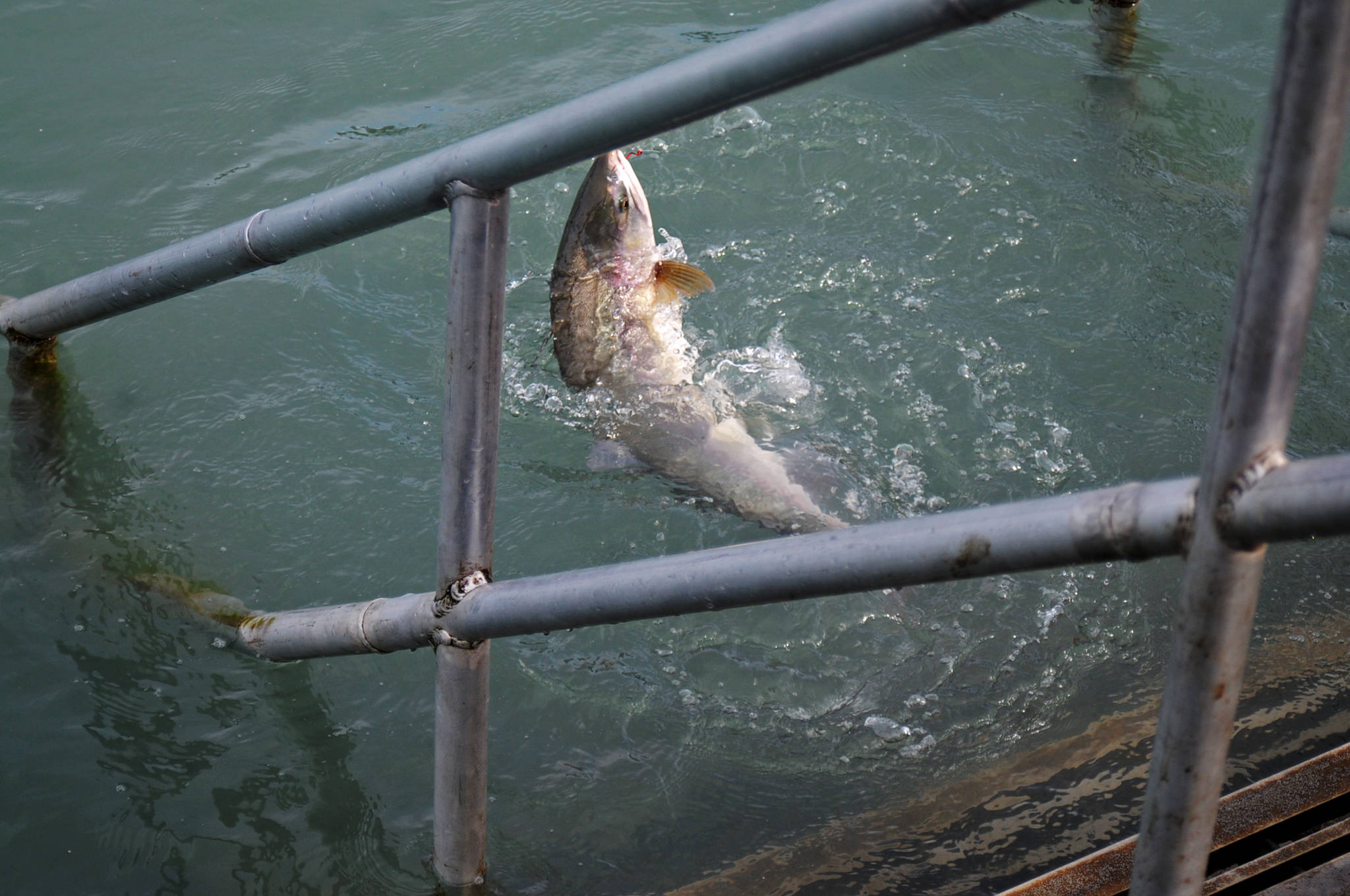
After last year’s disastrously low pink salmon runs to drainages all across the Gulf of Alaska, the forecasts offer a little more hope for the 2017 season.
Alaska Department of Fish and Game managers in Southeast are predicting a strong pink year, with 43 million fish set to return, slightly above the recent 10-year average of 39 million fish. The forecast is high in Kodiak as well, with mangers predicting a total run of about 28.1 million fish between the wild and hatchery-augmented runs, though the confidence is only fair because runs are naturally variable and environmental conditions are unpredictable.
In Prince William Sound, managers predict a total run of about 21 million fish, with a harvest estimate of 19.6 million salmon, according to the forecast. Biologists are also predicting a run of approximately 371,000 chum salmon and 74,000 sockeye.
If the forecast plays out accurately, it would be welcome news to commercial fishermen all across the Gulf of Alaska. Pink salmon returns were so dismal in 2016 that Gov. Bill Walker asked for, and was granted, a federal disaster designation, which opened up the potential for funds to be appropriated in Congress for relief. It’s not clear why the pink salmon returns were so much below average, but Fish and Game’s forecast puts a large part of the blame for uncertainty on anomalously warm sea surface temperatures for the past three years in the North Pacific, colloquially called the blob.
“Pink salmon that went to sea in 2014 and 2015 returned in numbers well below expectation and pink salmon that went to sea in 2016 (and set to return in 2017) may have experienced similar conditions,” the forecast states.
Every forecast has its uncertainties, but last year’s moderate forecast and poor returns have lent skepticism. Kodiak commercial fisheries area management biologist James Jackson said the managers were moderately confident in the forecast, but ocean conditions are unpredictable and forecasts are best estimates.
“I would say we’re moderately confident,” he said. “It really comes down to the fact that when you have such extreme variations in climate (like) we’ve seen over the past few years, it’s really hard to have a predictable model. That’s why we have inseason management.”
The stars seem to be aligned for Kodiak to have a good pink return this year. It’s an odd year, which is high for Kodiak — pink salmon, which have a two-year life cycle, tend to pitch from high to low, depending on the area — and the area’s hatchery on Afognak Island is set to have its five-year high return as well, Jackson said.
Kodiak is a complex area with multiple management plans and gear types. The management plans start out the season with regular weekly fishing periods that can be changed based on the salmon forecast. As with any fishery, the managers will evaluate the run and decide how to prosecute the fishery if the returns don’t live up to the forecast. That’s what happened last year — as it became clear the forecast was going to come in low, the managers closed the pink salmon fishery. In 2015, the total harvest of pink salmon was more than 33 million pinks. In 2016, it came in at about 3.2 million, or about a tenth of the previous year. The run in 2014 was weaker and early, while 2015’s run was large and late.
Many of the streams missed their pink salmon escapements for the first time in decades, Jackson said. All told, the Kodiak pink salmon return was one of the worst since the 1970s.
“It was fairly obvious from the get-go that the forecast was wrong,” he said.
In Lower Cook Inlet, 2015 was a record-breaking year for pink salmon. Last summer was the area’s low cycle, and given the high returns in previous years, 2017 should be set to break more records, but the forecast doesn’t look that way, said commercial fisheries area management biologist Glenn Hollowell.
“The forecasts don’t look rosy enough in comparison to the odd-year pink returns we’ve been getting,” he said.
Lower Cook Inlet is expecting a pink salmon return of about 1.29 million fish, with an expected commercial harvest of about 777,000 fish. That is significantly less than the 2015 harvest, when the seiners in Lower Cook Inlet alone harvested nearly 4.5 million pinks, not counting other gear types.
Lower Cook Inlet has a hatchery component as well, with Cook Inlet Aquaculture Association getting its Tutka Bay and Port Graham hatcheries operating to produce pink salmon. That should have pushed up the forecast further as well, but it’s only moderate, Hollowell said.
With ocean conditions hard to predict and a precedent of a good forecast turned sour, the managers aren’t entirely sure what to expect. With the colder winter this year, sending near-shore conditions more toward normal for Alaska, the mass of warm water in the Gulf of Alaska may be beginning to dissipate, but stream production depends on snowmelt runoff to the rivers as well. Stream production varies on water level each year, and if water levels are lower, then the streams can produce fewer salmon than in higher water years, Hollowell said.
“This is an interesting year,” Hollowell said. “It’s a year when we might diverge significantly from what we’ve forecast.”
Reach Elizabeth Earl at elizabeth.earl@peninsulaclarion.com.
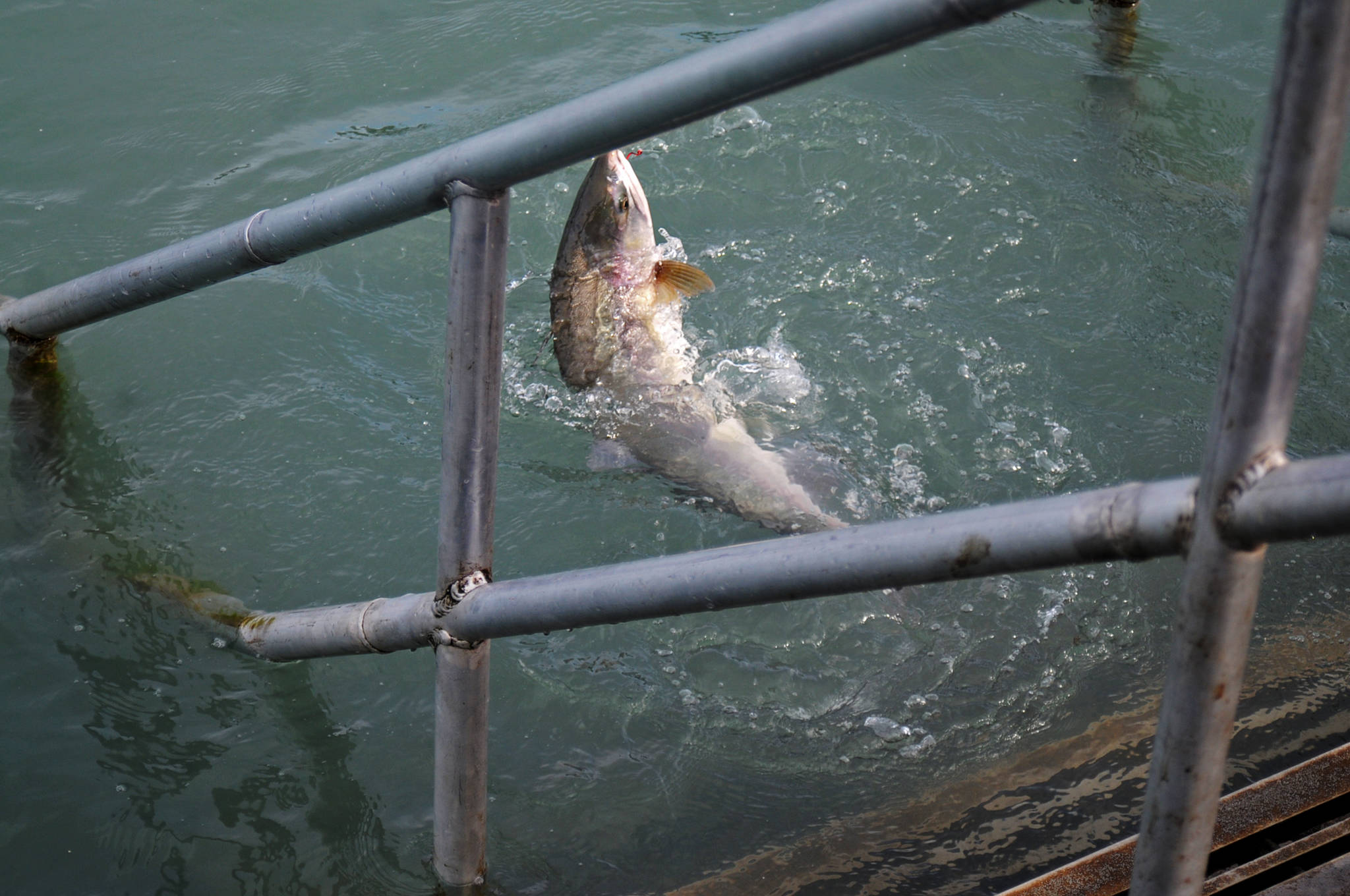
In this August 2016 photo, an angler lands a pink salmon on the docks at Centennial Park in Soldotna, Alaska. (Elizabeth Earl/Peninsula Clarion, file)
