
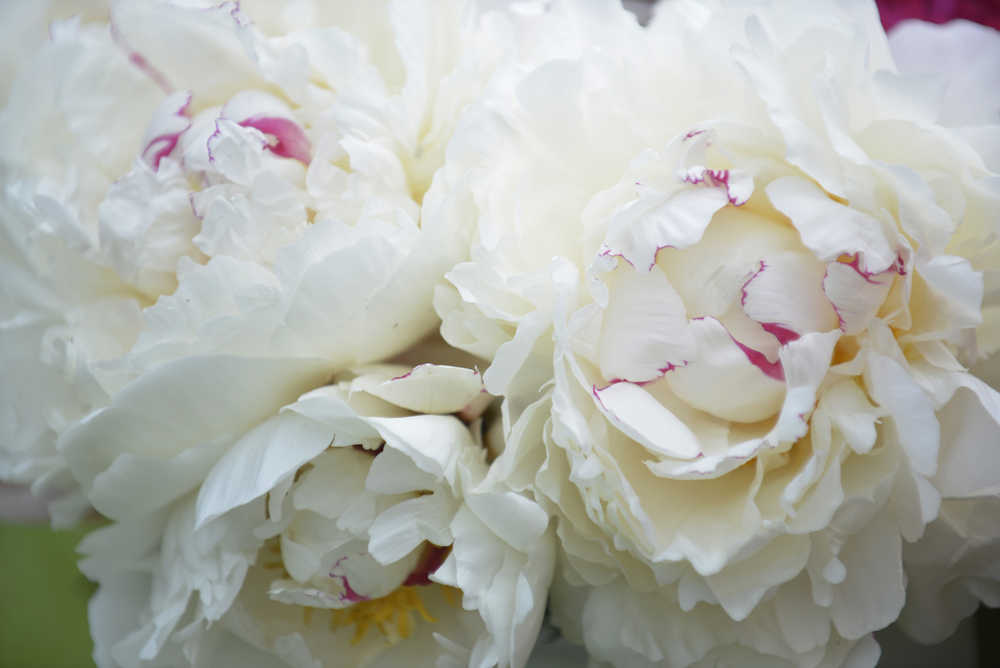
Kenai Peninsula peonies are not in full bloom, and that is what growers prefer for the perfect harvest.
Stems stretch to nearly 2-feet-tall and growers test the tightly packed bulb of petals bouncing around at the top.
“The feel of bud is the only thing indicating it is going to be harvesting time,” said peony grower Wayne Floyd. “It’s a little unnerving when you are not experienced like we are.”
Floyd runs Cool Cache Farms LLC in Kenai with his wife Patti Floyd. The two are selling their bounty for the first time this year to local farmers markets and through the Alaska Peony Market Cooperative.
Traveling parallel to a row of Kansas peonies, Floyd clips closed buds, full blooms and old flowers that are beginning to show signs of aging through bruises and wilting petals.
“You have to pick the old ones too,” Floyd said. “Bruising can lead to gray mold and botrytis — the scourge of the peony grower.”
At community markets Floyd can get about $2.50 for stem. From the ideal buyer — a bride-to-be — he can “charge top dollar.” For an upcoming event, closed blooms sell for $10-12 or more depending on the variety and shipment costs, he said.
Richard Repper, who runs Echo Lake Peonies in Soldotna with wife Irene, explained for most buyers, an open flower means no-go. Balled petals are chilled, sent packing and placed in cool water upon arriving at the final destination so the blooms expand and are ready on the day of the event, he said.
For the Reppers, the start of the harvest signals weeks of little sleep, Repper said.
Moving between 5-year-old plants he squeezes the buds, saying “got that one at just the right time.” Sometimes, a grower can miss the perfect pick by only hours.
Rain and cool temperatures during the harvest can open blossoms before a grower has a chance to get there, Floyd said. Stalks are counted before picking begins, but that isn’t always an accurate measure of how big a yield will be, he said.
The season began at Cool Cache on July 1. Many operations through out the Kenai Peninsula have been in full swing for weeks.
The peak was roughly a week ago, when 21 five-gallon buckets of buds were filled to the brim each day, Floyd said. By Friday, the numbers had dwindled to five full, bright orange containers.
Unpredictable blooms are not unique to Alaska, Floyd said. Many operations in the Lower 48 are having late seasons and so Alaska’s market is “in collision with their sale,” this year, he said.
Since it is their first season the Floyds are dealing with normal operational hiccups. The stems did not have buyers before the season began, because marketing takes time.
Ina Jones, owner of Alaska Homestead Peonies in Fritz Creek, is also wading through her first harvest.
“We are learning as we go,” Jones said.
The 3,500 3-year-old plants sewn across Jones’ 2.5 acres are relatively spread out for peonies. She said this year she saw an early spring followed by a late bloom. Plants were ready two to three weeks later this season.
For picking, a grower has to be able to identify the variety to know when they are best harvested, Jones said. Cultivating a consumer base is another part of the beast, she said.
“You don’t get them all marketed (the first year),” Jones said. “It just takes time to make connections with people.”
Jones has been farming for quite some time, so she says, it’s nothing new, but growing 2 acres of peonies is far more labor and tending and than 80 acres of hay, for example.
Gerri Martin operates Diamond Ridge Peonies with her husband Sean in Homer, and is also getting used to the daily grind. They won’t host their first harvest until next year so this year harvest time is dedicated to staking fields so that the plants “are more girdled,” and “weeding, weeding, weeding,” she said.
Martin is attempting a totally organic operation, which is no easy task. Constant tending is required the first few years to keep out pests and pesky plants, but every time fewer return, she said.
Starting out is also costly, Martin said. The couple is transitioning ownership of their 30-year halibut fishing business, North Country Halibut Charters, that has financed their thousands of roots, which can cost anywhere from $2-8 depending on the variety.
Preparing a field requires a tractor, which can be bought or rented.
Martin is optimistic about her future harvests because she lives on a hill. A higher elevation means ground temperatures will stay lower longer, resulting in a later season.
“We will have flowers on the market when the bulk of the state is done,” Martin said.
Martin said calls come in every day from larger operations looking to stock her stems. For the first few years, and until her business is in other hands, she will likely sell to other farmers who are most established in the market.
Entry into the industry does not come without risks.
Years ago, before Martin planted her first roots, there was massive die-off within operations in Homer and some operations in the upper Kenai Peninsula were wiped out entirely including one of the local pioneers who had been growing for one decade.
“That’s a scary thing,” Martin said. “That’s why we say ‘we won’t quite our day job yet’.”
Luckily, in Alaska’s Peony industry, help is never too hard to come by.
Floyd, Jones and Martin all utilize the tight-knit network of Alaska’s peony producers. All three are members of the Alaska Peony Growers Association, which is more for shared marketing and management assistance, and Floyd and Jones are in two local cooperatives that grow and sell as a group.
The Alaska Beauty Peony and Alaska Peony Market cooperatives combine resources by sharing equipment, marketing strategies and ultimately produce more flowers so they are more desirable to larger markets.
In previous Clarion interviews Floyd said hundreds of thousands of stems were sold out of Alaska last year, and with the number of operations spread through out the state, there is the potential for millions.
“The nation is ready for a lot of peonies — not just the nation,” Martin said.
Reach Kelly Sullivan at kelly.sullivan@peninsulaclarion.com.
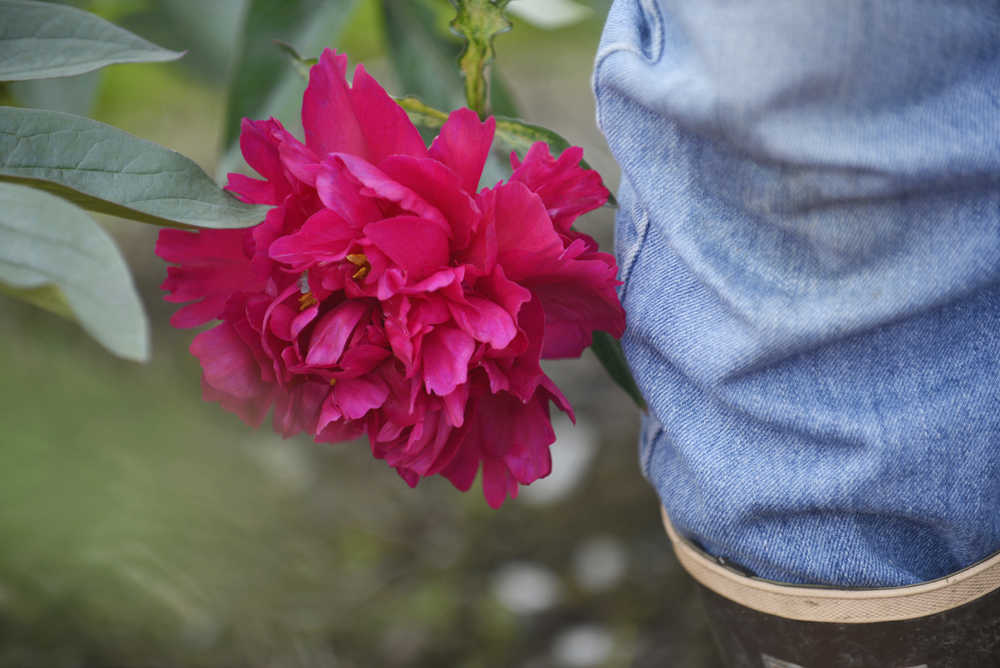
Photo by Kelly Sullivan/ Peninsula Clarion Wayne Floyd picks peonies Friday, July 17, 2015, at Cool Cache Farms LLC., in Kenai, Alaska.
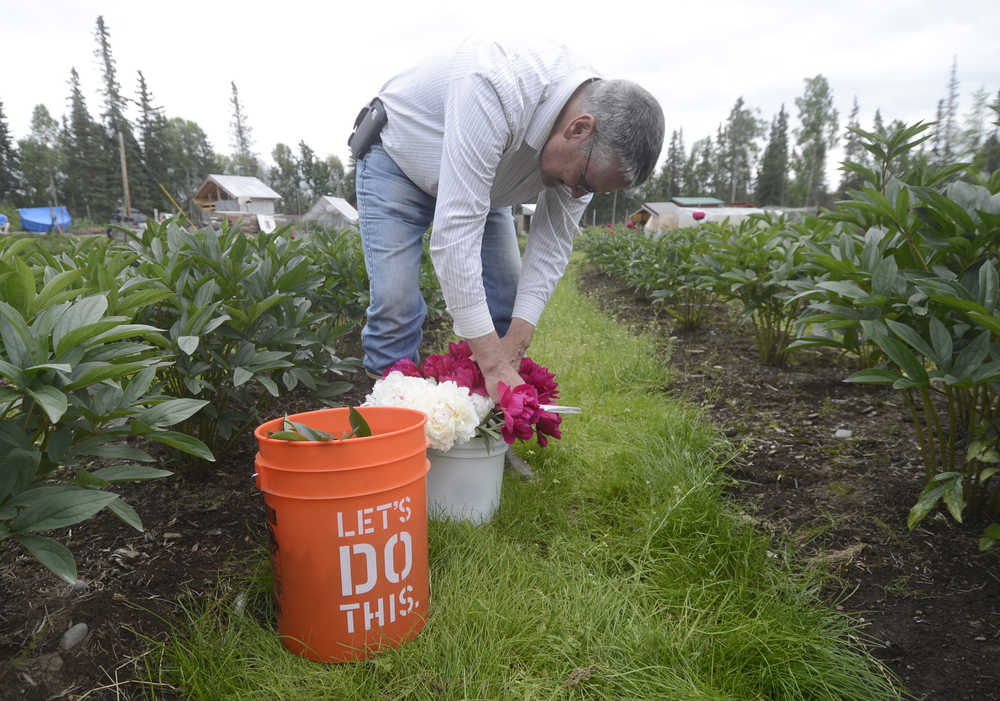
Photo by Kelly Sullivan/ Peninsula Clarion Wayne Floyd is selling the peonies from his first harvest at local farmers markets and through the Alaska Peony Market Cooperative Friday, July 17, 2015, at Cool Cache Farms LLC., in Kenai, Alaska.
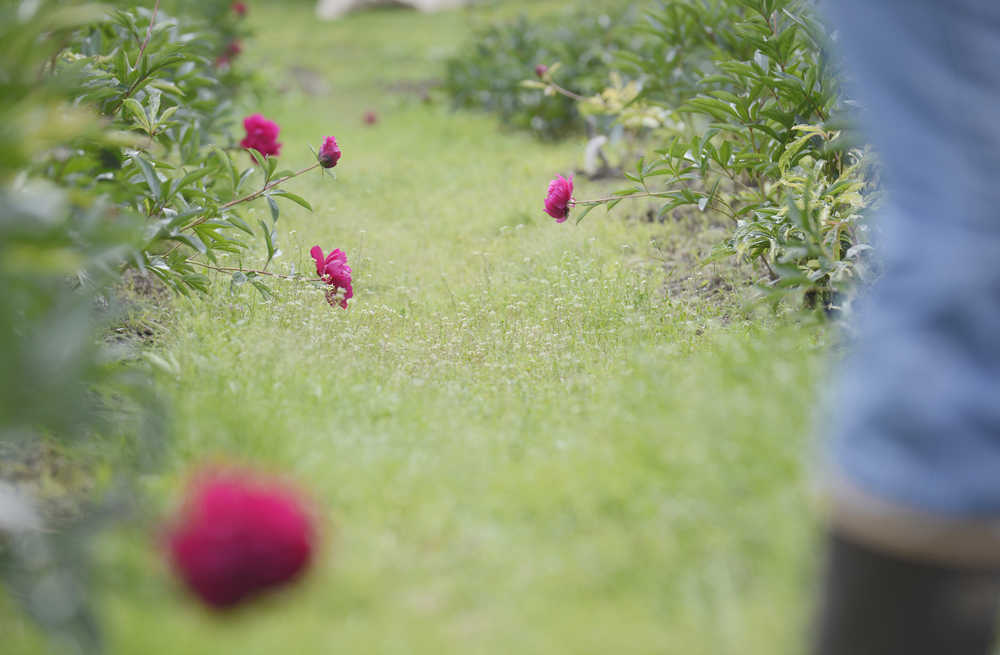
Photo by Kelly Sullivan/ Peninsula Clarion Kansas Peony buds and full blooms are ready for harvesting Friday, July 17, 2015, at Cool Cache Farms LLC., in Kenai, Alaska.
