
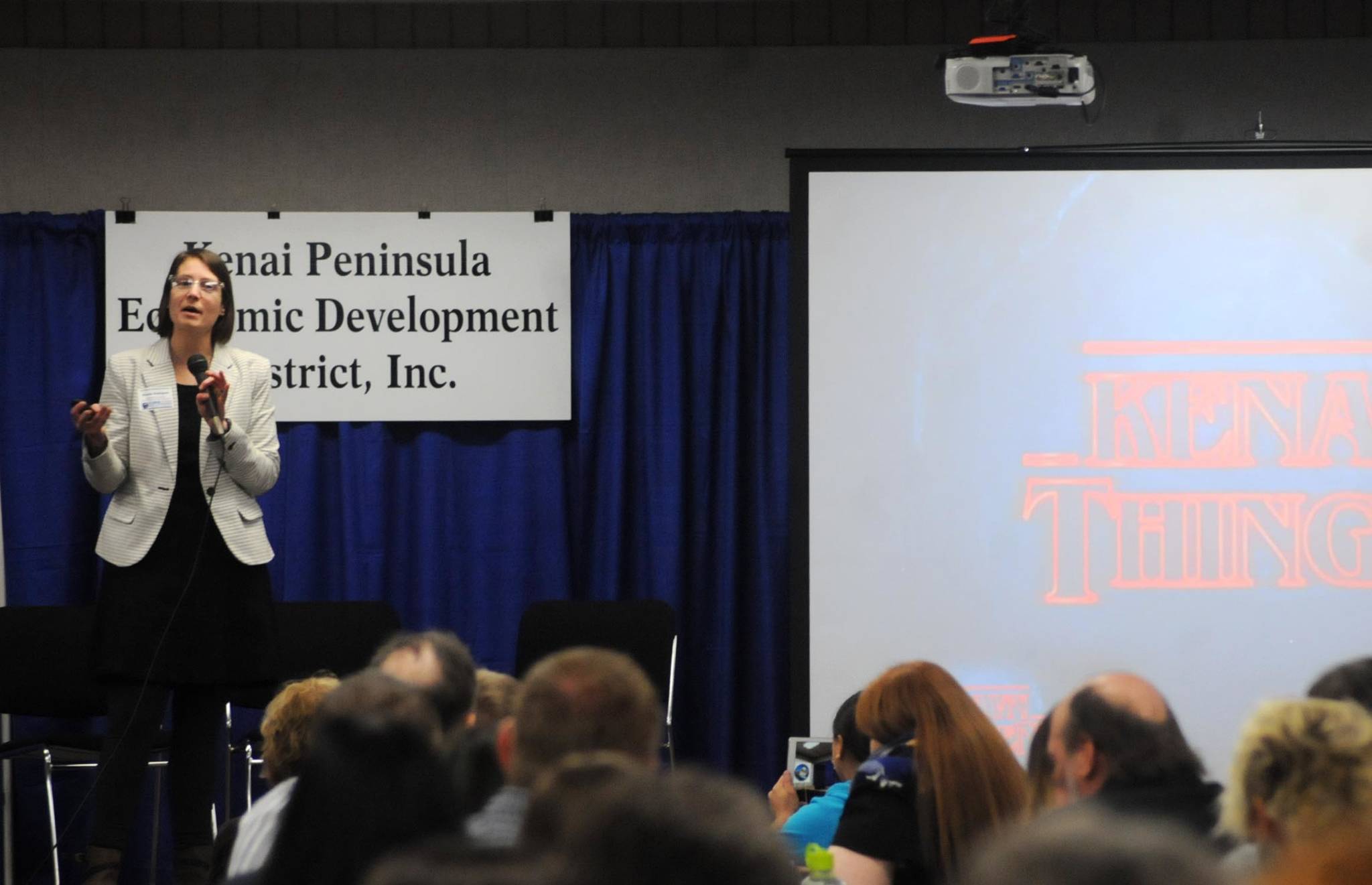
The Kenai Peninsula lost jobs and saw reduced wages in 2016 and the first two quarters of 2017, a continuation of the ongoing statewide recession.
However, it looked slightly different than previous losses in the recession. The peninsula actually added 20 oil and gas jobs, while the losses hit the tourism and retail industries, which had not previously felt as many of the effects of the recession. That’s troubling, though it could be part of one of the final waves of job cuts before the state begins to pull out of the recession, said state economist Alyssa Rodrigues.
“That’s not encouraging,” she said in a presentation at the Kenai Peninsula Economic Development District’s Industry Outlook Forum held Wednesday in Soldotna. “But again, I think this is part of that third wave of job losses and that will hopefully be kind of turning around and hopefully indicates that we’re getting to the end of the recession.”
Overall, job losses came in worse than projected in 2016 — employment was down about 1.9 percent. So far, the projections based on the first two quarters of 2017 show statewide employment down about 1.1 percent, with the Kenai Peninsula down about .7 percent, Rodrigues said. She cautioned some perspective, though, saying the percentage losses look more significant than the total job number losses.
She also pointed out that the slight recovery in the oil and gas sector translates to more dollars circulating in the economy because those jobs tend to be high paying. Though retail jobs are important and provide individuals with income, the economic impact from individual jobs is less than oil and gas jobs, she said.
However, the rate of job loss is predicted to be somewhat less this year, showing that losses are flattening though it remains negative. The Alaska Department of Labor and Workforce Development projected statewide employment in 2018 to decrease about 0.5 percent, according to the department’s annual jobs forecast. Since 2016, Alaska has lost about 9,900 jobs, according to the forecast.
“One reason statewide losses are slowing is that oil and gas, state government, professional and business services, and construction have already taken significant hits over the last couple of years and their job counts are stabilizing at lower levels,” the forecast states. “However, the impact from those losses will reverberate into stores, bars and restaurants, and a variety of other employers that depend on consumer, business and state government spending.”
Wages are down as well, not keeping up with inflation. Adjusting for inflation, across the peninsula, average annual wages fell about $1,428, she said. Statewide, the loss was about $1,000. That comes in part from overall job losses.
“Typically, we keep up with inflation,” she said. “As a borough, on the whole, wages keep up year after year. Last year, just barely squeaked by in order to keep up with inflation … that didn’t happen this year.”
The Kenai Peninsula still maintains a relatively diverse economy. The last year has seen growth primarily in the health care and local government sectors on the peninsula. The gains in local government follow a pattern seen in the last major recession in the 1980s, when state and local government jobs acted as a “stabilizing force” in the economy amid other job losses, including at the state and federal level, she said.
“State and federal are just holding steady — at least they are holding steady, and we are not losing those jobs,” she said. “They tend to be a little bit more highly paid, which is also a good thing.”
The population on the peninsula grew slightly from 2015–2016 — approximately .6 percent, more than Anchorage but still significantly behind the Matanuska-Susitna Valley, Rodrigues said. Overall, Alaska saw higher outmigration than inmigration, though the overall state population still increased because of births in that year. Population estimates released Wednesday show that the state’s population fell overall in 2017 by approximately 2,629 people, with approximately 8,885 people moving out of state.
Many of those leaving may be looking for better job prospects in the Lower 48, Rodrigues said.
“We don’t have an edge on the Lower 48 at this point,” she said. “If you think about the fact that our wages aren’t increasing on average. We already have higher costs to begin with. If you lose your job, you don’t have any reason to stay. If you’re down south, you don’t really have any reason to come up here. We’re not growing like we used to be. So it’s really impacting our population growth.”
Rodrigues recently transitioned from research in the Department of Labor and Workforce Development into the Alaska Department of Commerce, Community and Economic Development’s Division of Economic Development and is working on the 28 goals set out in the statewide comprehensive economic development plan. Among those goals are items like ensuring a better-prepared workforce, supporting the tourism and extraction industries and reducing energy costs for Alaska’s communities.
This is Alaska’s first complete statewide comprehensive plan, including various industry perspectives, she said. The plan is to implement the various goals over the next 5 years, focusing on specific goals each year.
“It wasn’t made by government — it was made by industry,” she said. “We’re a facilitator to figure out where do different industry sectors want to go? What do we need in this state to help us grow?”
Reach Elizabeth Earl at elizabeth.earl@peninsulaclarion.com.
