
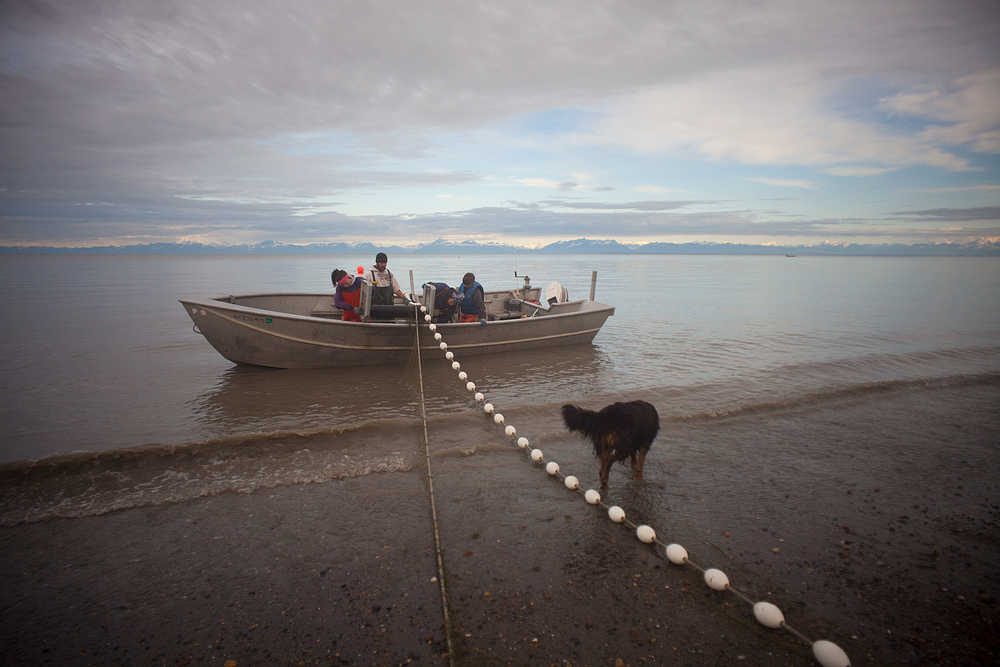
Resources for All Alaskans, a group formed to combat an proposed initiative to ban commercial setnet fishing in certain parts of the state, met in Kenai to talk strategy with several local fishing groups after being dealt a blow when an Alaska Superior Court judge ruled that it could not intervene in a lawsuit over the initiative.
The group submitted an amicus brief, or friend of the court brief, in support of the State of Alaska’s position opposing the proposed setnet ban initiative, and while the judge accepted that brief, she denied the group’s request to gain intervener status in an April 18 motion.
Had the group been able to intervene, it would have been able to participate in oral arguments that took place Tuesday in Anchorage. It is unclear if Resources for All Alaskans will choose to appeal the judge’s ruling.
The proposed ballot initiative, filed by another fledgling group, the Alaska Fisheries Conservation Alliance, would ban setnetting in areas of the state defined as “urban.”
Lt. Gov. Mead Treadwell rejected the proposed initiative in January and the conservation alliance filed an appeal of Treadwell’s decision in Alaska Superior court in late January.
Resources for All Alaskans was formed by several local and statewide commercial fishing representatives including Jim Butler, a longtime Cook Inlet setnetter and lawyer, Jim Garner, Executive Vice President of Trident Seafood, and Jerry McCune, president of United Fishermen of Alaska and Cordova District Fishermen United.
RFAA registered as a state nonprofit corporation named Salmon for All Alaskans in December according to state records, and changed its name to Resources for All Alaskans in late February.
Currently, the organization has a six-member board and an expanding list of advisers including former Alaska state senator and Halibut Cove resident Clem Tillion, President of Snug Harbor Seafoods Paul Dale, Cook Inlet setnetting group Kenai Peninsula Fisherman’s Association and the Alaska Salmon Alliance. McCune, who ran the meeting Wednesday at the Cook Inlet Aquaculture Association building in Kenai, said the group was consulting with lawyers to determine whether it should appeal the judge’s ruling and ask for a re-hearing of oral arguments — one that would include its own arguments on the case.
The judge heard oral arguments from the state and the Alaska Fisheries Conservation Alliance on Tuesday in Anchorage.
“We’re not done with them by far,” McCune said. “We can’t leave the initiative unchallenged.”
McCune told the group of about 20 who gathered at the aquaculture building that if the setnet ban initiative were to pass through its appeal and make it onto the ballot in 2016, organizers of the effort — which include members of the Soldotna-based Kenai River Sportfishing Association — would continue to attack commercial fishing in the state.
“They’ll come after drifters next,” McCune said. “They’ll want the whole thing until it all comes crashing down around them.”
Butler, president of Resources for All Alaskans, said the group was formed after statewide commercial fishing interests saw the proposed ballot initiative and wanted to understand the legal issues surrounding its scope.
“(They wanted to) make sure that there was a mechanism to help communicate how significant it is that people can go to a ballot box and vote a fishery out of business,” Butler said.
He characterized the case as being bigger than the “Pebble Mine issue.”
“Legally, the implication is that by ballot initiative, they say you can reallocate a state asset and get rid of an industry,” he said.
Butler, a Kenai-based lawyer, said the judge’s ruling against Resources for All Alaskans as interveners in the case suggested that she believed the state was well-positioned enough to argue the constitutional issues surrounding its original argument to deny the initiative.
No matter how the judge rules, Butler said the Resources for All Alaskans position was that both the state and the Alaska Fisheries Conservation Alliance felt strongly enough about their positions that the case would eventually end up in the state’s Supreme Court.
“(Resources for All Alaskans) certainly intends to continue to participate in amicus to try to help the court better understand the legal basis and the consequences of the initiative from an industry perspective,” Butler said.
Reach Rashah McChesney at rashah.mcchesney@peninsulaclarion.com.
