Mountain View students demo literacy curriculum at school board meeting
Published 10:30 pm Thursday, December 8, 2022
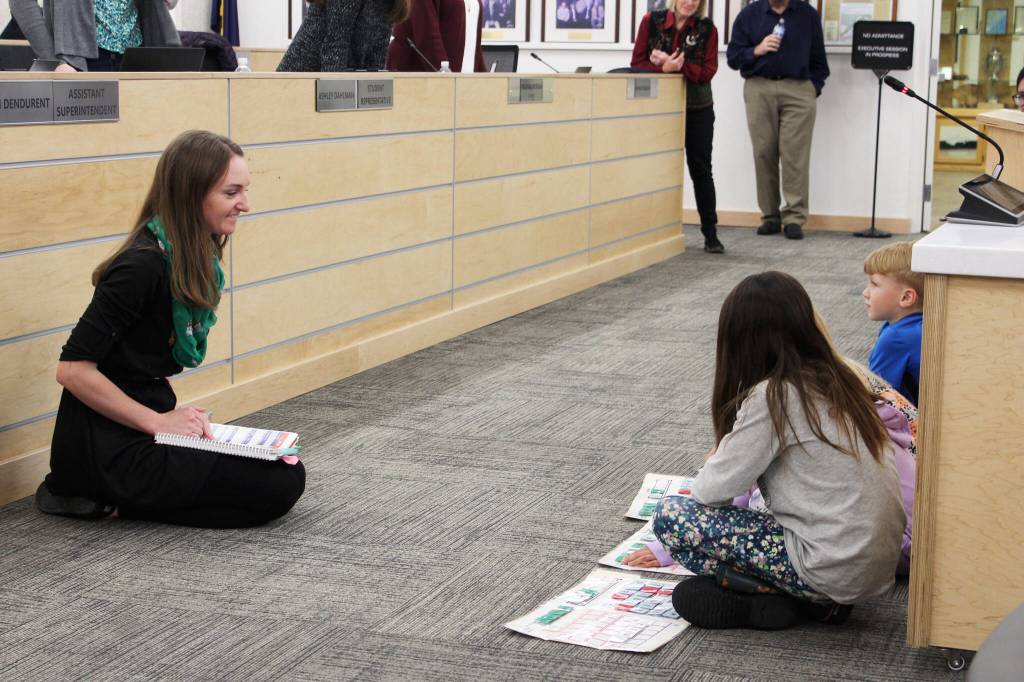

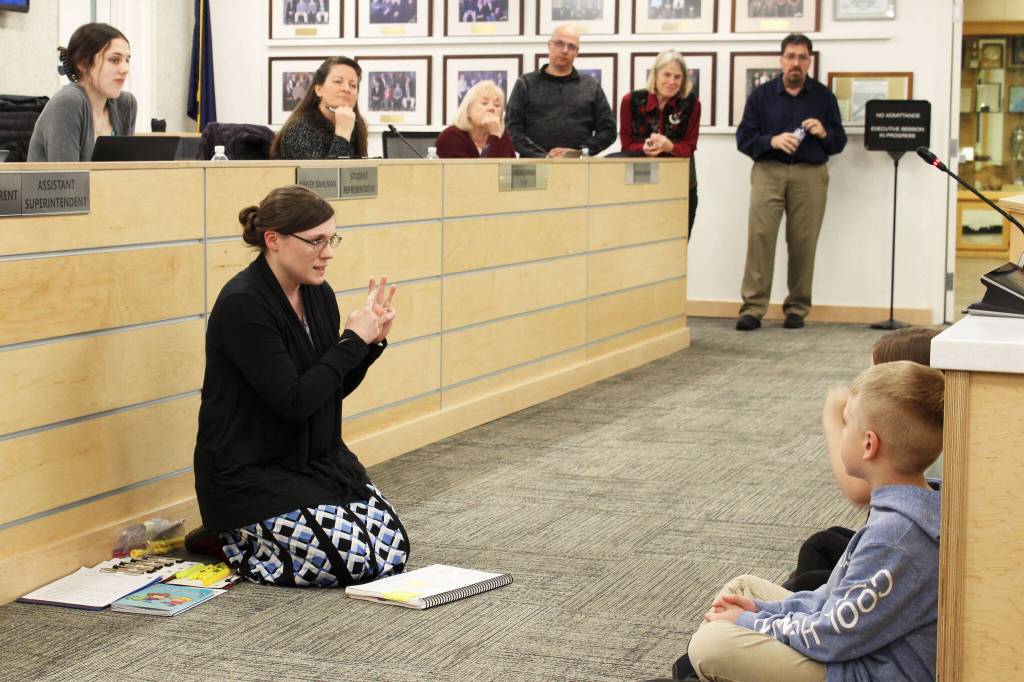



As schools around the state begin working to meet the benchmarks outlined in the Alaska Reads Act, one school on the central Kenai Peninsula offered this week a behind-the-scenes look at how students learn to read in the classroom.
First grade students from Mountain View Elementary School demonstrated during Monday’s meeting of the Kenai Peninsula Borough School District three different ways they are learning to read in school. Principal Karl Kircher, who was presenting his annual school report to the board, said the Alaska Reads Act is “foremost” on the minds of the Mountain View school community.
The Alaska Reads Act, which Gov. Mike Dunleavy signed into law earlier this year, created four new state education programs with the goal of helping Alaska students read at grade level by third grade. Those programs, along with existing state literacy initiatives, are incorporated into Alaska’s Strategic Reading Plan, published in late August.
The implementation of the Alaska Reads Act in Mountain View classrooms, Kircher told board members, is done through multiple avenues all articulated in that plan, which offers resources and suggestions for professional development, evidence-based materials, early literacy, frameworks for success, science of reading resources and teacher preparation.
As part of Monday’s presentation, students in Kristin Perkins’ class showed off their Heggerty phonemic awareness techniques, which involved “roller coastering” words with their hands to identify the middle sound and breaking up words into syllables. Barbara Ralston’s students read aloud from “decodable” books, which are written to align with phonics that students have already learned.
Teacher Callie Giordano demonstrated “word building,” which comes from the University of Florida’s Literacy Institute. Students followed along while Giordano tapped out sounds in words like “block” on her fingers.
“B-l-o-ck,” Giordano recited, tapping her fingers to her thumb with each sound.
After Giordano and the children “tapped it out” on their fingers, students bent over laminated manila folders and moved sound fragments around to recreate the word.
Classroom instruction is just one way Kircher said Mountain View is working to boost student literacy.
In response to the professional development prong of the Alaska Strategic Reading Plan, Kircher said Mountain View staff have prioritized Language Essentials for Teachers of Reading and Spelling, or LETRS, programs offered at the state and district level.
Those programs are meant to help teachers with skills specific to reading instruction, such as phonological awareness, fluency and comprehension. Kircher said Monday that there are 10 Mountain View staff members participating in LETRS training at the prekindergarten, early literacy, interventionist and administrative levels.
Curriculum Coordinator Melissa Linton and Director of Elementary Education Eric Pederson during a presentation about literacy given to the KPBSD Board of Education last month, offered a road map for the implementation of initiatives intended to boost student literacy.
Representatives from KPBSD, including Superintendent Clayton Holland, attended the Alaska Science of Reading Symposium earlier this year, which the Alaska Department of Education and Early Development touted as a way to lay the groundwork for early literacy improvement.
Pederson said during the presentation that he and KPBSD Federal Programs Coordinator Jessica Scogin met with KPBSD staff who attended the symposium to figure out ways to support district literacy.
“We came up with three results,” Pederson said. “One is we need to really dive into getting some more phonics support for our schools, polish the plan for offering LETRS to admin and teachers, and the third was the knowledge that we needed to continue this discussion as we went forward.”
The district purchased Heggerty videos for teachers, he said, and offered 80 spots to teachers and administrators for LETRS training. The district now also has an Effective Literacy Team tasked with defining the “mission and vision” of literacy within the district.
Linton described LETRS to the board during last month’s literacy presentation as a “mental sweat” that goes back to basics when it comes to reading.
“Teachers are committed for two years of very rich, intense literacy instruction to get them up to speed on the brain research behind it, how we read (and) the components of effective literacy instruction,” Linton said last month of LETRS. “It’s not based on a program, it’s really, really going deeper into the pedagogy and what it takes to teach a student how to read.”
Looking ahead, Linton and Pederson said the district plans to incorporate the recommendations of the Effective Literacy Team to strengthen KPBSD’s English Language Arts curriculum.
Reach reporter Ashlyn O’Hara at ashlyn.ohara@cmg-northwest2.go-vip.net/peninsulaclarion.