
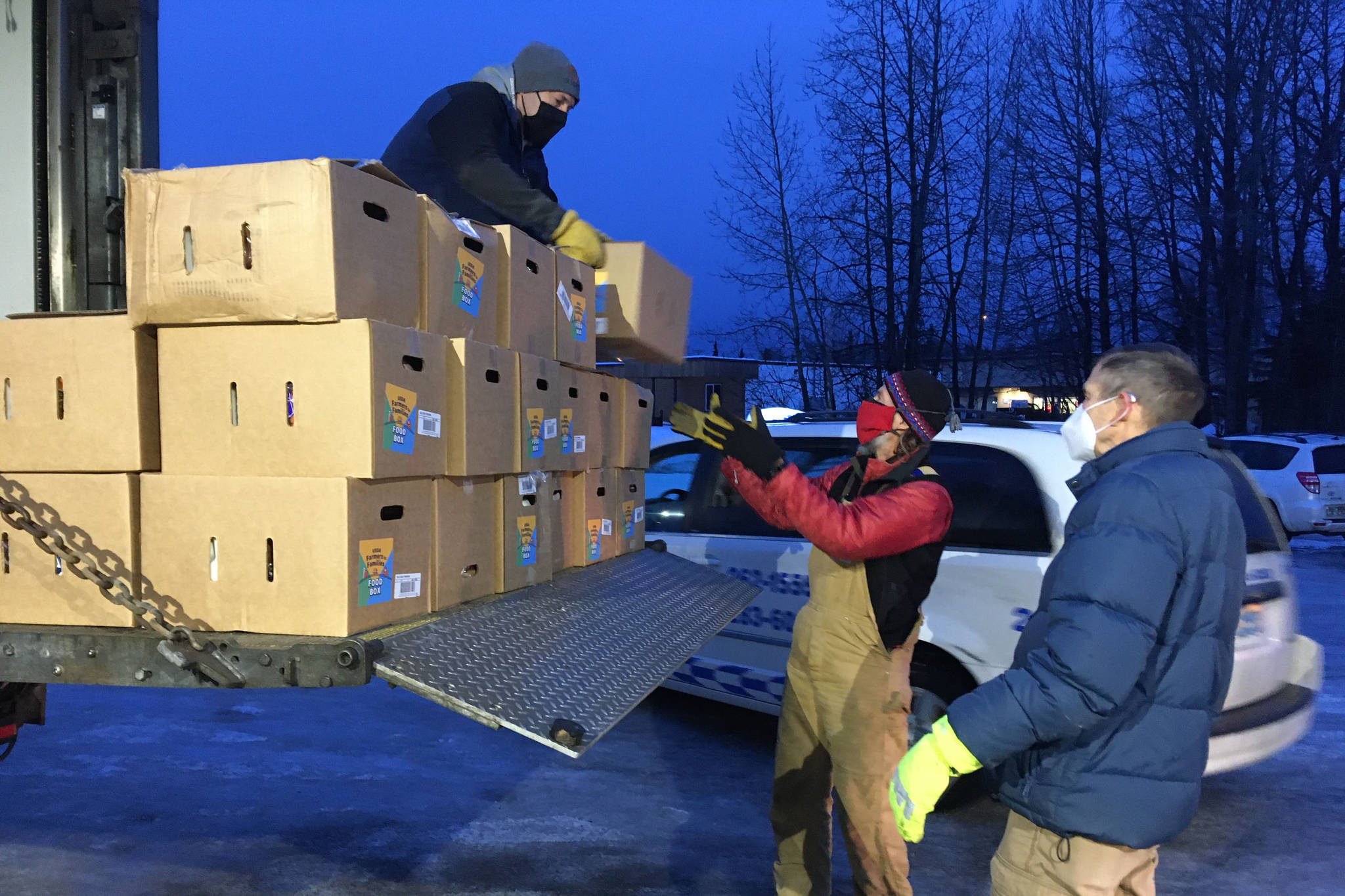
Community organizers are warning that Alaskans receiving federal food assistance could see a serious decline in their benefits at the end of March if the state fails to act. Without state action such as another disaster declaration or new law, Alaska will stop receiving $8 million a month in emergency allotments of the Supplemental Nutrition Assistance Program, also known as food stamps.
There’s legislation in the works to address the issue, but the increased benefits are set to expire at the end of the month.
Because of the economic impacts of the pandemic, “food insecurity increased by about 32%,” said Eve Van Dommelen with Food Bank of Alaska. “One in six Alaskans are figured to be food insecure.”
That decline in benefits will have serious negative impacts on families already suffering from the economic impacts of the coronavirus pandemic, Van Dommelen said. The amount of money a person receives in food stamps is based on their specific situation, Van Dommelen said in a phone interview, but with the emergency allotment, a household will receive its maximum eligible benefit.
The food bank has a team of employees meant specifically to help people apply for SNAP benefits, Van Dommelen said, and over the past year that team has seen a 180% increase in requests for assistance. Some of the highest numbers the program had ever seen were in the past two months, she said.
Food banks across the state have reported massive increases in people needing their services. Southeast Alaska Food Bank Manager Chris Schapp said the average number of people each week had increased by at least 100% over the last year.
“Pre-pandemic (weekly) average was 65-70 people,” Schapp said. “Now the average is 125-150.”
[Amid adversity, Juneau’s food banks soldier on]
Food Bank of Alaska works with partner agencies across the state. For some agencies demand for food services increased by up to 900%, Van Dommelen said. Households relying on the increased benefits through the pandemic could see that extra aid come to an end at the end of March.
Because it’s an emergency allotment, the U.S. Department of Agriculture requires a public emergency declaration be in place, according to Cara Durr, director of public engagement for Food Bank of Alaska. Lawmakers have a bill that would retroactively extend the state’s COVID-19 disaster declaration through Sept. 30, 2021, but Gov. Mike Dunleavy has expressed resistance to continuing the declaration.
The increased benefits mean “hundreds of dollars into the pockets of Alaskans in need,” Durr said. “While things with COVID are looking better, the economic impacts are still being felt by those who have been affected.”
Dunleavy let the declaration lapse on Feb. 15, and wrote in a March 18 letter to House Speaker Louise Stutes, R-Kodiak, that the state had continued to provide a robust response to the pandemic despite the declaration lapsing.
“The worst of the pandemic is behind us,” Dunleavy said in the letter. “Alaska leads the nation in, and sets the standard for, widespread testing.”
There are things the state needs legislation for, the governor said, but none of them require a disaster declaration. In an email, Department of Health and Social Services spokesperson Clinton Bennett said the state had been working with the federal Food and Nutrition Services to find a way to continue the benefits.
“FNS has flexibility within their regulatory language for Alaska to continue receiving these benefits without an explicit disaster declaration,” Bennett said. “What is needed and what we are working with the Legislature on, is a limited authorities bill necessary for our ongoing COVID-19 response and recovery plan, and with specific language that FNS has approved for the state to continue receiving (emergency allotment) SNAP benefits.”
A bill in the House of Representatives extending the declaration and also containing several other provisions like legal protections for businesses operating during the pandemic moved out of committee and will head to the floor soon for a vote. If the bill passes the House, it must then go through the committee process on the Senate side before being sent to the governor.
The Senate has a separate bill that would give the governor certain powers, including the ability to receive SNAP funding, that is similarly on its way to the House, according to Senate President Peter Micciche, R-Soldotna.
“The Senate chore is to work to convince the other body that we have done our due diligence,” Micciche said.
Senators had worked with the governor’s administration and federal agencies to ensure the bill had all the tools the governor needs to help the state recover from the pandemic.
“Our goal is to pass a bill the governor will actually sign,” he said. “If a bill is not signed because it’s too broad I don’t think that solves a thing.”
Still, with the looming deadline of April 1, community advocates are concerned about how long the political process will take.
“When you have a group of legislators that are focused,” Micciche said of the looming deadline, “amazing things can happen in a short time.”
Contact reporter Peter Segall at psegall@juneauempire.com. Follow him on Twitter at @SegallJnuEmpire.
