
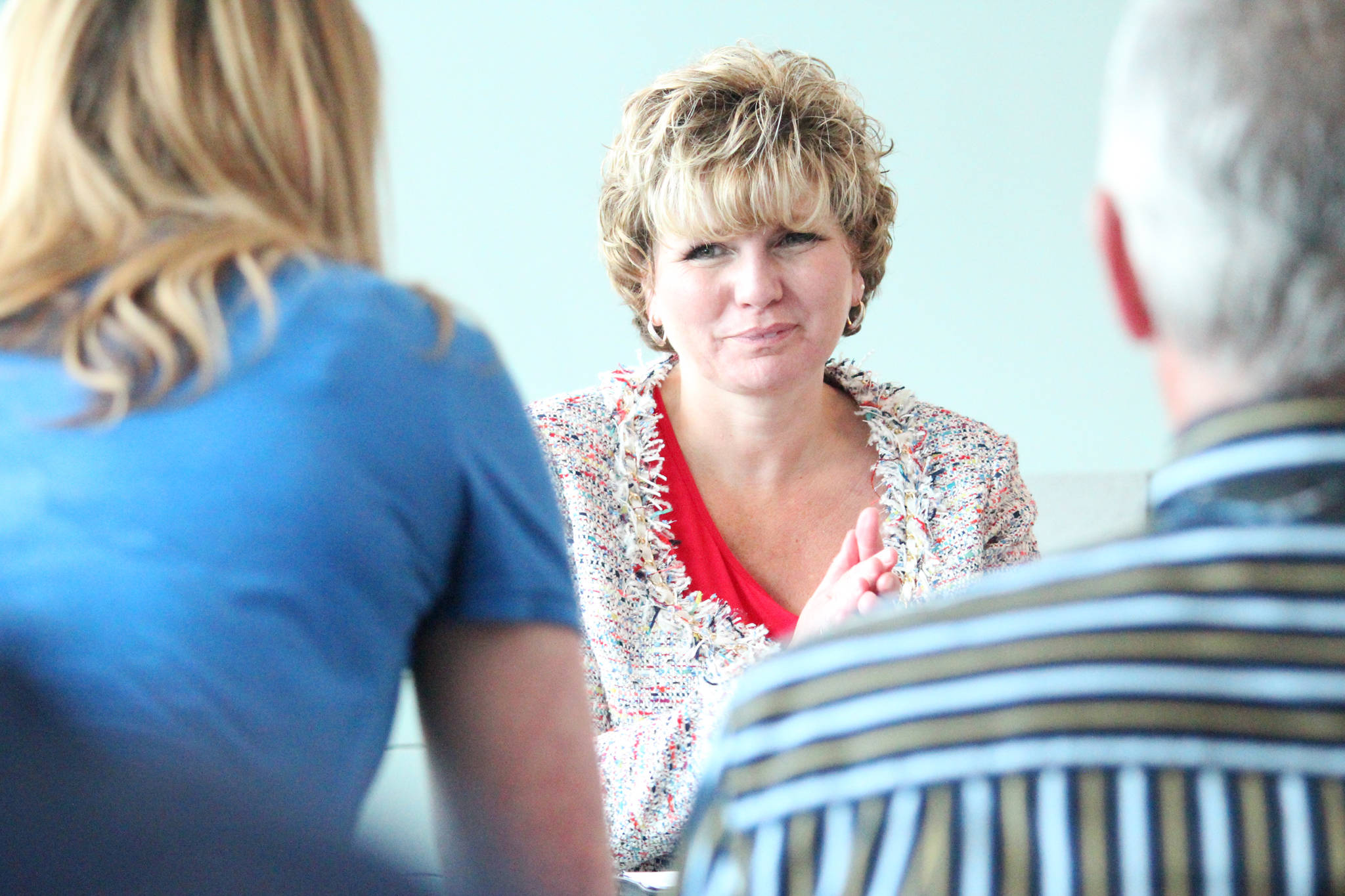
Plenty of rain, and a few tears, fell in Old Town Kenai on Friday as creators of the Henu’ Community Wellness Court unveiled the therapeutic program to the public in a grand opening.
The Henu’ court is an experimental program operating under joint jurisdiction by the State of Alaska Court System and the Kenaitze Indian Tribe, the first of its kind in Alaska. It’s a court that seeks to help offenders after their arrest but before their case resolution who face long sentences for charges relating to substance abuse. Those who complete the minimum 18-month program set up through the court that focuses on healing and rehabilitation face a better legal outcome than what might be reached through a traditional court.
Offenders identified as eligible for the court program are referred by the District Attorney’s office. Kenai Superior Court Judge Anna Moran and Kimberly Sweet, chief judge for the tribe, sit and hear cases together.
“Sadly, many of you are familiar with the current opioid epidemic and it’s terrible impact on families in our community,” Moran told the dozens of people gathered on the tribe’s campus for the grand opening Friday. “But substance abuse issues have been tearing families apart for a long time, whether it was alcohol, cocaine, meth, heroin, marijuana, or prescription drug abuse. I’ve seen everything over the past 30 years.”
The court’s creators have described the program as something that will hopefully reduce the surrounding community’s rate of recidivism — the rate at which freed offenders commit another crime and return to prison. Nearly two thirds of Alaska’s released offenders return to state correctional facilities within three years, according to a 2015 Alaska Criminal Justice Commission report that made 21 recommendations to the Alaska Department of Corrections to cut costs and improve the system.
The recidivism rate is even higher among Alaska Natives — more than 74 percent of released non-violent Alaska Native felons are returning to prison in the state, according to the 2016 Recidivism Reduction Plan.
During her comments at the grand opening, Sweet told the story of Nant’ina, a creature known by the Dena’ina people to cause pain and suffering. She said that as people have changed, so has the figure, and that it now often comes in the form of alcohol and drug abuse.
“Sometimes it seems we invite him in, seek him out, offer him the best of who we are, even the last of our resources,” Sweet told the crowd. “I have seen Nant’ina reflecting from the eyes of far too many that I love.”
Moran said Friday that the tribe and state court system have tried for years to address substance abuse on the peninsula together, but have struggled when it comes to funding. She and Sweet have been involved in the Henu’ court’s creation from the beginning and had help from those who have gone through the process before.
Judge Korey Wahwassuk, of the Minnesota Ninth Judicial District Court, co-founded the country’s very first joint-jurisdiction court between a state and a tribe in 2007 with John Smith, who is retired from the Minnesota Court of Appeals. The pair gave guidance to the Henu’ court’s creators, who worked with members of Project TEAM, a group including legal professionals, law enforcement members and others in the community.
“It’s kind of like a dream come true for us,” Smith said.
Wahwassuk told the crowd Friday that it was an emotional day for her, and applauded Sweet and Moran for their strong vision and passion that motivated the entire team.
“The team came together with the common goal of combatting the devastating effects of drug and alcohol abuse,” Wahwassuk said during Friday’s grand opening. “But in the process they created a shared path towards wellness and healing for all people, recognizing that addiction and helplessness know no jurisdictional boundaries.”
No sooner had the official celebration wrapped than the program’s seven current participants were sitting before Moran and Sweet for a court hearing. Held in the Dena’ina Wellness Center and opened to the public, the hearing is a weekly stipulation for the first three months of the program.
The two judges sat at a table directly in front of the defendants, who were addressed one at a time and asked to give their highs and lows from the previous week. Sweet and Moran offered advice as well as reminders of things still on the participants’ to-do lists as far as completing the steps of the therapeutic court program.
“Treatment is your first job,” Moran counseled one defendant while discussing employment scheduling.
The judges also offered encouragement while the participants shared recent triumphs or moments of difficulty.
“You need to acknowledge your own strength,” Sweet told another.
The pair reiterated what a long road the 18-month program is and acknowledged that they don’t expect the participants to turn their lives around immediately.
“You don’t unlearn all those behaviors overnight,” Moran said. “It’s one little step at a time.”
Each participant was applauded following their update to the court and received a small gift.
The year-and-a-half long program is split into four phases, said Matt Oakley, the tribal probation officer. This first phase involves trust building and lasts four months, he said. It is also the time during which the participant is evaluated and referred to whatever treatment services they might need.
The second and third phases focus on continuing a participant’s employment, community service and education, and finding where to put their skills to use, Oakley said. The final step in the program, called the restoration phase, requires the participant to complete a large community project and become a peer mentor to other people still in earlier phases of the program, he said.
All seven current participants are still in the first phase, he said. Successful completion of the program can result in reduced fines and reduced probation.
“I know your court is already having a positive impact on the participants and their families and I know that your work will transform lives for a healthy community for years to come,” Wahwassuck told the Henu’ planning team.
Reach Megan Pacer at megan.pacer@peninsulaclarion.com.
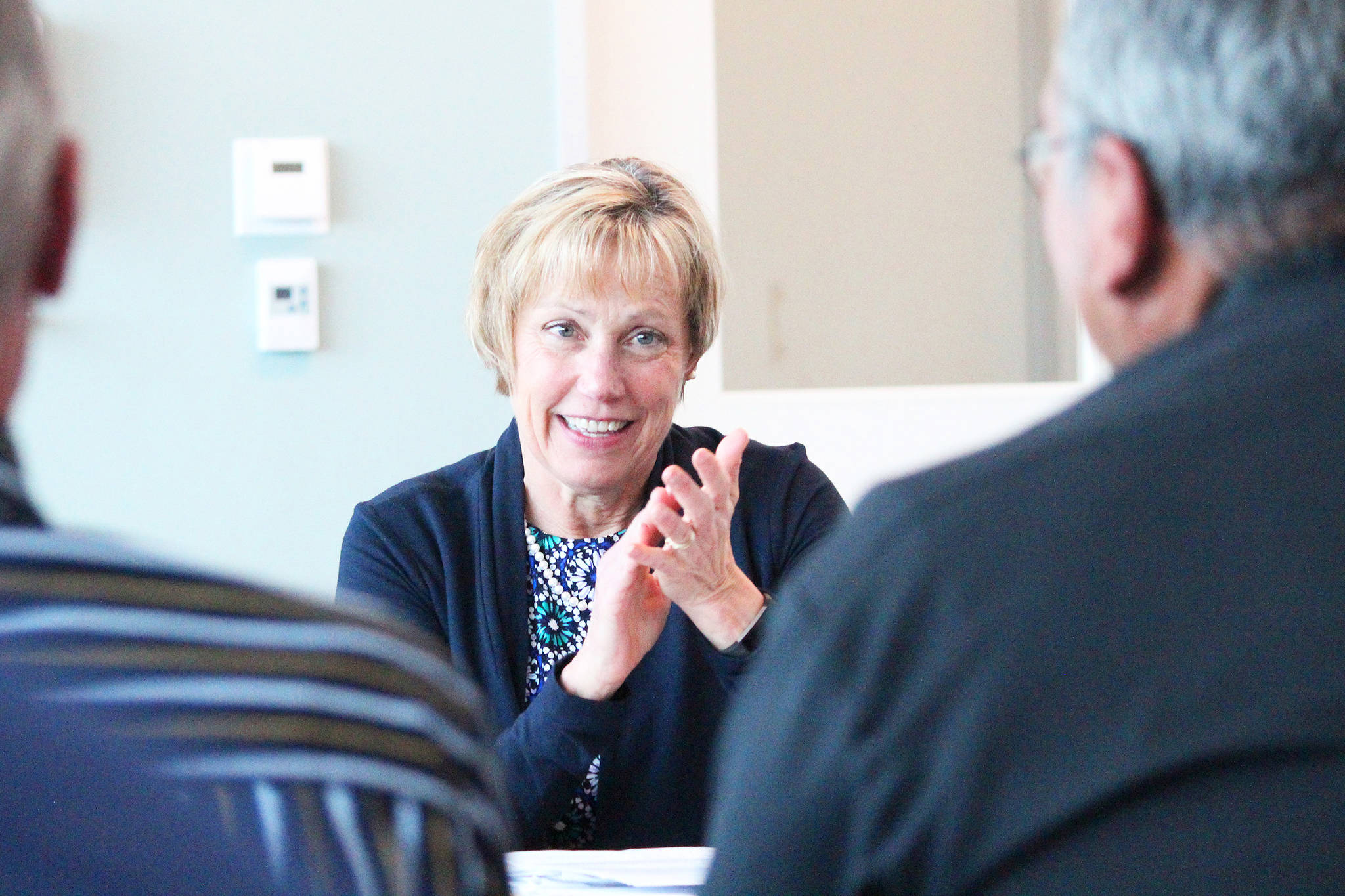
Kenai Superior Court Judge Anna Moran applauds a participant of the Henu’ Community Wellness Court on a recent birthday during a court hearing for the program’s participants Friday, June 23, 2017 at the Dena’ina Wellness Center in Kenai, Alaska. Though the joint therapeutic court between the state and the Kenaitze Indian Tribe has been running since January, it had a grand opening Friday on the tribe’s campus in Old Town Kenai. (Megan Pacer/Peninsula Clarion)
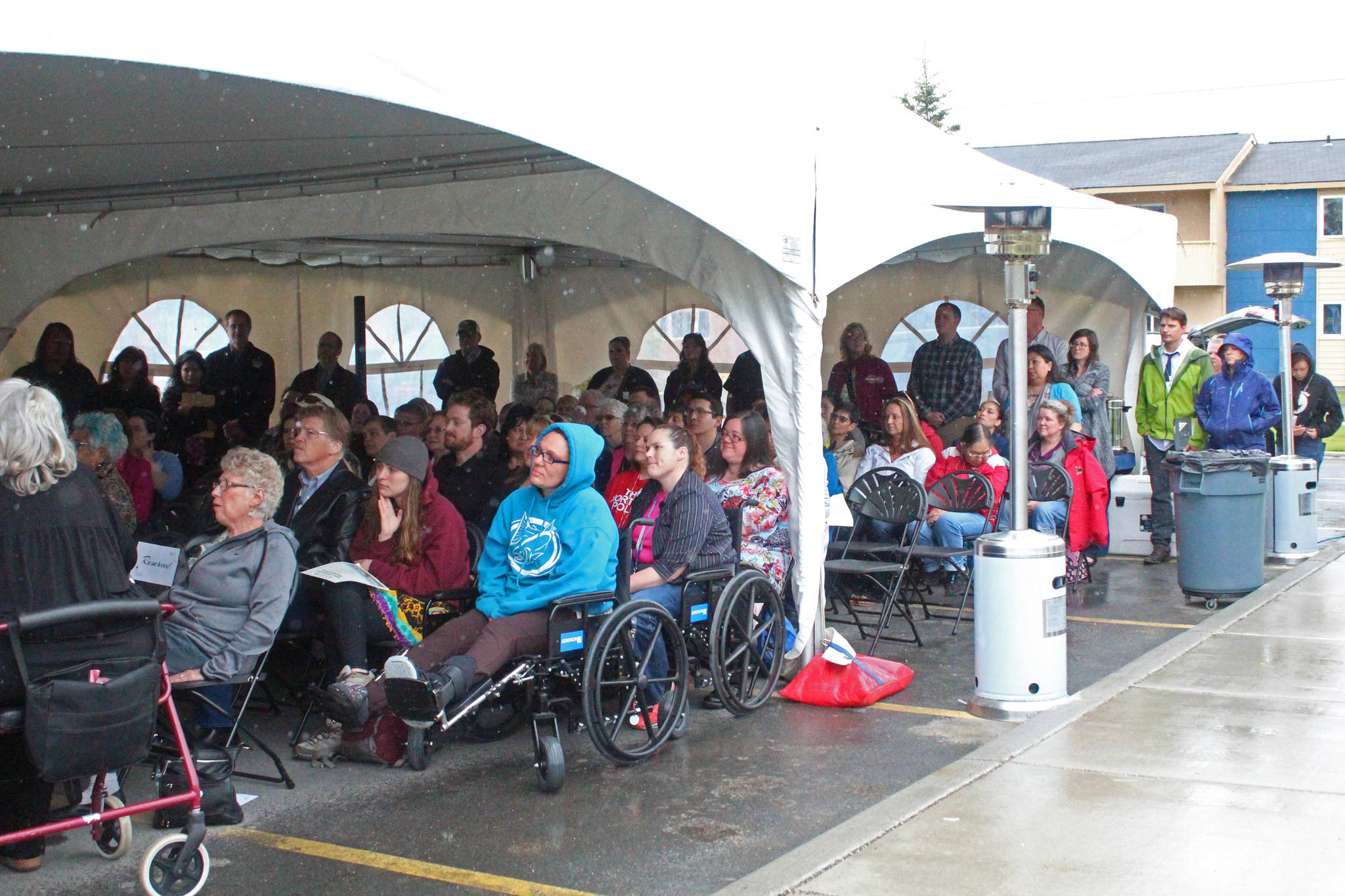
Onlookers keep dry under a tent during the grand opening of the Henu’ Community Wellness Court on Friday, June 23, 2017 on the Kenaitze Indian Tribe’s campus in Kenai, Alaska. Thought the joint therapeutic program run by the tribe and the Alaska Court System has been up and running since January, the program had its debut to the public Friday in Old Town Kenai. (Megan Pacer/Peninsula Clarion)
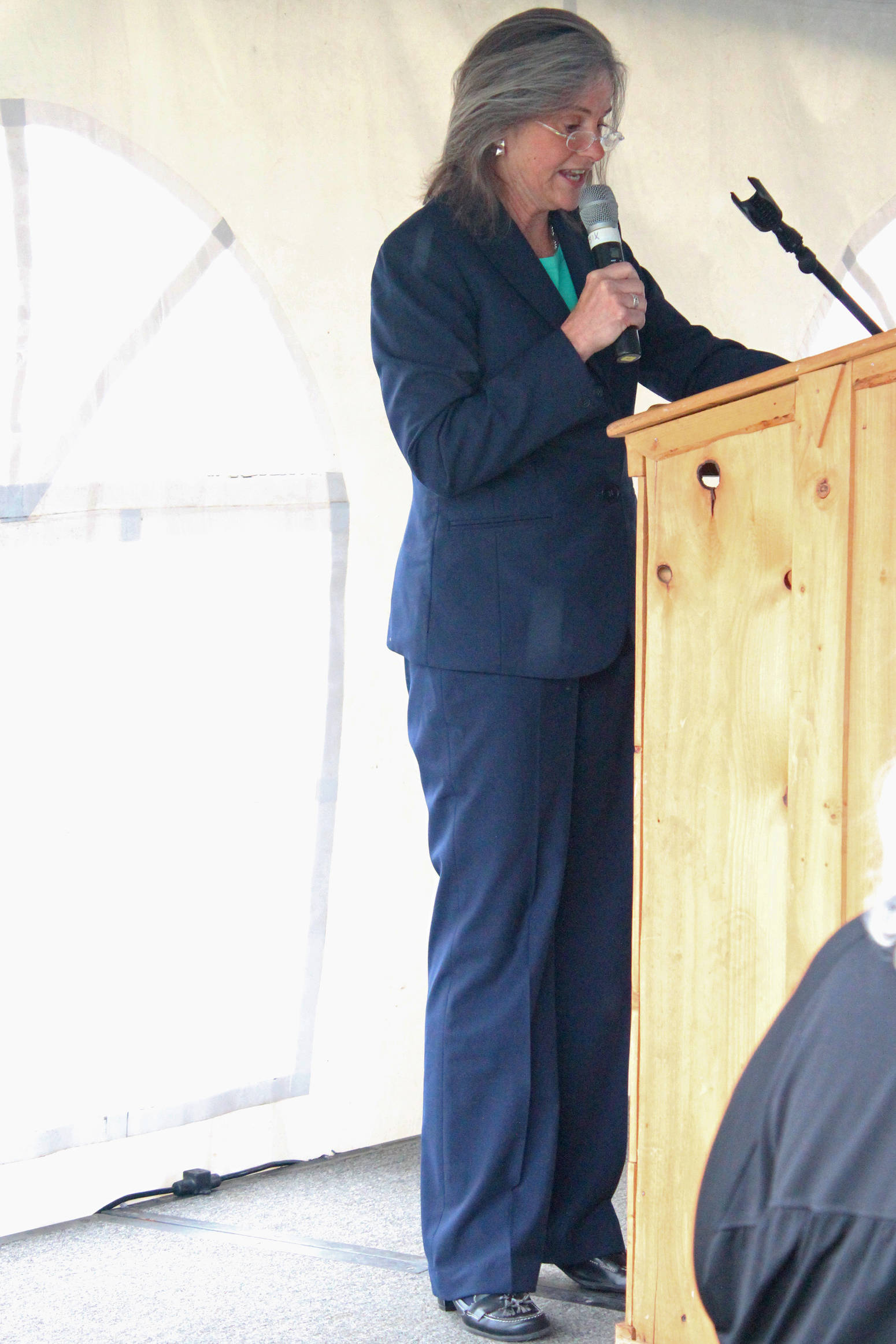
Judge Korey Wahwassuck, a member of the State of Minnesota Ninth Judicial District Court, speaks to a crowd at the grand opening of the Henu’ Community Wellness Court on Friday, June 23, 2017 at the Kenaitze Indian Tribe’s campus in Kenai, Alaska. Wahwassuck is the co-founder of the first joint court system under both tribal and state jurisdiction in the country, and helped the creators of the Henu’ court make the therapeutic program a possibility. (Megan Pacer/Peninsula Clarion)
