
Local governments and nonprofits are working to understand the possible impacts of a pause on grants and loans disbursed by the federal government that was announced late Monday night, even after the order was seemingly rescinded on Wednesday.
A memo by the acting Director of the Federal Office of Management and Budget dated Jan. 27, first reported late Monday night by independent journalist Marisa Kabas, says the U.S. government provided $3 trillion in financial assistance in fiscal year 2024 — and that all grants, loans and other financial assistance will be paused until they can be reviewed for adherence to “Administration policies.” Federal agencies “must temporarily pause all activities related to obligation or disbursement of all Federal financial assistance,” by Feb. 10 and until that review can be completed.
On Wednesday, another announcement by the OMB said that the Monday memo had been rescinded, but U.S. President Donald Trump’s Press Secretary Karoline Leavitt wrote on X, formerly known as Twitter, that “This is NOT a rescission of the federal funding freeze,” that only the memo had been rescinded and that the president’s orders on federal funding “remain in full force and effect, and will be rigorously implemented.” Per New York Times reporting, the federal government is expected to move forward with evaluating funding that doesn’t align with Trump’s priorities.
In a Facebook post Wednesday, U.S. Sen. Lisa Murkowski shared the OMB memo rescinding the Monday order, but said there was still uncertainty regarding the some federal funding — encouraging Alaskans to reach out to her office if they identified any projects or services that were still on hold.
“Some projects may still be impacted by prior executive orders, and we are seeking clarity on what exactly remains in limbo,” she wrote.
Scrambling for answers
The Monday night memo triggered a flurry of activity on Tuesday, with nonprofits, cities and government officials working to understand what a pause might mean for local projects and services.
The State of Alaska and many government and nonprofit entities on the Kenai Peninsula count federal funding as a significant part of their revenue. The state’s budget for the current year describes more than 40% of all revenues as coming from federal sources.
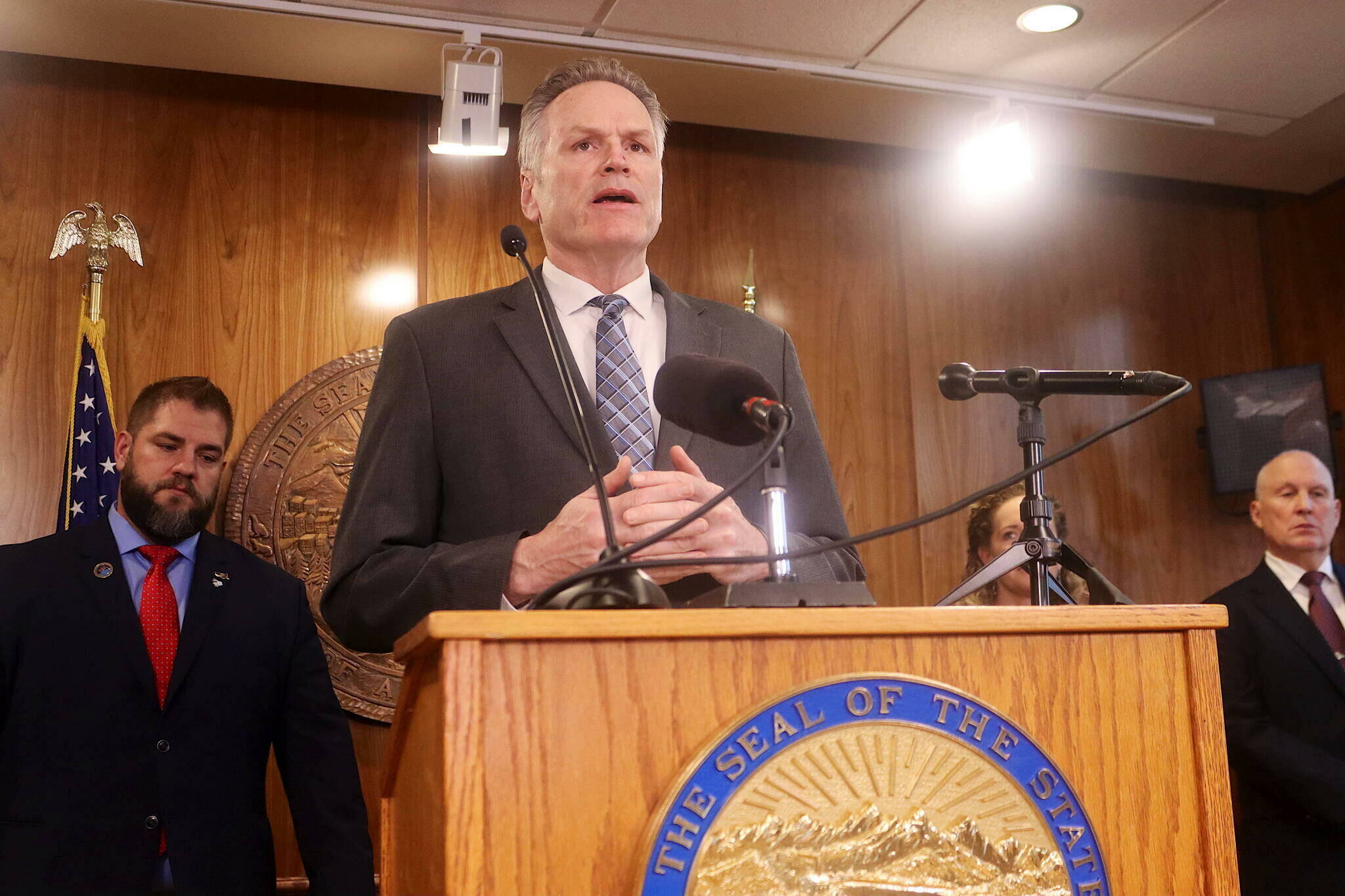
The governor’s office did not respond to questions Tuesday about what a pause might mean for Alaska or its programs and projects. In a provided statement, the governor’s office wrote that the federal OMB had issued a pause on federal grants, loans and financial assistance but that “it is our understanding” that programs providing direct benefits to individuals are not paused and that the OMB is working “quickly” to evaluate programs.
“We are awaiting further guidance from federal OMB and continuing to assess potential impacts as further information is released,” they wrote.
As the governor’s statement says, a second memo by OMB published Tuesday says that programs that provide “direct benefits to Americans” are “explicitly excluded from the pause,” citing specifically Medicaid, Medicare, SNAP and other programs like rental assistance and Pell grants.
Despite that claim, reporting by the New York Times says that the online portal through which state Medicaid departments receive federal funding temporarily stopped working on Tuesday. Times reporting says also that a federal judge temporarily blocked the order in response to a lawsuit filed by Democracy Forward, with a permanent decision expected Feb. 3. Attorneys general in 22 states and the District of Columbia have also filed suit against the order.
In a statement, U.S. Sen. Dan Sullivan wrote Tuesday that the pause “is more limited in scope than some initial media reports suggested, but I still have concerns on how it can negatively impact Alaskans.”
Locally, Kenai Peninsula Borough School District Superintendent Clayton Holland said on Tuesday he was notified of the announcement late Monday night and quickly got in contact with both the State Department of Education and Early Department and the office of Sen. Murkowski as the district waited for more information.
A loss of federal funding could impact a number of district programs and people, he said, specifically related to programs like Students in Transition or some special education programming.
Despite that uncertainty, Holland said he didn’t want anyone to panic. The district always has to be ready for sudden changes and is awaiting more information, he said.
A letter from Holland to all district staff, sent Tuesday and provided to the Clarion by Holland, reads “we will continue to monitor this situation and provide additional information as it becomes available.” The letter includes a statement from Murkowski’s office outlining some programs, like Title I, that weren’t expected to be affected by the order.
Kenai’s acting City Manager, Dave Ross, said Tuesday that Kenai, similarly, is “gathering all relevant information as it becomes available.” He said that they don’t have any specific details about how the decision might impact Kenai’s programs and services, but the city will evaluate impacts, adapt as needed and provide updates.
Questions remain
Even after the freeze order was rescinded on Wednesday, local organizations still said they were working to understand what changes to federal funding could mean.
Soldotna City Manager Janette Bower on Wednesday, after the order was rescinded, said Soldotna is still waiting for more information. When the announcement came Monday night, she said, “it was a whirlwind” as the city worked to understand which projects might be affected and who in the wider community might be affected — “almost everyone.”
Soldotna is still awaiting federal disbursement of funding for a variety of grants, including for rehabilitation of its airport runway, for bulletproof vests at Soldotna Police Department, for cybersecurity improvements, for improvements to its water treatment plant, and for ongoing construction of the Soldotna Field House. Bower said Wednesday that the city is in contact with its federal lobbyists and has been assured by the United States Department of Agriculture that the funding for the field house should be unaffected, but that the situation could change as more executive orders are announced.
“We’re just continuing to watch,” she said.
Peter Diamond, executive director for the Kenai Peninsula Food Bank, said Wednesday that federal grants fund critical programs at both the local and state levels — that a freeze might jeopardize “continuity of these services.”
The Alaska Food Policy Council, a Homer-based statewide advocacy group for Alaska food security, in a Tuesday press release wrote that the move could threaten Alaska’s economy and food systems.
“Federal funds are essential for a range of programs, including some that provide food security to tens of thousands of Alaskan children and families,” the release reads. “These funds are critical for everything from school meals to agricultural research, and this funding freeze risks destabilizing them.”
A joint statement issued Tuesday by the Alaska Council of School Administrators and Association of Alaska School Boards, similarly, says that the “abrupt freeze exacerbates existing uncertainty surrounding federal funding for education.”
“Without predictable and reliable funding, school districts will face immense difficulty in planning and delivering the high-quality education our children deserve,” the statement reads.
At Kachemak Bay Family Planning Clinic, CEO Claudia Haynes on Tuesday said they were waiting for more information. In a Tuesday press release, the Alaska SeaLife Center said a freeze would represent a challenge and reaffirm a necessity for the center to diversify its funding sources to ensure stability of its work. The LeeShore Center in its annual report for the last fiscal year describes 22% of its total revenue as stemming from federal grants.
The Clarion and the Homer News reached out to several other city and borough government officials, as well as other nonprofits for this story and did not receive a response before publication.
This story was updated on Wednesday, Jan. 29 to incorporate further information and with additional comment from the City of Soldotna and Kenai Peninsula Food Bank.
Homer News reporter Chloe Pleznac contributed reporting to this story. Reach reporter Jake Dye at jacob.dye@peninsulaclarion.com.
