
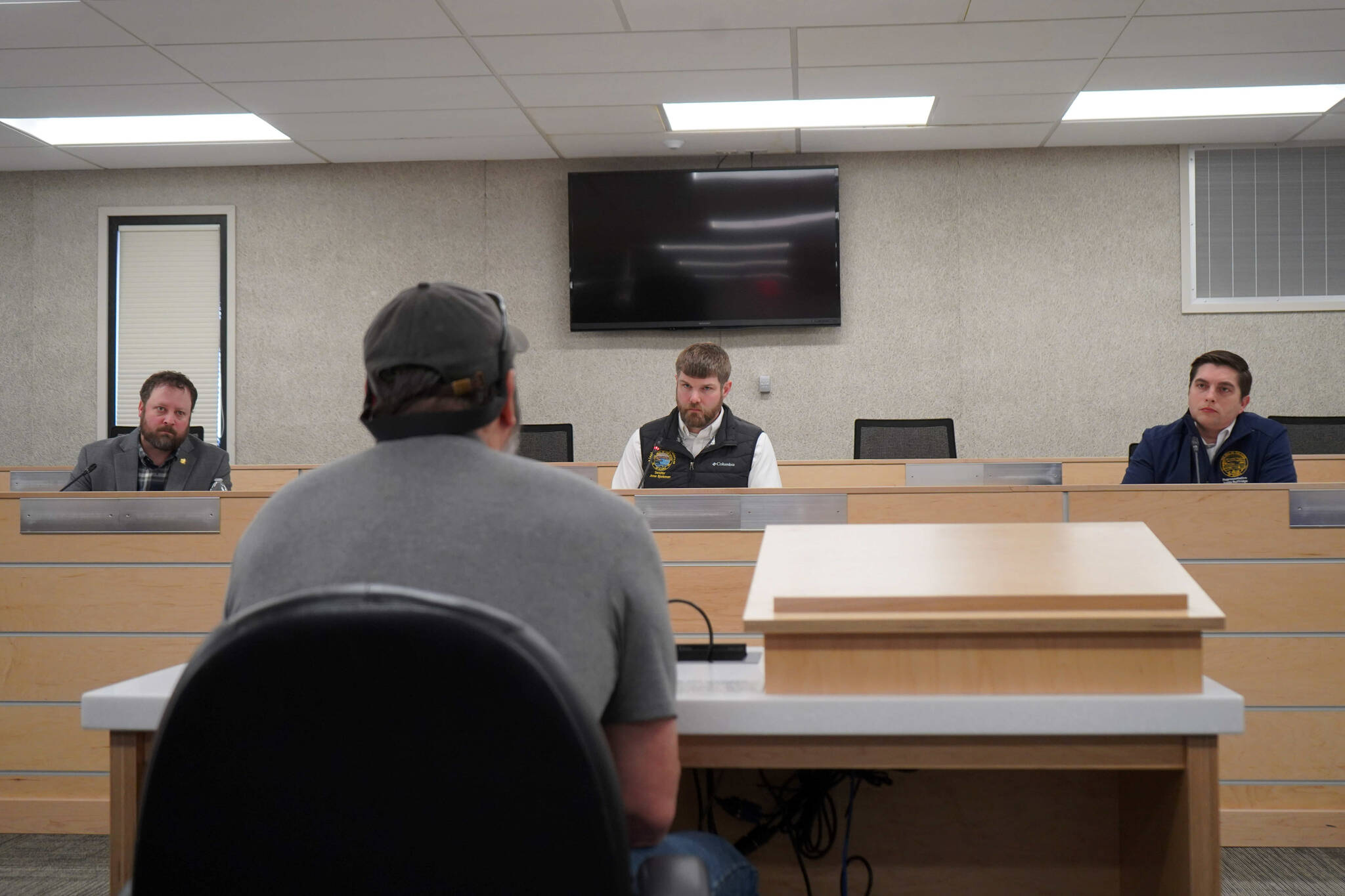
While the ongoing conversation around state education funding dominated last month’s town hall with three of the Kenai Peninsula’s state legislators, many attendees came with concerns about local fisheries. Sen. Jesse Bjorkman, R-Nikiski; Rep. Justin Ruffridge, R-Soldotna; and Rep. Bill Elam, R-Nikiski, fielded questions and shared their perspectives on fishing regulations, the east side setnet fishery and trawling.
Donna Anderson asked the legislators to do what they can to bring the State Board of Fisheries to the central Kenai Peninsula. The board in October chose not to come to Soldotna for their 2027 meeting, and they haven’t met locally for the Upper Cook Inlet Finfish meeting since 1999.
Norm Darch, a Salamatof Beach setnetter, said he was concerned by the board’s actions in March, when a board-generated amendment to a proposal “diverged pretty drastically” from the original language, and wasn’t published or noticed in time for people not already in Anchorage for the meeting to participate in.
“It was voted down,” he said. “But regardless, I think a full public process wasn’t served there.”
Elam said that he didn’t want to see any specific user group “singled out,” referring to comments made by board member Greg Svendsen in March where he said he wanted to see all gillnets removed from Cook Inlet. He said he’d also had “countless conversations” about bringing the board to Soldotna, but that he’d been told “we have a knack for getting rowdy.” Board of Fisheries Executive Director Art Nelson told the Clarion in September that he didn’t consider any potential or perceived threats of violence as a factor in the board’s repeated decision not to come to the central Peninsula.
Those conversations, Elam said, would continue.
Monte Roberts, a Kenai River guide fisher, called on the legislators to find ways to empower local volunteer boards to be stronger participants in policymaking. He sits on the Kenai River Special Management Area Board and the Kenai/Soldotna Fish and Game Advisory Committee, and chairs the Kenai River Guide Academy Board.
“When we donate hundreds of hours and then don’t feel like people listen to it, we find other things to do,” he said.
That testimony came only a couple of weeks after the KRSMA Board had called on Alaska State Parks to “reset” its relationship with the board and involve it in policy discussions. That discussion followed an outcry by Kenai River guides about two stipulations added to their permits this year that would bar guide fishers from the Eagle Rock Boat Launch this summer — which was revoked — and add a “revocable at will” clause within a list of legal requirements. The revocable at will language, as of April 8, is still included in the stipulations published by state parks.
Greg Brush, another Kenai River guide fisher, spoke about the Eagle Rock development, which he says will be brought up again by State Parks Director Ricky Gease.
“Can we count on you to help us with state entities that unnecessarily limit access to a publicly owned resource?” he asked.
Lisa McDonald, of Soldotna, said she wanted to ensure Eagle Rock remained open for all people to access the Kenai River. It’s “the only safe space we have for our disabled, our elderly and our kids to access that river,” she said.
Ruffridge said that he was happy to work with Brush and with Roberts to oppose State Parks’ effort to temporarily bar guides from Eagle Rock and to add a “revocable at will” clause in the stipulations on their guiding permits.
“The stipulations that were brought forward did not go through the right public process,” he said.
Specifically, Ruffridge said he would continue to work to see the revocable at will stipulation reversed.
“Anybody here want their state permit to do business to be revocable at will?” he asked the 100 attendees of the town hall. None raised their hands.
“That’s what I thought.”
A couple of attendees asked the legislators to stop or change trawling in the Gulf of Alaska, which has been under scrutiny in recent years for the high number of king salmon reported as bycatch amid declines in king salmon abundance in rivers across the state. Among those who spoke against trawling was setnetter Colby Engstrom.
“We’re all having to lose revenue,” he said. “We’re having to do gear changes while out of state interests are pillaging offshore. They’re destroying our runs and we’re the ones that are left holding the ball for it.”
Bjorkman said he’s “getting closer” to finding a solution for legislation to pursue on trawling. There are biological concerns, he said, and the answer is more complicated than banning the whole industry.
“If we say ‘OK, we’re going to ban trawlers today in state water’, that means that we are not harvesting a whole lot of pollack and a whole lot of cod,” he said. “What do pollack and cod eat? They eat little salmon.”
Ruffridge also said he’s focused on “access issues” to local fisheries. Local setnet fisheries have been closed entirely in the last two years and are set to be closed again this year because of the steep decline in returns of Kenai River king salmon. Several proposals by setnetters to harvest sockeye salmon while taking steps to avoid killing kings have been rejected by the board. Kenai River king salmon were named a stock of management concern in 2023 and in 2024 were placed under an action plan barring setnets from the water if fewer than 14,250 large kings are projected for the river. Only 6,600 were counted last year.
“I can’t imagine if the State of Alaska came into my business and said you are no longer allowed to do business,” he said. “Our governor does not want setnets in the water in Cook Inlet. Really, he doesn’t want nets in the water in Cook Inlet at all. That’s a problem.”
Bjorkman echoed that statement, saying “all user groups have value in our fisheries,” but also that the fish “have to come first as priority one.”
“When we have weak stocks and concerns about fish returns, we need to protect those returns,” he said. “Also, we need to provide opportunity when it makes biological sense to provide opportunity.”
The loss of economic activity from commercial setnetters and king salmon fishing guides on the Kenai Peninsula, is “huge.”
For more information about the three legislators, visit “Senator Jesse Bjorkman,” “Representative Justin Ruffridge” and “Rep. Bill Elam” on Facebook.
Reach reporter Jake Dye at jacob.dye@peninsulaclarion.com.
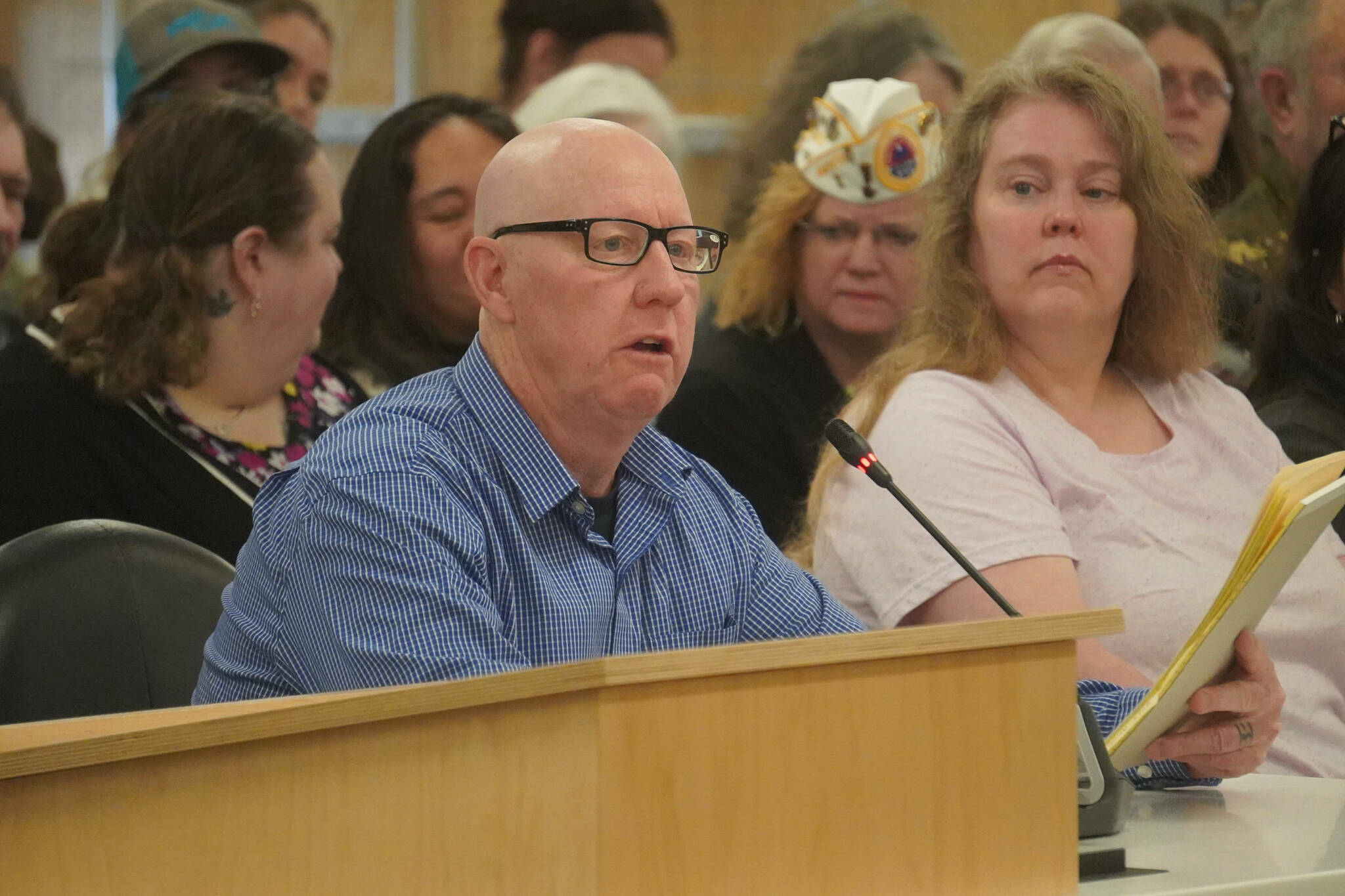
Greg Brush speaks during a town hall meeting hosted by three Kenai Peninsula legislators in the Kenai Peninsula Borough Assembly Chambers in Soldotna, Alaska, on Saturday, March 29, 2025. (Jake Dye/Peninsula Clarion)
