
Gov. Mike Dunleavy’s proposal for two special sessions of the Alaska Legislature we’re met with mixed reaction from lawmakers Friday, who agreed more time was needed on the budget but wanted time to consult constituents on proposed constitutional amendments.
Before the announcement lawmakers had been rushing to pass a budget for the state by May 19, the statutory end of the regular session. Senate President Peter Micciche, R-Soldotna, told reporters Friday he still hopes to hear a budget bill on the floor Sunday or Monday.
House Speaker Rep. Louise Stutes, R-Kodiak, said the House Majority Coalition had not yet had time to discuss the matter in a caucus meeting.
Dunleavy announced two special sessions Thursday afternoon, one starting May 20, effectively extending the current session another 30 days. He also called a second session for August, at which time the state expects better guidance on spending rules for American Rescue Plan Act funding.
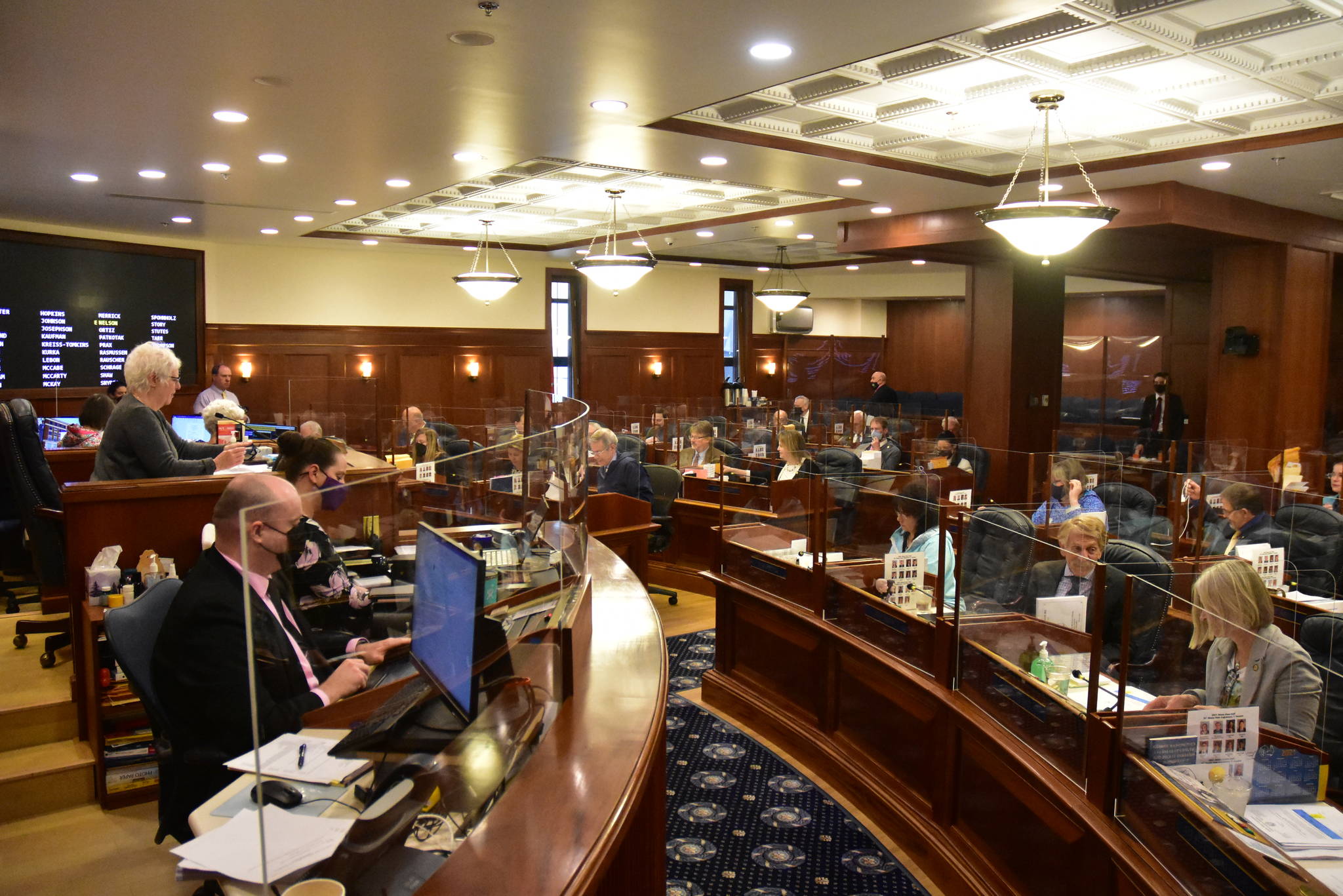
Both special sessions would take place in Juneau. Masking was made optional at the Alaska State Capitol Friday, but other health mitigation policies like temperature screening will remain, according to an email from Santé Lesh, deputy executive director of the Legislative Affairs Agency.
The governor has also called for lawmakers to consider the three constitutional amendments Dunleavy has proposed for the past several legislative sessions. Together, Dunleavy said those amendments will set Alaska on a more stable fiscal path and resolve longstanding issues like the Alaska Permanent Fund dividend.
[Dunleavy calls special sessions for budget, relief funds]
The governor’s calls for special sessions also limit the scope of what lawmakers are able to do. For the May special session, Dunleavy directed lawmakers to work on the budget, PFD and his proposed amendments. The August session directs lawmakers to work on the amendments but also appropriations for federal relief money.
Dunleavy proposed changes to one of his amendments Thursday in a news conference flanked by a large number of Republican lawmakers and said several lawmakers had moved on their positions regarding divisive issues like the PFD. A number of Republican lawmakers, including the governor, have advocated strongly that the state follow a formula for paying PFDs set out in statute, but on Thursday Dunleavy and other lawmakers said they were willing to step away from that demand.
Dunleavy is proposing combining the Earnings Reserve Account and the principle of the Alaska Permanent Fund into one account, the increased value of which would earn interest to pay for state government and PFDs.
Under the governor’s proposal the state would take 5% of the market value on the earnings on that account each year and split that draw evenly between state spending and PFDs. But projections from the Legislative Finance Division show that would still leave over $1 billion in deficit spending, meaning the state must make additional cuts to state services or look for new ways to generate revenue.
Additional revenues are part of the call for the special session in August, as are more constitutional amendments and federal relief funds.
Speaking to reporters Wednesday, Dunleavy said he expected the process to involve a lot of give and take on the part of lawmakers and Alaskans.
Speaking on the floor of the House Friday, Rep. Ivy Sponholz, D-Anchorage, thanked the governor for calling the special session and revising his position on the statutory formula.
“I know that was hard and probably will come at great political cost to him, but the risk of not solving this problem is great,” Sponholz said.
Contact reporter Peter Segall at psegall@juneauempire.com. Follow him on Twitter at @SegallJnuEmpire.
