
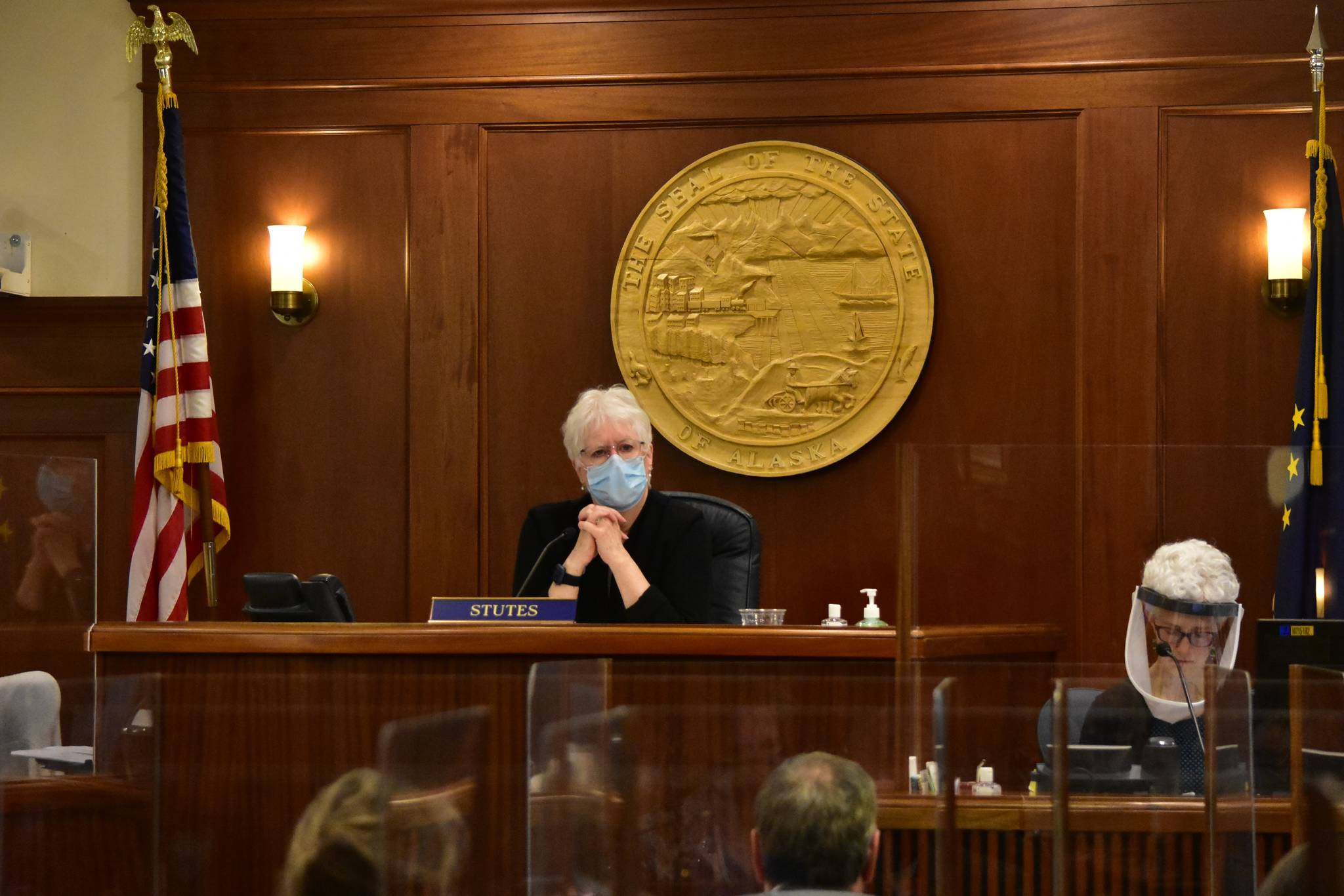
Debate among state lawmakers over whether to issue another disaster declaration turned into an hourslong dispute over the direction the state should take in combating the COVID-19 pandemic.
The House of Representatives was on the floor most of Thursday to debate amendments to a bill declaring another emergency. Gov. Mike Dunleavy let the state’s emergency declaration lapse on Feb. 15, after using executive power to extend the order twice. Since the lapse, health care groups and some municipalities have been asking the state to reinstate the declaration in order to have more flexibility to fight the pandemic.
While the bill itself originally came from Dunleavy when he submitted disaster declaration bills at the beginning of the legislative session, he has since said such an order is no longer necessary.
Rep. Steve Thompson, R-Fairbanks, offered an amendment that would have removed references to a broad disaster declaration and enumerated specific provisions he said would allow the governor to effectively combat the pandemic
Dunleavy said in a March 24 letter that an emergency declaration wasn’t necessary to maintain the various state efforts to combat the pandemic such as testing and vaccinations. Republican lawmakers repeatedly referenced the letter in support of the amendment, but many also voiced the belief declaring another emergency sent the wrong message to Alaskans.
“I refuse to normalize a state of emergency,” said Rep. Sarah Vance, R-Homer, adding that the state should focus on reopening its economy.
Democrats and Independents countered that the pandemic remains ongoing, citing the recent rise in the state’s test positivity rate, and said the emergency declaration simply provided tools to the governor he could use or not use at his discretion.
“While there has been some improvement, the pandemic very much continues,” said Rep. Tiffany Zulkosky, D-Bethel. “Now is not the time to dismantle resources.”
Members of both camps argued their respective proposals would help boost the economy. Democrats cited the support of business groups and others who see the flexibility provided by a declaration as part of the state’s economic recovery. Rep. Liz Snyder, D-Anchorage, and other Democrats said the declaration would send a strong message to tourists and businesses about the stability of Alaska during the pandemic.
Rep. Bryce Edgmon, I-Dillingham, said that Michigan is the only other state without a disaster declaration.
But Republicans said the opposite is true. Rep. Ben Carpenter, R-Nikiski, said declaring another disaster would send the message the situation in Alaska is deteriorating. Several Republican lawmakers questioned how long a state of emergency was expected to continue.
[AG defends pandemic emergency orders during hearing]
“The disaster mentality itself is damaging,” said Rep. James Kaufman, R-Anchorage. “That mentality may be as damaging as anything that could happen or has happened. To return a state of disaster would irrevocably harm the state.”
Reps. Chris Kurka and David Eastman, both Wasilla Republicans, offered a series of amendments that would have prevented the mandating of vaccines for employment and discrimination for those who decline a COVID-19 vaccine and liability for businesses that did require vaccines. Amendment 10 from Eastman would have made transportation companies such as airlines legally liable for injury resulting from receiving the vaccine if they were to require vaccines from transportation.
All those amendments failed along caucus lines but an amendment from Rep. DeLena Johnson, R-Palmer, preventing any federal pandemic relief funds from being used for non-medically necessary abortions, did pass. Supporters of the amendment said while there were no provisions in federal relief funds specifically for abortion, there was similarly no language preventing it.
Thursday’s debate was only the bill’s second hearing, and it was held until Friday morning for a final vote on the floor. If the bill passes, it will be sent to the Senate whose leadership has expressed reservations against enacting another declaration.
Senate President Peter Micciche, R-Soldotna, previously told the Empire he wanted to send a bill to the governor’s office that would get signed.
• Contact reporter Peter Segall at psegall@juneauempire.com. Follow him on Twitter at @SegallJnuEmpire.
