Larger commercial coho harvest sparks concern in Mat-Su
Published 3:13 am Wednesday, August 23, 2017
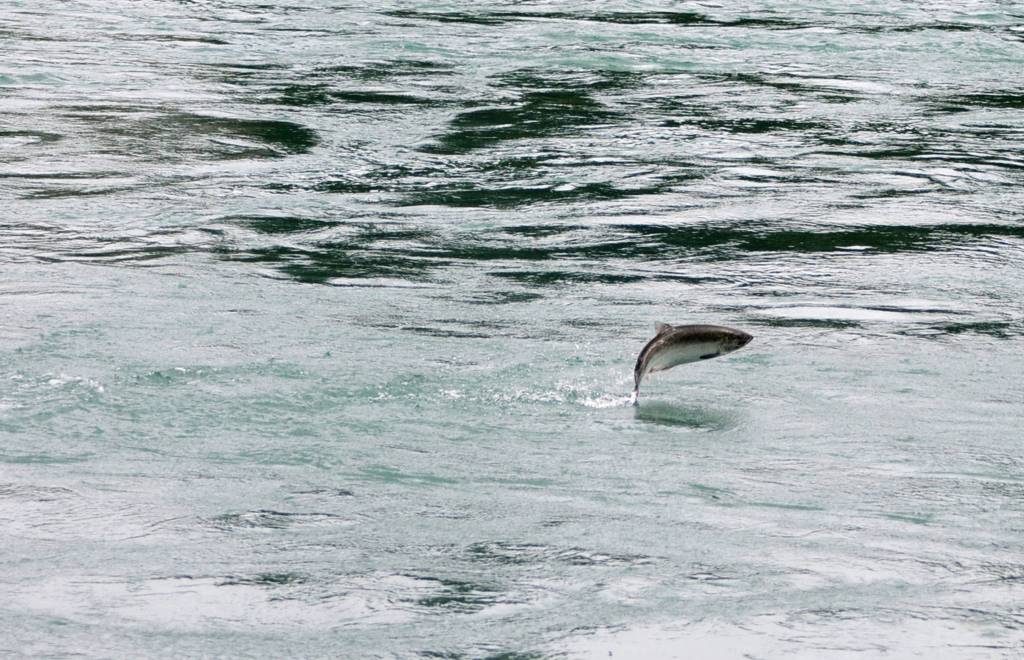
Upper Cook Inlet’s drift gillnet and east side set gillnet commercial fishermen saw a larger harvest of coho than in recent years this season.
Not all commercial fishing is done for the season in the management area — setnetters in the northern district, on Kalgin Island and some drift gillnetters on the west side of Cook Inlet are still operating — but the vast majority of commercial fishing ended Aug. 15. So far, commercial fishermen have harvested about 2.5 millon salmon altogether, 1.8 million of those being sockeye salmon, far and away the most common species in the commercial fishery.
However, commercial fishermen also saw a larger than usual harvest of both silver and chum salmon this year. As of Monday, 255,811 silvers and 237,659 chums had been harvested, according to the Alaska Department of Fish and Game’s inseason harvest data. Both of those totals are above the averages in the most recent 10-year period, the chums significantly so.
In the last 10 years, commercial fishermen have harvested an average of 170,000 coho, according to the 2016 annual management report for Upper Cook Inlet. However, in the period from 1966–2015, the average was about 292,000 coho per season, according to the report.
For chums, the most recent 10-year average harvest is about 136,000 fish. The 2017 harvest so far is not quite double that, with the drift fleet in the central district alone taking about 163,946 chums.
Commercial fisheries area management biologist Pat Shields said in a previous Clarion interview that a large coho harvest in the commercial fishing fleet can mean a large abundance of coho arriving to the inlet and be a good sign for abundance in a given year. However, there has been concern for coho passage to the stream systems in the Matanuska-Susitna Valley, especially the Little Susitna River. The Fish and Game commercial fisheries managers restricted the setnetters in the northern district from their regular 12-hour periods to six hours to allow for additional coho salmon passage, according to an emergency order issued Monday.
The Mat-Su Fish and Wildlife Commission, a borough committee on Fish and Game issues, planned to meet Tuesday night with Fish and Game Commissioner Sam Cotten and Division of Sportfish Director Tom Brookover to express concerns about the coho runs to the valley.
Passage has improved in the last few days — the Little Susitna River weir registered 7,830 coho as of Monday, about 2,500 fish shy of the lower end of its escapement goal of 10,100–17,700 coho. The Deshka River, which had a goal of 10,200–24,100 coho established this year, has already exceeded that goal, with 34,385 coho past the weir as of Monday. Jim Creek has also exceeded its escapement goal of 450–1,400 with 1,437 coho as of Monday, and Fish Creek is within the escapement goal of 1,200–4,400 coho with 3,508 counted as of Monday, according to Fish and Game.
But even with the coho numbers doing better, the Mat-Su officials still wanted to express concerns about how the valley’s fisheries are managed as compared to the Kenai Peninsula’s fisheries, said borough Public Affairs Director Patty Sullivan.
“We were very impressed with the Deshka, and this is the first year the Deshka has had a goal,” she said. “Our Fish and Wildlife Commission had to beg the (Board of Fisheries) to install the escapement goal. It’s things like that — it’s management tools that the north feels we aren’t given, or they’re diluted or taken away.”
The Mat-Su Fish and Wildlife Commission and borough officials lobbied the Board of Fisheries hard at its meeting in February and March to maintain the restrictions on the drift gillnet fleet, keeping it out of the center of the inlet to ensure that coho are able to pass north. The board loosened the restrictions on the drift fleet for one 12-hour period district-wide in July if the sockeye run to the Kenai River is predicted to be greater than 2.3 million fish, which the Mat-Su Fish and Wildlife Commission strongly opposed. Sullivan said the commissioners planned to ask Cotten and Brookover Tuesday about their support for the corridor fishing restrictions.
“Our argument is, ‘Why should conservation be a gamble and surplus harvest be a sure thing?’” she said.
Reach Elizabeth Earl at elizabeth.earl@cmg-northwest2.go-vip.net/peninsulaclarion.