
Less than a month after wrapping up conversations about school closures for the current school year, the Kenai Peninsula Borough School District began talks during a Monday work session about which schools might be closed next year.
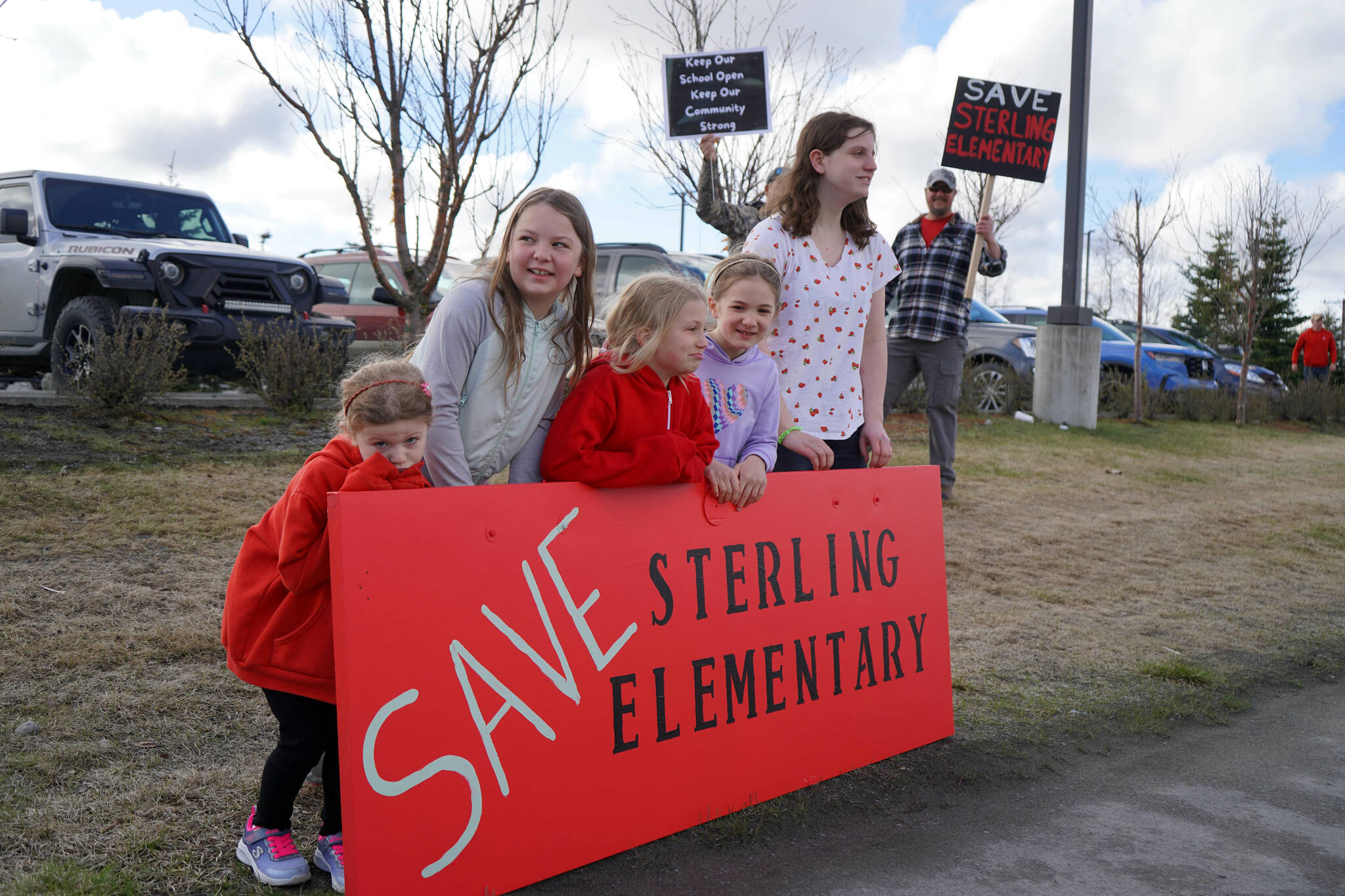
This year, the district closed Nikolaevsk School and very nearly closed Sterling Elementary School. Those decisions came toward the end of the school year — Nikolaevsk was closed in May and Sterling ended the school year with its closure included in a planned budget. KPBSD Board of Education President Zen Kelly said, in opening the conversation much earlier this year, he wants to see those discussions approached “a little bit differently.”
Kelly said the board will, over the next few months, develop a “framework” of key considerations to guide closure decisions. A presentation to the board by KPBSD Director of Planning and Operations Kevin Lyon says some of those considerations could be focusing closures in areas with more than one school, considering impacts to students like long bus rides, evaluating enrollment trends and weighing various costs like facility condition, transportation and revenue.
Where last year district leadership presented a list of nine schools that could be considered for possible closure, this year the district has begun with a list of schools that “legally” can be closed. Some of the schools considered for closure last year, like Moose Pass Elementary School, are no longer considered a legal option for closure. Lyon said the district can’t close a school — unless their enrollment falls below 10 students — in an area where there’s not year-round road access or in areas more than 20 road miles from the nearest other school.
The list of schools that can be legally closed includes almost all of the schools in Kenai, Soldotna, Homer, Nikiski and Seward. It does not include the district’s smallest schools in communities like Cooper Landing, Hope and Tyonek. It also does not include any of the district’s charter schools, which are considered differently.
Presenting the full suite of options for closure, Lyon said, doesn’t represent the district’s capacity. “Strictly by what the law says,” he said, Kenai Central High School could house all of Kenai’s students K-12. That’s not a realistic option — he pointed instead to moves like Nikiski’s combining of middle and high school students in one building.
Because schools are funded and staffed based on the number of students in attendance, Lyon says it’s better to have a school that’s a little too full than an empty school that can’t pay its utilities. He gave Nikolaevsk as an example. It was built for roughly 200 students and only had an enrollment of 20 by the time it closed.
KPBSD Superintendent Clayton Holland echoed that point, saying that closing and combining schools comes with benefits because more students in a building means more funding and staff — allowing students to get access to more opportunities and programs that they might not otherwise.
Charter schools, though not eligible for closure, are a part of the conversation, Kelly said. As the KPBSD looks to close its schools this year, it will hear a call to open a new charter school in Nikolaevsk and to expand Aurora Borealis Charter School. The district is also welcoming a new charter school this year in Tułen Charter School. Those facilities necessarily affect the enrollment of surrounding schools. Charter schools, Kelly said, have “a real world impact on our brick-and-mortar schools that exist.”
Similarly, board Vice President Jason Tauriainen pointed to the district’s open enrollment policies as potentially erosive to some schools.
“We’ve crippled some of our schools because some of them are close enough for people with means to drive their students,” he said. “Then the ones that don’t have means are left. Then their schools aren’t able to offer the programs that they used to offer.”
The board didn’t make any decisions on Monday, but Kelly said talks would continue at each board meeting for the next few months. He said communities should be a big part of the ongoing conversations and that some communities need to work to bring students into their buildings to reverse the “snowball effect, death spiral, whatever you want to name it.”
The Kenai Peninsula Borough School District will meet next on Sept. 8 in Seward. Agendas and a livestream link can be found at the KPBSD BoardDocs website.
Reach reporter Jake Dye at jacob.dye@peninsulaclarion.com.
