
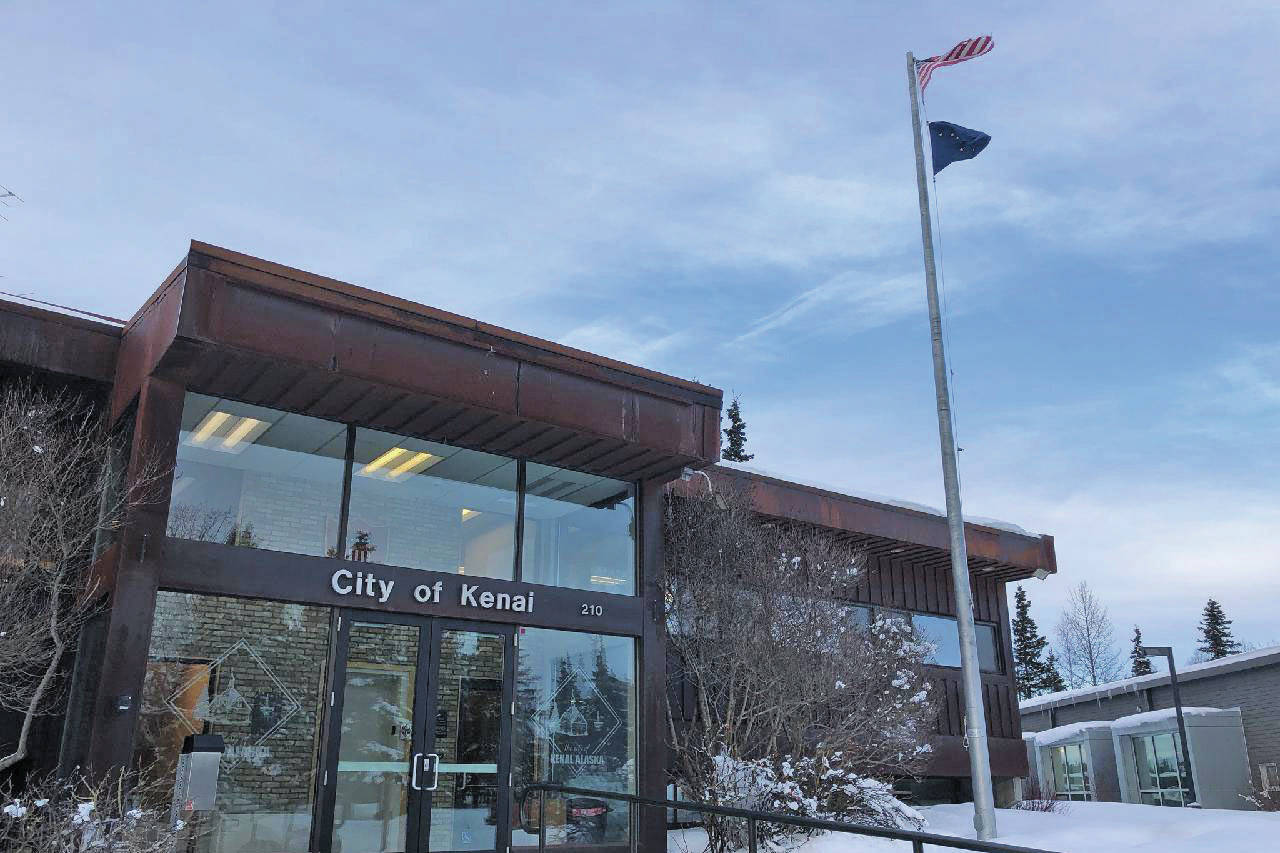
While the Kenai City Council prepares to discuss and adopt the City of Kenai’s 2022 budget, the city’s finance director says he’s optimistic for Kenai’s financial future.
The city is projecting just over $38.64 million in total government revenue, with more than 30% of that coming from taxes. They’re expecting just under $50 million in government expenditures, which includes about $13.2 million in appropriations for capital projects from prior years. FY 2022 refers to the city’s fiscal year beginning on July 1, 2021 and ending on June 30, 2022.
The city anticipates a deficit of about $2.1 million in its general fund, which is an established account used to carry out basic city government activities, such as police and fire protection and administrative services. Most of the approximate $16 million in revenue the city expects will flow into the general fund during FY22 will come from taxes, accounting for about 74% of the fund’s revenue. More than 40% of general fund expenditures in FY22 are expected to go to public safety.
Steady mill rates
The city expects to maintain its mill rate of 4.35, which is consistent with past rates, according to the budget draft. Mill rates are used to figure out how much someone will pay in property taxes during a certain fiscal year. To calculate how much property tax they expect to pay, an individual must divide the mill rate by 1,000 and then multiply that by their property’s taxable value.
For example, someone who owns property in the City of Kenai with a taxable value of $100,000 should expect to pay around $435 in city property taxes in FY22. The Kenai Peninsula Borough has its own mill rate. The city uses revenue generated from property taxes to pay for general government operations, public safety, public works, parks and recreation, senior citizen programs, debt services and capital projects, according to the budget document.
Something incorporated into the city budget, Kenai Finance Director Eubank said, is a “projected lapse,” which refers to the amount of money the city expects they will have leftover at the end of the fiscal year. Eubank said the lapse the city generally anticipates is about 5%, which for FY 2022 would come out to about $800,000.
Special revenue
In addition to the general fund, Eubank said the city has four special revenue funds, which all have their own streams of revenue and annual operating budgets: the Airport Special Revenue Fund, the Water and Sewer Special Revenue Fund, the Personal Use Fishery Special Revenue Fund and the Senior Citizen Special Revenue Fund.
That is in comparison to the city’s Capital Project Funds, where budgets are project-length. Unlike city funds that have annual operating budgets, capital project funds carry over each year and are available until the project is completed. Funds currently allocated for capital projects currently total about $13.2 million, which is reflected in the city’s projected expenditures for FY 2022.
Appropriating funds
The city council is the only group with the authority to appropriate funds and adopt the city budget, which they do on a yearly basis. Money that is not spent by the end of the fiscal year lapses back into fund balance. Money not spent by the end of the fiscal year, Eubank said, is reflected in what is called the fund balance. The amount left in the fund balance helps the city determine whether or not their rates of taxation are excessive or adequate.
“The way we gauge whether those rates are too high or too low is by our fund balance policy and our range,” Eubank said.
That policy, Eubank said, requires the city to demonstrate that the revenue they project to bring in will be enough to pay for the city’s operating expenses. The city council is technically allowed to “deficit spend,” meaning spend money that they don’t have, but it requires a vote of at least five council members to do so.
Not every budget process has a fund balance policy in place, however. The state, for example, does not, meaning they currently are not taking in the revenue necessary to cover their basic operating expenses.
“In order for the state just to provide the minimum level of services that they’ve been providing, they need more money,” Eubank said. “They can’t fund education, health and human services, they can’t fund all of these things, let alone build roads, build bridges, maintain their own buildings, all of these things that are capital in nature. They can’t even keep the lights on.”
The state could eliminate every one of their departments except for the Department of Education and Early Development and the Department of Health and Social Services, Eubank said, and they still would not be able to cover their operating expenses.
COVID-19 impact
A key theme of the document is how the COVID-19 pandemic impacted city operations in FY2021. Among Kenai’s hardest-hit establishments were places that require people to come together, while departments like Parks and Recreation saw more engagement than previous years.
At the airport, a decline in air travel due to the pandemic was exacerbated by the bankruptcy of the Ravn airline last spring. Additionally, the budget document describes struggles to market the airport due to its absence from trade shows and inability to achieve its stated goal of tracking compliance with the Federal Aviation Administration. The FAA did not conduct inspections in 2020.
“Air carriers were significantly impacted by the COVID-19 Pandemic Emergency which was considered to be more impactful to airlines than the terrorist attack on September 11, 2001,” the document says.
The Kenai Chamber of Commerce and Visitor Center also struggled to market the city to visitors. The number of people who visited the visitor center was cut in half in 2020 compared to previous years. The center saw more than 30,000 visitors during calendar year 2017, 2018 and 2019. It saw just over 15,500 in 2020 and is projecting to jump back to 30,000 in 2021.
The city’s sales tax revenue increased during FY21, which the city attributed to government stimulus money and efforts to boost shopping at local businesses, such as the “Shop Here All Year in Kenai,” program, which the city partnered with the Kenai Chamber of Commerce and Visitor Center to offer.
On the flip side, the city saw an increase in the number of people using parks and recreation facilities. The number of ice time reservations at the Kenai Multi-Purpose Facility, for example, have hovered at just under 600 annually since 2018, but jumped to 936 in 2021, which Eubank linked to the COVID pandemic.
Specifically, Eubank noted that hockey teams in Anchorage who were unable to gather due to COVID mitigation protocols in the city sometimes traveled to Kenai to use the facility.
“Those teams came down here a lot to play because it was one of the places they could play,” Eubank said Tuesday.
Something positive that came out of the pandemic, Eubank said, was federal financial stimulus. On top of helping stabilize the city’s economy in response to COVID, some of the funds were also used to pay for public safety staffing, which means they now have more funds leftover to put toward capital projects.
Eubank said that while they recognize the relief is one-time funding, it will fill a void left by an absence of state grants for those projects.
“In Alaska, the way it used to work was when a building got old or a road got old, we went to Juneau, we lobbied, we got a grant, we came back, we fixed our building, we paved our road,” Eubank said. “The next year, it was the other road. We went to Juneau, we got a grant. Well, those grants don’t exist anymore. There’s no money coming out of Juneau. We’ve got all these buildings and all this infrastructure that we have to now … start figuring out how we’re going to maintain. This slug of money has created an opportunity for us, basically, to almost fully fund our capital plan for the next five years from the general funds perspective.”
Looking ahead
While the state figures out how to secure its long-term financial future, however, Eubank said Kenai is doing well.
“The City of Kenai is doing very well,” Eubank said. “It’s got very healthy reserves. We’ve been very successful over time and we have options to make changes with whatever comes our way. When you have savings and you have reserves, it gives you options. Sometimes those options are to phase things in over time … or reduce services potentially or reevaluate service. We’ve got all the options because we have the savings to do it. The state’s running out of options.”
The final budget will need to be passed by the Kenai City Council. The council will hold a public budget work session on April 24.
Reach reporter Ashlyn O’Hara at ashlyn.ohara@peninsulaclarion.com.
