In 2015, nearly 3 dozen Alaska villages lack basic plumbing
Published 5:45 am Tuesday, September 22, 2015
ANCHORAGE — Flush toilets and running water are elusive dreams for Paul Dock and other residents of impoverished Alaska villages where indoor plumbing has historically cost hundreds of thousands of dollars to install in just one home.
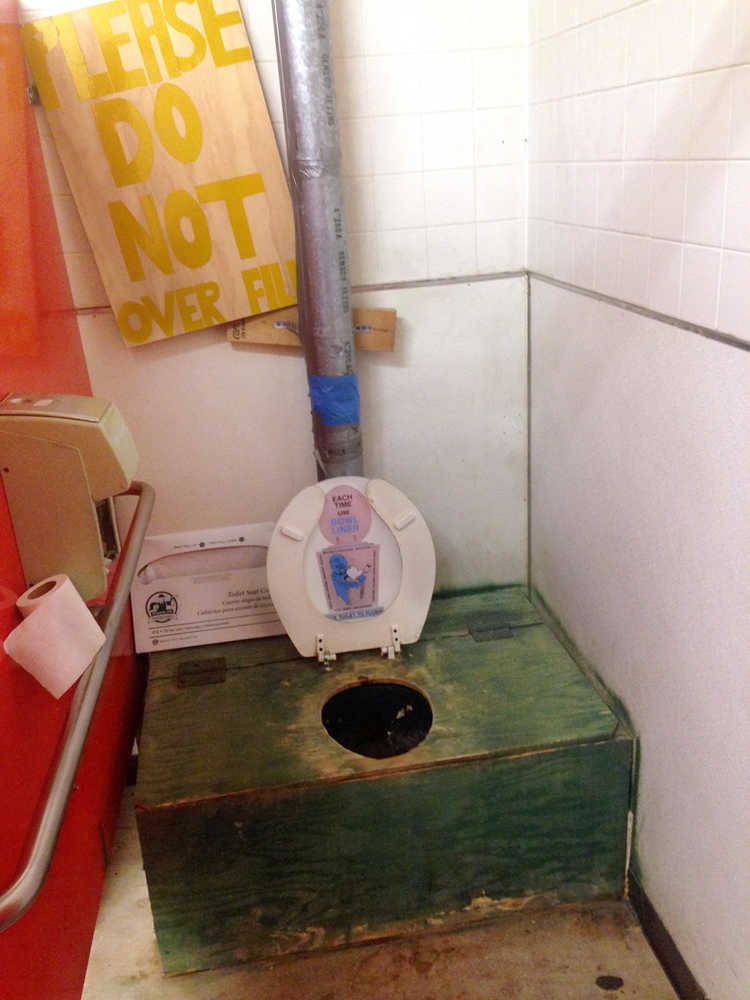
Residents in at least 30 isolated communities far from the state’s meager road system are mired in Third World conditions despite more than $2 billion in federal and state money over the past 50 years to provide basics like running water that most Americans take for granted. But with the state facing increasingly tight budgets, the days of springing for traditional piped water and sewer systems are gone, leaving residents in unserved communities to continue to rely on outhouses or the honey bucket system — large buckets that serve as toilets.
The state, meanwhile, hopes to find more affordable options through a contest that’s similar to a Bill & Melinda Gates Foundation competition to reinvent the toilet for the 2.5 billion people around the world who don’t have access to modern sanitation. The Alaska project involves six test communities, including Kipnuk, where Dock lives, and Kivalina, a badly eroding northwest Alaska community whose plight captured President Barack Obama’s attention during his recent visit to the state.
Dock, the tribal council administrator in the Yup’ik Eskimo village of Kipnuk, remembers when Alaska was flush with oil and had big plans to eliminate the honey bucket.
“But it didn’t become a reality for some of the villages, including Kipnuk,” Dock said. Instead, the nearly 650 Kipnuk residents get their drinking water from rain, rivers, snow and ice or from the village’s treated-water collection point commonly known as a washeteria. Human waste is dumped into bins outside homes, then collected by locals on four-wheelers and trailers and hauled to the sewage lagoon of the community, located nearly 500 miles west of Anchorage. Dock said sometimes the bins overflow, spilling along the village boardwalks.
“Very, very unsanitary,” he said. “Eventually, some of the people walk on it.”
The lack of water and sewer service in Native villages has been linked, in fact, to disproportionately higher rates of skin infections and respiratory illnesses. But funding traditional piped systems historically has cost between $200,000 and $400,000 per home in rural Alaska Native communities, according to Bill Griffith with the Alaska Department of Environmental Conservation’s water division.
“It’s incredibly expensive,” he said.
There are no roads linking the far-flung villages to urban areas, so everything has to be flown or barged in, and some communities don’t have a way to barge things there, he said. Also, difficult soils, including permafrost, sometimes are part of the task, adding to the expense. Other complications could include having to mine or transport gravel used for filling pipe trenches, building foundations and other construction necessities, Griffith said.
Today, the challenge for the state is finding the money to build water and sewer systems in communities that still lack them, with federal and state funding plummeting and construction costs skyrocketing. Many other rural communities have aging systems that are becoming obsolete or inoperable. Altogether, more than 3,300 homes in rural Alaska still lack running water and flushing toilets, although schools in even the most remote village tend to have indoor plumbing. The DEC estimates there is a gap of more than $660 million between the estimated cost of $724 million needed to bring all communities up to date and the $63.6 million available.
As a result, the agency has launched a state-funded private sector competition that it hopes will lead to research and development of new water and sewer delivery services, including systems featuring small-scale treatments at individual homes. Of 18 entities that applied to participate in the Alaska Water and Sewer Challenge, the state selected three companies or organizations and their partners to work with two villages each on proposals submitted this summer for prototype development and testing expected to begin later this year. The goal is to take existing technology and combine it in new, affordable ways, Griffith said.
One telling rule for participating teams: Projected costs can’t exceed $160,000 per home. The proposals being finalized with the participating teams are all expected to come in far below that figure, Griffith said. The target figure is set by the federal Indian Service as the maximum feasible amount for serving a home in rural Alaska, he said.
“I’d love to have something much less than that,” Griffith said. The state is finalizing project contracts with the teams for testing that’s expected to begin this year. A total of $4 million has been made available by the state and federal governments for contracting and project administrative costs, Griffith said.
The ideas include one headed by the University of Alaska Anchorage, which is working with Kipnuk and the village of Koyukuk to develop a home-based system to treat water from a variety of sources with membrane filters and ultraviolet light for reuse. That proposal — submitted after team members visited each village this year — calls for homeowners to choose individual components, such as a shower and toilet, to fit their needs. Aaron Dotson, a UAA civil engineering professor, envisions sending the systems to communities as kits.
“The community then constructs it themselves,” Dotson said.
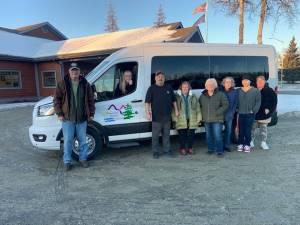
In Koyukuk, only the school and teacher housing have indoor plumbing, and so does just one resident who paid to have a system installed in the home. Cindy Pilot, a City Council member, said everyone else uses outhouses — in the middle of winter when it can get as cold as 50 below zero. Some residents in the Athabascan community of about 90 use honey buckets in their homes overnight.
Pilot looks forward to the day when that will be a thing of the past.
“It would be just one less thing to have to take care of,” she said.
Online:
http://watersewerchallenge.alaska.gov/index.html
Follow Rachel D’Oro at https://twitter.com/rdoro