

House bill would change Alaska oil tax credit system

House bill would change Alaska oil tax credit system

  • By Becky Bohrer
  • Wednesday, February 8, 2017 9:23pm
  • News

JUNEAU — Democratic House majority members on Wednesday proposed changes to an Alaska tax credit program that financially rewards oil exploration and production but is seen by critics as too pricey amid a multibillion-dollar state deficit.

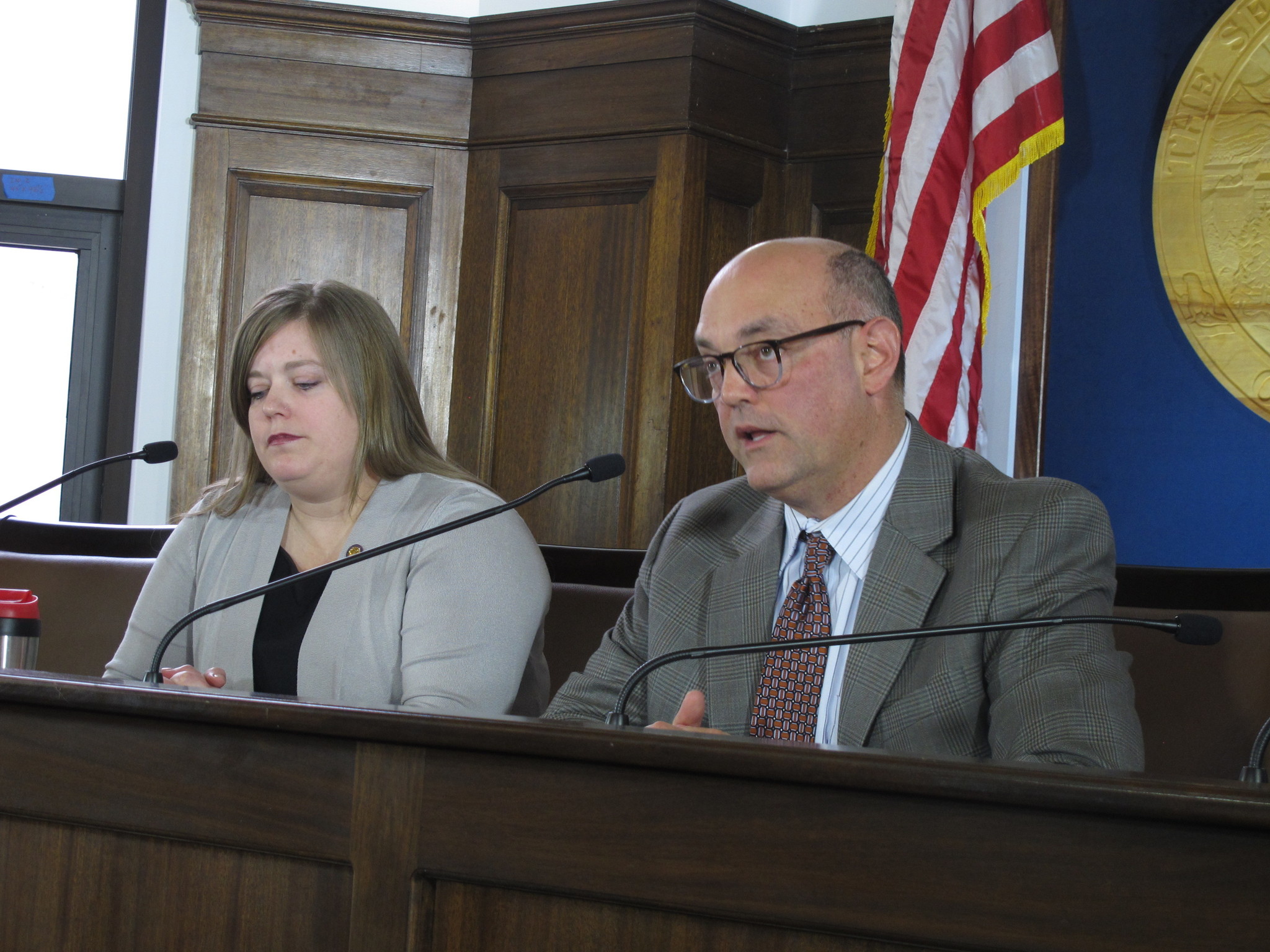
The bill was introduced on behalf of the House Resources Committee by co-chairs Geran Tarr and Andy Josephson, both Anchorage Democrats, over the objection of minority Republicans who didn’t want their names associated with the proposal.

The measure would, among other things, raise the minimum oil production tax and eliminate cash payments for future credits earned by small producers and explorers. State Tax Division Director Ken Alper said the bill appears to apply to credits awarded in 2018 and beyond and that current credits would remain cashable.

Tarr told reporters the state has an overly generous system of credits and sees the bill as a starting point for discussions.

Alaska Oil and Gas Association President Kara Moriarty said she doesn’t think the public recognizes the magnitude of the changes made last year and said provisions in the new bill will negatively affect the industry.

Gov. Bill Walker recently said he doesn’t see how the state can have a complete fiscal plan without addressing oil taxes and credits.

The state faces an estimated potential credit obligation of about $1 billion, including credits expected to be earned in the coming year and those deferred due to limited funding.

Walker has used his veto authority the last two years to limit funding for credits, citing concerns with cost and the lack of a plan to tackle the deficit, which has been exacerbated by low oil prices.

Senate Resources Committee chairwoman Cathy Giessel, an Anchorage Republican, has said that lawmakers have made strides in reducing credits but that Walker’s vetoes had complicated matters by compounding costs.

The last decade has been marked by fights over oil taxes in Alaska and a struggle to find a balance between establishing a system that will entice companies to the North Slope and ensuring Alaskans receive a fair share for what’s developed.

Credits have been seen as a way for the state to share in front-end costs in the hopes of reaping benefits once oil flows. The 2014 collapse in oil prices prompted another re-examination of the system.
House bill would change Alaska oil tax credit system

More in News

File.
Soldotna aims to change short-term rental tax and permitting

Public hearings for two ordinances addressing existing short-term rental regulations will occur during the next city council meeting on Jan. 14.

Low clouds hang over Cook Inlet north of Anchor Point on Oct. 23, 2025. (Photo by Yereth Rosen/Alaska Beacon)
Inletkeeper condemns federal management of Cook Inlet oil lease sale

The agency alleges an environmental study by the Bureau of Ocean Energy Management was conducted with a “serious” lack of transparency.

The Kenai Chamber of Commerce announced the winners of the 13th annual gingerbread house competition on Dec. 20, 2025. This creation by Sierra won the 2-5 year old age category. Photo courtesy of the Kenai Chamber of Commerce
Wrapping up the holiday season

The Kenai Chamber of Commerce’s Angel Tree program and gingerbread house competition spread Christmas cheer to hundreds locally.

The Challenger Learning Center is seen here in Kenai<ins>, Alaska,</ins> on Sept. 10, 2020. (Photo by Brian Mazurek/Peninsula Clarion)
Kenai City Council considers possible uses for Challenger Center

One option would assess the facility’s potential as the new public safety building.

A snowmachine rider takes advantage of 2 feet of fresh snow on a field down Murwood Avenue in Soldotna, Alaska, on Monday, Dec. 12, 2022. (Jake Dye/Peninsula Clarion)
Ice fishing opens on some Kenai National Wildlife Refuge lakes

Snowmachines are permitted for ice fishing access on Hidden, Kelly, Petersen, Engineer and Watson lakes.

The waters of Cook Inlet lap against Nikishka Beach in Nikiski, Alaska, where several local fish sites are located, on Friday, March 24, 2023. (Jake Dye/Peninsula Clarion)
Kenai asks for fishery economic disaster declaration

The Kenai City Council requested that Gov. Dunleavy declare a disaster and support a recovery plan for the Upper Cook Inlet East Side Set Net fishery.

The Kenai Peninsula Borough School District logo. (Photo courtesy of Kenai Peninsula Borough School District)
District superintendent dispels rumors about student construction

Superintendent Clayton Holland said student involvement in Seward High School construction is “based on rumor, not fact.”

Anchorage-based singer and songwriter Keeley Boyle is pictured in Anchorage<ins>, Alaska,</ins> on Sept. 26, 2023. Boyle, who was raised on the Kenai Peninsula, will use a $10,000 grant she received from the Rasmuson Foundation to create an album of songs about her grandparents’ home in Nikiski. Photo courtesy of Jovell Rennie
Musician hailing from Kenai receives Rasmuson grant

Keeley Boyle will record an album of songs about her grandparents’ Nikiski home.

Commercial fishing and recreational vessels are docked in the Homer harbor on Oct. 23, 2025. The commercial fishing industry endured a series of challenges over the year, some of them imposed by the new Trump administration. (Photo by Yereth Rosen/Alaska Beacon)
Alaska fisheries in 2025: turmoil, economic and environmental challenges and some bright spots

NOAA cuts, economic headwinds and invasive species pose problems, but there was some recovery in crab stocks and salmon harvests.

Most Read