
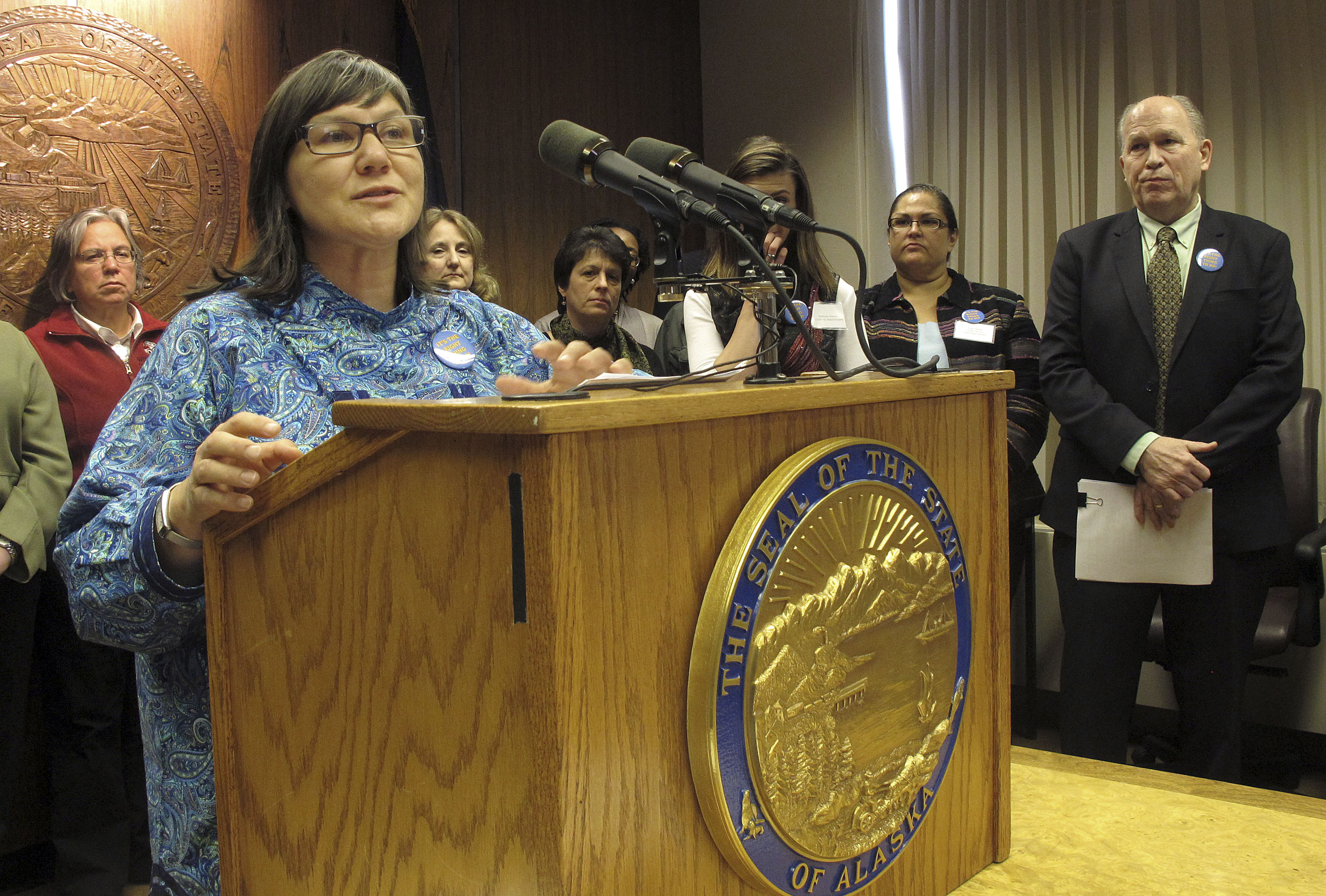
JUNEAU, Alaska — Gov. Bill Walker said he will introduce legislation to overhaul and expand the Medicaid system in Alaska.
Walker, who campaigned on expanding Medicaid coverage, discussed his plans during a news conference Tuesday, surrounded by supporters. He and others wore blue buttons reading: “It’s the right thing to do.”
The bill comes with just over a month left in the scheduled 90-day session. Members of the Republican-led House majority had called on Walker to introduce a bill dealing with expansion, saying it was too big a policy call to leave to line items in the budget. There have been calls, too, for changes to the current Medicaid program — which is over 60 percent of the state health department budget and a driver of the state operating budget — before moving toward expansion.
Walker initially dealt with expansion by including provisions related to it in the operating budget. Those were stripped out in the House. He also had balked at introducing a bill of his own, noting that there was a Democratic bill dealing with expansion in the House.
He told reporters Tuesday that he settled on a bill of his own in response to what he was hearing from legislators. The administration has maintained that expansion and overhauls go together, and that leveraging federal money available for expansion provides an opportunity to finance reform efforts.
Senate Finance Committee co-chair Pete Kelly, who last week introduced a bill focused solely on Medicaid overhaul, said he was glad Walker introduced a bill. Kelly and the administration had at one time been working on the bill but disagreed on Medicaid expansion. That remains the major disagreement, Kelly said.
Health commissioner Valerie Davidson said the overhaul plans included in Walker’s bill are not new concepts and are issues the administration has discussed in presentations to legislators. She said the administration is looking to build on changes already underway.
Provisions include having the health department pursue a waiver to expand services provided to Indian Health Service beneficiaries through tribal health facilities, as well as pursue demonstration projects and enhance telemedicine capability.
The bill also calls on the department to consult with affected parties and submit to the legislature by next January a proposal to authorize a provider tax to offset some of the costs of the Medicaid program.
The administration has targeted July to begin enrolling newly eligible Medicaid recipients, should the state go ahead with expansion. Walker, in response to a reporter’s question, indicated the state had options besides legislative approval for accepting expansion but said “none that we’re exploring at this point because we have faith in the legislative process that they’re going to move this through.”
In states opting for expansion, the federal government is expected to pay 100 percent of costs through 2016, stepping down after that to 90 percent by 2020. The administration has said it does not plan to continue the state’s participation if the match falls below 90 percent.
In a recent letter to Walker, U.S. Health and Human Services Secretary Sylvia Burwell said if the state expanded coverage and later dropped it, it would have no obligation to maintain coverage for the new group and would face no penalties. But she said states are encouraged to have a plan for phasing out coverage in those situations.
An analysis by the Evergreen Economics research firm found nearly 42,000 Alaskans would be eligible for coverage next year but about 20,000 would be expected to enroll that first year. The number of newly eligible Alaskans expected to enroll was projected to rise each year, reaching just below 27,000 by 2021.
A recent report from the state health department said the state would be able to offset new costs associated with expansion by reducing or eliminating contributions to programs that provide health care to those who would be eligible for Medicaid.
