Global change, local action
Published 2:43 am Monday, March 30, 2015
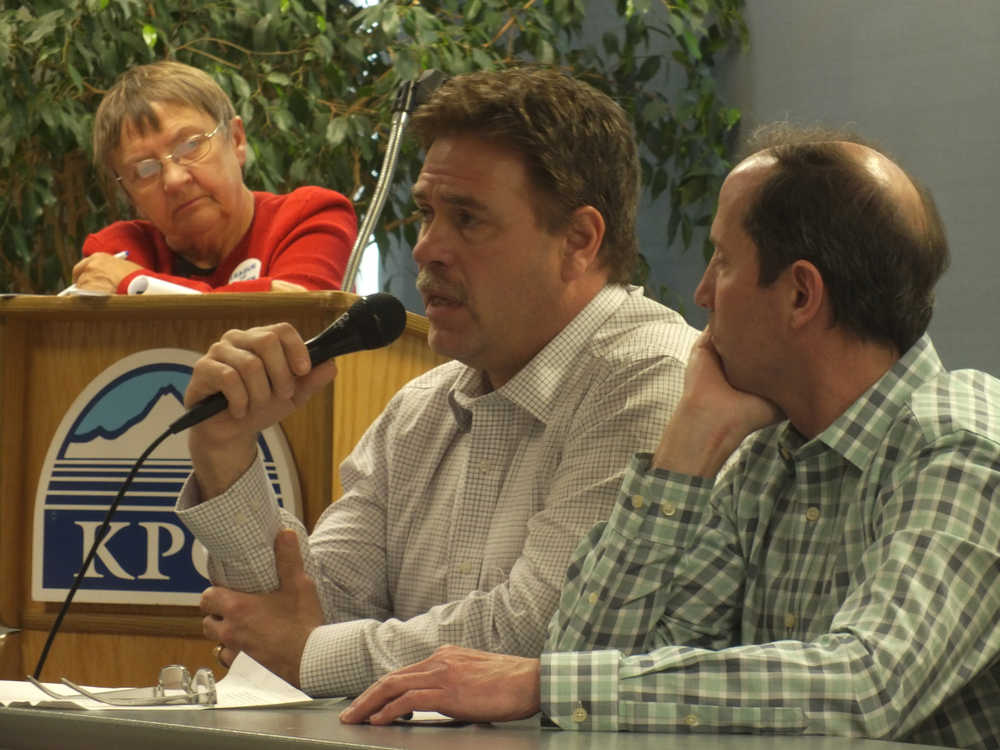
Scientists and citizens met to discuss the global ecological phenomenon of climate change in relation to Kenai Peninsula communities last weekend.
The Central Peninsula League of Women Voters organized a Kenai Climate Conference hosted Saturday by Kenai Peninsula College’s River View Campus. Member Sammy Crawford said it was meant to bring the public, politicians, and scientists into the conversations about climate change.
“Our whole mission is to educate voters,” Crawford said. “This to all of us is a major issue, and we need to set up a way for people to learn about it in a non-threatening way.
There’s no charge, there’s no questions at the end, there’s no test. It’s just a way to learn, and to rub elbows with all these amazing scientists.”
The five scientists who presented at the conference were local researchers including salmon stream ecologist Sue Mauger of Cook Inlet Keeper, Steve Baird of Kachemak Bay Research Reserve, Mitch Michaud of the United States Department of Agriculture, and biologist John Morton of the Kenai Wildlife Refuge. Morton was also a member of the conference’s organizing committee.
“I wanted to make sure that we had local science, as opposed to people from afar coming in to tell the locals,” Morton said.
Mauger presented her five-year study of water temperatures in 20 Peninsula salmon streams, and discussed how a rise in those temperatures could harm salmon.
Michaud spoke of global warming’s effects on fire patterns, Baird of how rising sea levels could influence Cook Inlet shore erosion, and Morton of effects on the Peninsula’s plants and wildlife.
Morton said that the data these scientists collectively gathered formed a coherent picture of climate change’s local effects.
“Different individuals with different areas of expertise are all saying the same thing,” Morton said.
“We’re just saying it in different ways. I wasn’t sure if that was going to happen. It did, and that was wonderful.”
The one scientist “from afar” was Dr. Jeremy Littell of the United States Geological Survey’s Alaska Climate Science Center, who discussed how global changes are influencing the Kenai Peninsula climate. Littell said this year’s unseasonably warm winter wasn’t necessarily a result of global climate change, but that it could be viewed in that context.
“You can’t say that this winter was directly caused by climate change, global warming and global warming alone,” Littell said.
“You can say that this is the kind of event that is consistent with the expectations [of the climate change hypothesis] and that the frequency of these kind of events should increase as we go forward in time.”
Littell said that science rooted in the specific ecology of the Kenai Peninsula would have to be met by public action, and be based on the area’s priorities.
“All adaptation to climate change is inherently local,” Littell said.
“The problem is global, but the adaptation has to be local, because each place is unique and has unique circumstances, and the people there have unique wishes and needs.”
The speakers named two possible types of reaction: mitigation and adaptation. Both were analyzed in the final event of the day, a panel in which local politicians spoke of what their councils had done to reduce carbon emissions and took questions from audience members about possible future actions. Kenai vice-mayor Brian Gabriel, Kenai Peninsula Borough mayor Mike Navarre, Soldotna Mayor Nels Anderson, Seward city council member Rissie Casagranda, and Homer Mayor Mary Wythe participated in the panel.
Navarre said that effective political will for climate action has to come from constituents rather than elected officials.
“One of the things that’s really difficult in the public policy arena is what I call the paradox of politics,” Navarre said. “That is that you can’t lead and advocate for change effectively unless you’re in office, and if you’re not careful about how you go about it, you’re not going to be in office in order to provide the change and leadership… It really speaks to the importance of forums and community discussions like this.”
Several organizers said that such political initiative was a desired product of the conference. Morton said he hoped the borough would be responsive to climate concerns.
“It would be wonderful if the borough — we’re not talking higher than the borough — would develop a strategic adaptation plan that would include the municipalities as partners,” Morton said.
At the end of the conference, moderator and Kenai Watershed Forum scientist Branden Bornemann invited attendees to submit their names to an email list intended to form a group to author the plan and present it to local governments.
Crawford said she hoped this would be a legacy of the conference.
“What we’d like to see is different groups come up with long-term plans,” Crawford said. “This is just a one-day splash. Let’s make it last longer.”
Reach Ben Boettger at ben.boettger@cmg-northwest2.go-vip.net/peninsulaclarion