Ex-crewman mourns loss of brother, friends in boat disaster
Published 5:50 am Wednesday, February 15, 2017
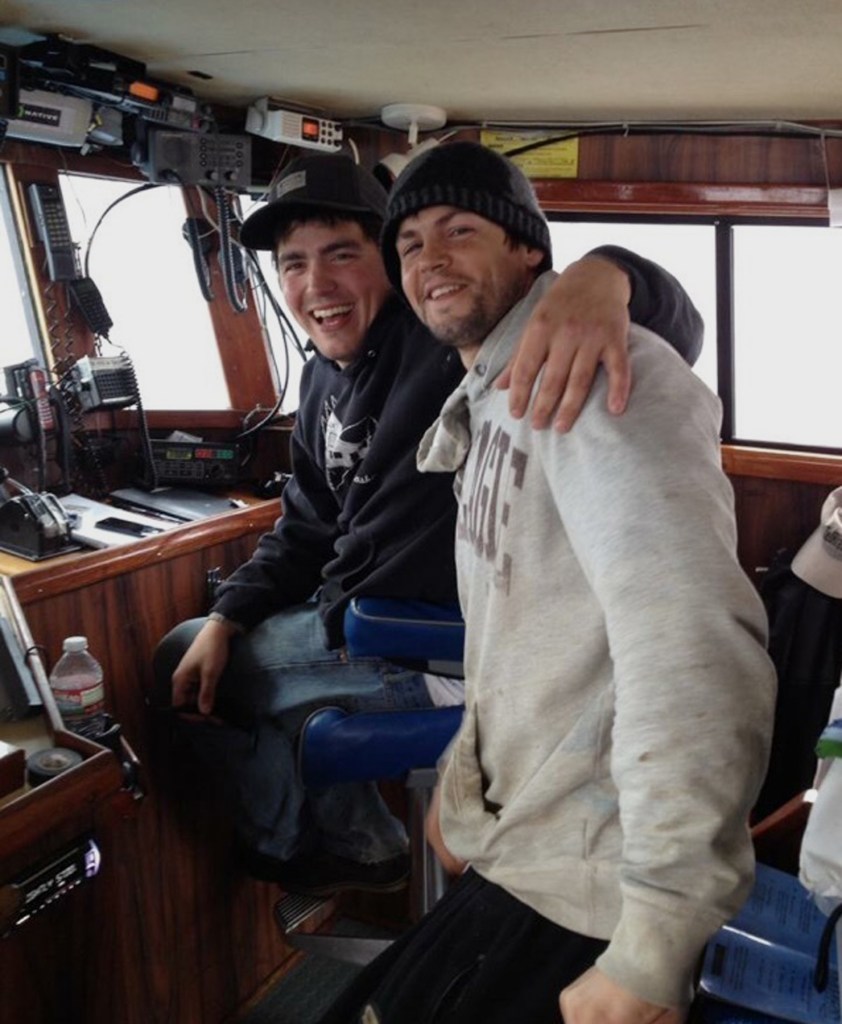
ANCHORAGE — Dylan Hatfield got one last chance to see his brother and five other crewmen on the Destination, a 98-foot crab boat missing and presumed sunk in the Bering Sea.
The Destination was tied up Thursday in the Aleutian Islands port of Dutch Harbor, preparing to leave. Hatfield, 29, had just come in from the Bering Sea on a different boat. He had worked on the Destination off and on for seven years, and when he left, his older brother, 36-year-old Darrik Seibold, replaced him.
“We went down to the boat, brought a case of beer, said hello to everybody, gave everybody big hugs, told stories and had laughs,” Hatfield said. Afterward, they all went out for pizza at the Norwegian Rat Saloon.”
“I got to tell the fellas I loved them, I got to hug my brother and tell him that I loved him, and then they left,” Hatfield said.
Early Friday, the Destination left for St. Paul Island, one of the tiny Pribilof Islands in the vast Bering Sea.
On Saturday morning, Hatfield got the call: the Destination was missing 2 miles off another Pribilof Island, St. George. The Coast Guard had received an emergency location radio transmission from a device that transmits when it hits saltwater.
Searchers rushed to the scene. They found an oil slick, a life ring and buoys. They emergency location beacon was floating in the slick.
The lack of debris, the failure to make a mayday call, the absence of lifeboats or mariners in survival suits pointed to a sudden tragedy.
“In my mind, they rolled over,” Hatfield said. “I’m almost positive that those boys are still on the boat.”
Commercial fishing is inherently dangerous, and crab fishing in the Bering Sea is notoriously so. Fishermen work winters in icy, heaving platforms handling heavy, unforgiving equipment.
The National Institute for Occupational Safety and Health notes that fishermen drop crab pots, each weighing 750 to 850 pounds empty, rigged to hundreds of feet of coiled line and buoys used to recover them from the ocean bottom.
Just getting to the fishing grounds is dangerous. Vessels stack the heavy pots on their main deck in three to five tiers high as they travel in shallow ocean that sees big waves, high wind and icing that can make a boat top-heavy.
In the 1990s, 73 people died in the Bering Sea crab fishery as the result of capsizing, sinking, falling overboard or an industrial accident. Two factors, however, have dramatically lowered that rate of nearly eight deaths annually.
The Coast Guard and the Alaska Department of Fish and Game in 1999 instituted an upgraded inspection program with an emphasis on stability and safety. Vessels found lacking were not allowed to leave port.
Federal managers also changed the fishery. Before 2005, boats rushed out from ports “derby style,” trying to catch as much crab as possible until a quota was met, even if it meant fishing in dangerous conditions.
That was replaced with “crab rationalization,” in which most of the catch was guaranteed to boat owners. That meant they could use fewer boats, take longer to catch their quota and sit out dangerous conditions.
It also meant hundreds of crew members lost their jobs. However, safety improved. From October 1999 through last year, 10 lives have been lost, according to the national institute.
The Destination was on its way to St. Paul and planned to drop off bait on the island before heading out for a week or two to fish. The boat was carrying 200 crab pots and probably about 15,000 pounds of bait, Hatfield said.
The boat had just rounded the northeast quarter of St. George Island, an area known for turbulent water, when it went down.
“You get the shelf shallowing-up there, and lots of tide,” Hatfield said. “It’s always really cold around those islands.”
A number of factors probably led to a capsizing, he said. The boat may have iced up from sea spray freezing in 20-degree temperatures. An alarm in the engine or steering room may have malfunctioned.
The boat had three tanks for holding crab. Pumps keep water circulating to them. If a pump shut off, it could cause a tank go slack — partially emptied of water that provides stability, Hatfield said.
When a big wave hits, and the boat rolls in one direction, a slack tank makes it harder to recover.
“It’s never the first one,” Hatfield said. “They probably took a big one, laid ‘em over, and they didn’t recover. Then they took another one, and another one, until she probably just rolled over.”
The vessel owners, F/V Destination, Inc., have not released name of the six crewmen. Spokesman Mike Barcott said the company has not contacted all families to make sure they want the names public.
He agreed that whatever happened probably came on suddenly. A half hour before the boat disappeared, it was in calm water on the lee of St. George Island, Barcott said by email.
“If there was a problem at that time they easily could have pulled into the harbor so we assume all was good then,” he said.
Seibold leaves a 3-year-old son. The cause of the tragedy likely will never be known, Hatfield said.
“The only people who know what happened are on the bottom of the ocean,” he said.