
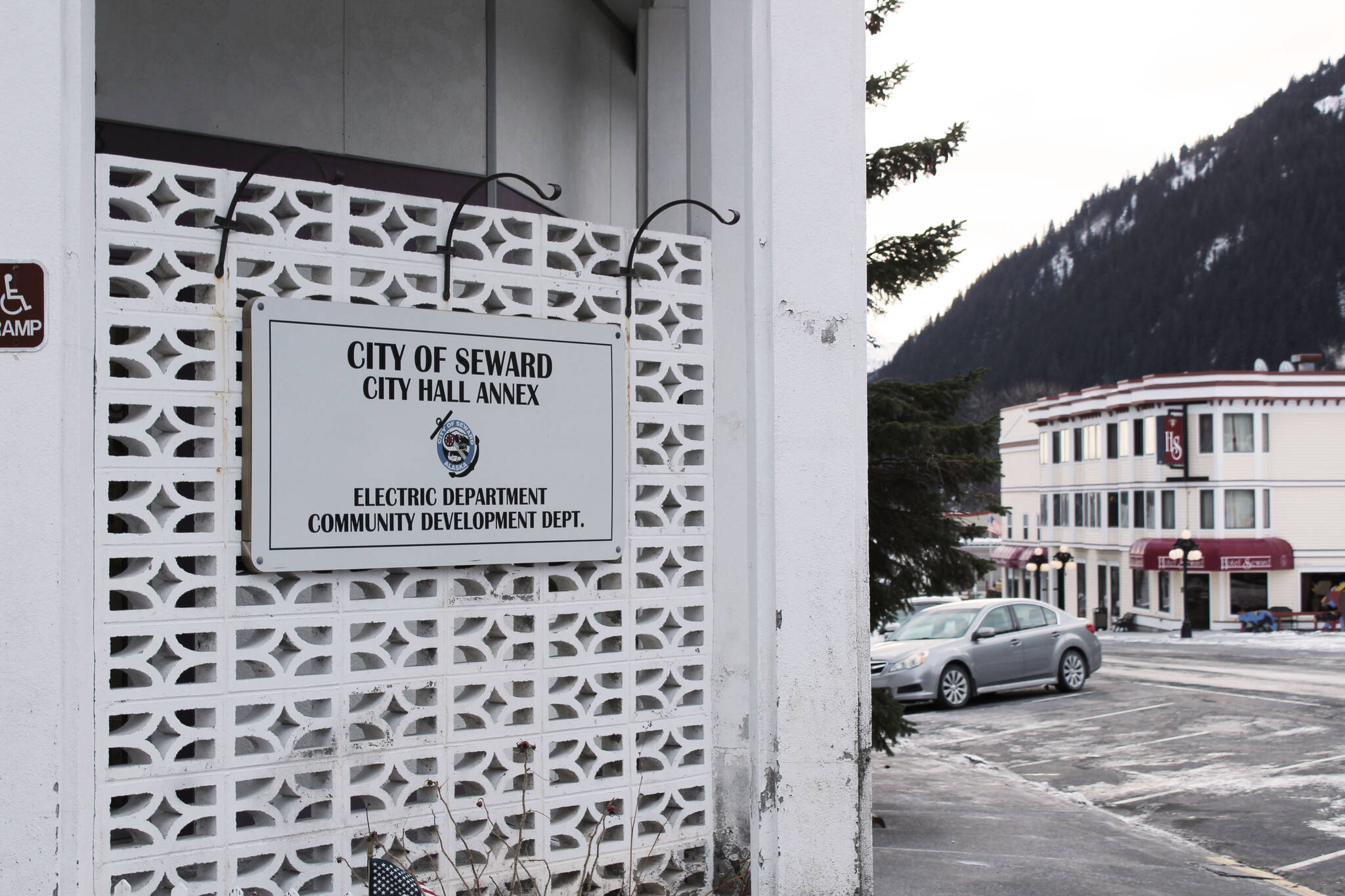
Two referendums calling for propositions related to the sale of Seward’s electric utility to be taken off of the city’s Oct. 3 ballot will be reevaluated next month, city staff said Thursday.
Seward City Council members on Monday voted down legislation that would have scheduled a special referendum election in response to the petitions for late November. Council member Robert Barnwell moved Monday to reconsider the issue, Seward City Manager Kat Sorensen said Thursday.
Both petitions, sponsored by Darryl Schaefermeyer and Phil Kaluza, aim to repeal resolutions Seward City Council members passed in July. The first resolution put on the city’s Oct. 3 ballot the question of whether or not the city should lower the threshold needed to advance a city utility sale from a three-fifths majority to a simple majority. The second resolution also put on the ballot the question of whether or not the city should sell the Seward Electric Utility to Homer Electric Association.
That question was first put before Seward voters during a special election held in May. Although a majority of voters supported the sale, votes in support fell seven short of meeting the 60% threshold required by city code. A similar electric utility sale also failed in 2000 after votes in support also failed to hit the three-fifths threshold.
The petitions were filed the week after the council voted to put both propositions on the ballot, and roughly three months after Seward voters killed the same utility sale by just seven votes. Both petitions — one for each of the council resolutions passed in July — received more than 100 signatures, which is well over the 71 needed. Both petitions were deemed sufficient by Seward City Clerk Kris Peck, who reported that both were received on Sept. 5. Sorensen wrote in a memo for the council’s Monday meeting that the petitions were certified on Sept. 15.
Seward’s city code allows qualified city voters to seek a referendum vote on issues passed by the city council and says that the city clerk shall submit the matter to city voters during the city’s next regular election. If there is no regular election scheduled to occur within 75 days of the petition being submitted to council, the council must hold a special election within the same time frame.
However, because of when the referendums petitions were certified, Sorensen wrote in a memo to council members, there was not enough time for them to appear on the Oct. 3 ballot while still meeting the legal election noticing requirements. Sorensen said Thursday that, at the time the referenda were certified, the city’s ballots for the Oct. 3 election had already been printed. Further, voting in the Oct. 3 election is already underway, as absentee in-person voting started on Sept. 18.
“Although Seward City Code language states that it must be put on the next regular election, these referenda fall too close to the next regular election to meet the required legal noticing,” Sorensen wrote. “The Clerk must notice a regular election 20 days in advance and a special election 30 days in advance.”
Up for consideration during the Seward City Council’s meeting on Monday was a resolution scheduling a special election for a referendum vote on Nov. 28. Council members during that meeting voted 3-2 against setting a special election date, but will reconsider the resolution during their next meeting.
Regarding Monday’s council vote not to hold a special election, Sorensen said Thursday Seward’s city code authorizes the Seward City Council to vote up or down any resolution that comes before the body. The city, she said, is waiting until the council’s Oct. 9 vote on the issue before analyzing how to proceed.
Kaluza, who testified before the city council vote, said he doesn’t think Seward should sell what he called a “profitable and functioning electric utility.” He questioned why HEA is the preferred buyer, criticizing the cooperative’s rates.
“I encourage everyone to seriously consider whether to vote to sell their electric utility or not,” Kaluza said. “We can always sell later on under more transparency, but if we sell now, there’s no going back. We’ve sold our goose.”
The vote came shortly after a presentation by HEA General Manager Brad Janorschke who spoke to city council members during Monday’s meeting about “myths” he said have circulated about the proposed electric sale. Among those myths, he said, are that HEA doesn’t own its battery energy storage system, that HEA doesn’t make its own power and that HEA cannot guarantee the city a seat on its board of directors.
Barnwell, who said he fully supports the sale of the city’s electric utility, thanked HEA for continuing to be present in Seward while advocating for the utility sale. He said he views HEA as being more rural-focused and Chugach Electric Association being more urban-focused and said he expects rates will even out in the long run.
“I think we’re in a position where we’ve had a good run with this utility, but I just don’t think the city is the right entity to manage it going forward and I think HEA is,” Barnwell said.
Seward voters will head to the polls Tuesday to vote on the fate of the city electric utility. Monday’s Seward City Council meeting can be streamed on the city’s YouTube channel.
Reach reporter Ashlyn O’Hara at ashlyn.ohara@peninsulaclarion.com.
