
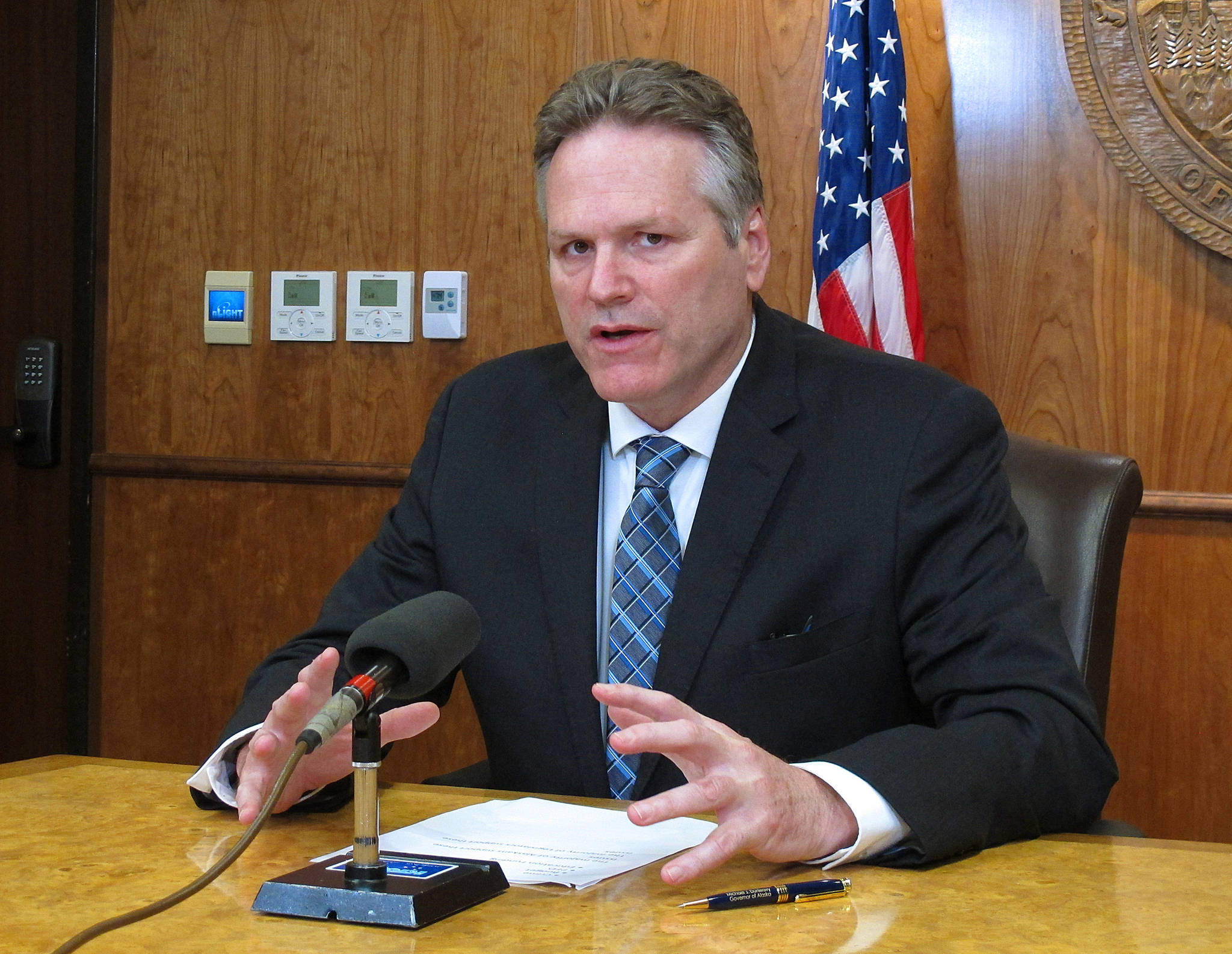
JUNEAU — Gov. Mike Dunleavy plans to call lawmakers into a special session, saying they did not appear to be on course to finish major unresolved issues by Wednesday’s constitutional deadline.
Details on the timing and location of the special session were expected later.
Dunleavy told reporters Wednesday evening that a change of venue might make a difference and said there has been interest in meeting in the Matanuska-Susitna Valley. The Republican Dunleavy is from Wasilla. He said it also could be in Juneau.
Senate Finance Committee Co-Chair Bert Stedman, a Sitka Republican, said the Capitol is Juneau and it would make sense to have the special session here.
Up until Dunleavy’s announcement, the day was marked by an hours-long House floor session with bills including board extensions and a measure intended to allow the Alaska State Fair to continue selling alcohol. But there had been no public meetings on a sweeping crime package or the state operating budget. Also undecided was how to handle the dividend paid to residents from the state’s oil-wealth fund, the Alaska Permanent Fund.
“We’ve been looking at the pace, we’ve been watching this,” Dunleavy said of announcing his intention for a special session hours ahead of the deadline, adding later: “It just doesn’t appear it’s going to happen.”
House Speaker Bryce Edgmon, in a statement, said the decisions lawmakers face “are simply too important to rush.”
“We have worked hard to achieve meaningful compromise, and we are committed to continuing our work to get these monumental decisions right for Alaska,” the Dillingham independent said.
Heading into the day, House and Senate negotiators had nearly reached agreement on an operating budget that shunned the level of cuts Dunleavy proposed to areas like the university system and ferry system. But a decision remained on the divisive issue of what to do about the dividend.
Dunleavy, speaking with reporters earlier in the day, made clear his expectation that residents receive a full dividend from Alaska Permanent Fund earnings after three years of capped payouts.
“We will use all the tools available to us to make sure that that law is followed,” said Dunleavy, who has veto powers and the ability to call special sessions.
Senate President Cathy Giessel said members were thinking about what Dunleavy wants for the dividend and how to do that but also what the dividend program could look like going forward.
“There’s only so much money, and we’re trying to figure out how best to share the wealth with citizens,” the Anchorage Republican said. “It is something that has been a legacy in this state, and we don’t want it to be something that cripples the state and the ability to provide services.”
The Senate, in its version of the budget, proposed a full dividend payout, which would equate to checks estimated to be around $3,000 each and cost $1.9 billion. But that proposal left a $1.2 billion deficit that would need to be filled, and some members said they saw the full payout as a negotiating point. The House didn’t address the dividend in its version of the budget but leaders said they planned to address it later.
The dividend calculation has not been followed the last three years amid ongoing debate over a persistent budget deficit. Lawmakers who agree with Dunleavy’s call for a full payout argue that unless the law is changed, the calculation should be followed. Others consider the calculation outdated and unsustainable.
The rub comes with the Legislature’s decision last year to use permanent fund earnings — long used to pay dividends — to help cover government costs amid disagreements over budget cuts and taxes and a continued drawdown of savings. Lawmakers also last year sought to limit what could be taken from fund earnings to pay for dividends and government. Alaska has no statewide sales or personal income taxes, and Giessel said, “at this point, we don’t see that people want a tax, either.”
The earnings reserve account was valued at $19 billion at the end of April, and Dunleavy has argued the money is there to pay full dividends. But critics worry about overspending from the reserve.
There has been discussion, also unresolved, about taking billions from earnings, which are spendable, and putting them into the fund’s principal, which has constitutional protections.
The House Rules Committee introduced a resolution calling for a future special session to address use of permanent fund earnings. It was on Wednesday’s House calendar, but not immediately taken up.
House and Senate budget negotiators as part of their deliberations agreed to advance funding for schools for the fiscal year starting July 1, 2020. That is similar to action taken by lawmakers last year to fund schools for the upcoming fiscal year that Attorney General Kevin Clarkson has argued is unconstitutional.
Dunleavy said he expected action on the budget, crime package, dividend and education funding.
He has called for lawmakers to include in the budget school funding. Legislative leaders have balked, standing behind their actions last year in approving money for the coming year as valid.
Dunleavy, who had been making a push for proposed constitutional amendments related to spending, taxes and the dividend, said those could be worked on over the next year. Those measures haven’t gotten much traction with lawmakers.
• By BECKY BOHRER, Associated Press
