Dog park funding approved after debate
Published 10:30 pm Wednesday, January 5, 2022
The Kenai City Council voted Wednesday to award an additional $63,000 to community efforts to open a dog park in the city.
The legislation, which was approved after council members clashed over the best way to move the project forward, transferred $63,000 to the city’s Parks Improvement Capital Project Fund to support completion of the park, including design and construction needs, according to a Dec. 9 memo from Vice Mayor Jim Glendening and council members James Baisden and Teea Winger, who sponsored the legislation.
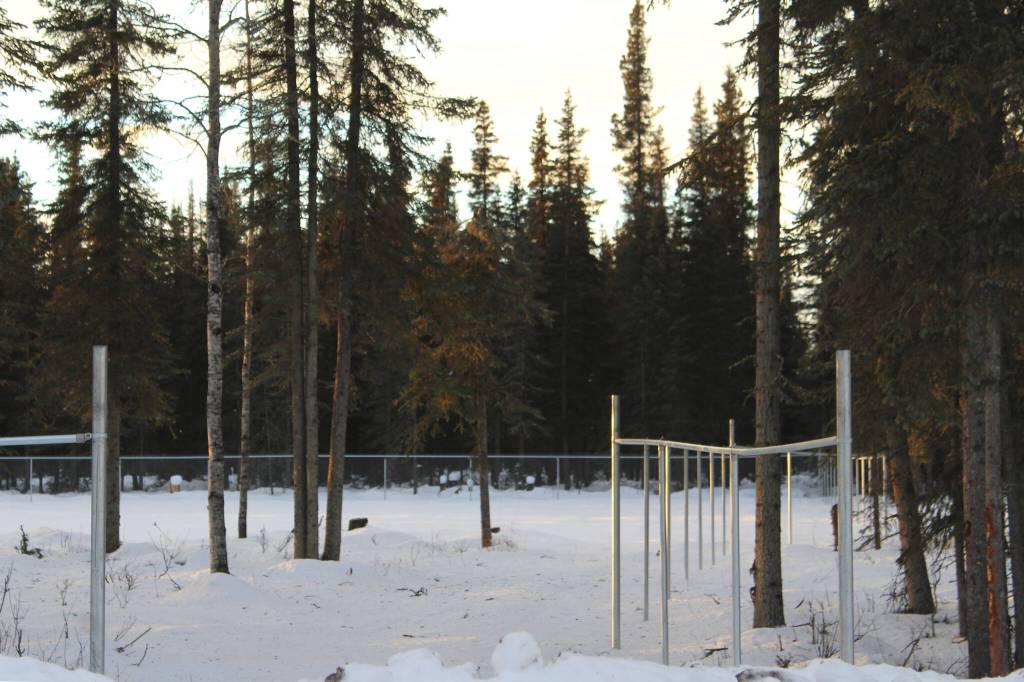
A dog park in Kenai, which will be located at Daubenspeck Family Park, has been floated for years, with work mostly driven by volunteer labor and financial donations. Organizers told the council last fall that the opening of the park would be pushed from spring to summer 2022 due to construction delays. The council has donated land near Daubenspeck Park for the project, as well as $25,000 for fencing infrastructure.
Organizer Crystal Locke told the council Wednesday that the additional $63,000 would be used for “Phase II” of the project, which would make possible lighting, water, security cameras and access that complies with the Americans with Disabilities Act. She added that those features require expertise that she and other volunteers don’t have.
Locke said Wednesday the $25,000 previously donated by the city has been fully expended on fencing, but that the 4-foot-tall fence purchased for the project will not be tall enough to accommodate large dogs, especially following snowfall. The group has instead determined that a 6-foot-tall fence will be sufficient.
Council members who supported the additional $63,000 donation for the project said Wednesday that it was needed to help address some of the more sophisticated work needed for the park, while those opposed questioned the fiscal responsibility of the process.
Council member Henry Knackstedt proposed considering the park as a capital project, which would go through a formal process reserved for large-scale projects. The City of Kenai describes capital projects as, typically, one-time expenditures that cost more than $35,000.
“I don’t feel that as a fiscally conservative person that I can support the funding at this point without the project having gone through the scoping and the design work and all of that,” Knackstedt said.
Council member Glenese Pettey said she was serving on the council when volunteers first approached the city about creating a dog park and recalled that their request at the time was for land only.
“I did take them at their word when they said there would be no expense to the city,” Pettey said.
Kenai City Manager Paul Ostrander similarly said that the city usually identifies the scope of work and produces a cost estimate prior to awarding funds for a project.
When asked whether $63,000 would be enough money to complete the project elements described in “Phase II,” Ostrander said he was unclear. Because the exact scope of the project hasn’t been itemized, Ostrander said, a lack of definition on some items — such water sourcing and type of material — leave lingering cost differences that make the final project cost difficult to pin down.
“The number of lights, the number of cameras — you know, without that information I couldn’t tell you if this is sufficient money or not,” Ostrander said.
Baisden pushed back, saying the legislation is written to reflect the “complexities” of the project’s remaining elements and that he expects Ostrander’s team can complete the work.
“Are you telling me that you can’t complete this properly?” Baisden asked Ostrander. “You can’t go and work through the check boxes that you would typically do? We’re going to give you funding and if it’s not enough, you’re going to come back and ask us for more funding. You do that all the time in your budget.”
Ostrander said capital projects are typically handled by identifying the project needs, providing an internal cost estimate, ranking it among the city’s other capital priorities, providing funding, then beginning design and construction.
“We typically go into this with at least a better ballpark estimate than what we currently have with the dog park,” Ostrander said.
Kenai Mayor Brian Gabriel reiterated that the dog park would not be following the city’s usual process for capital projects and said the city will not look good if they appropriate money for a project that has a bad outcome. Gabriel said he supports the dog park, but not the way it’s getting done.
“I want to be on the record to say that I don’t support the process that’s being done here,” Gabriel said. “I don’t think it’s how things should be done when you’re doing capital projects. It’s not how you would do things if you built a house, (or) if you did stuff yourself (or) if you were doing a yard improvement.”
The council ultimately voted 5-2 to award the additional funding, with council members Knackstedt and Pettey voting in opposition.
The council’s full Wednesday meeting can be viewed on the city’s YouTube channel.