
Returns on chum salmon are so low this year Douglas Island Pink and Chum Inc. is working with the State of Alaska on permits to move fish from Amalga Harbor to its hatchery on the Gastineau Channel in Juneau.
“This is the worst return we’ve seen in since 2005,” said Katie Harms, DIPAC’s executive director. “This one is extremely poor and unprecedented and a scary return for everyone right now.”
DIPAC is concerned they won’t get enough fish for their broodstock, or the fish they keep at the hatchery to produce more fish. If that happens the hatchery will have to release fewer fish next year in order to its stock, Harms said, which means smaller returns. Fishing groups worked with the state to make changes to certain fisheries boundaries to allow more fish to return upstream, according to Harms, but even with that change, she’s concerned the hatchery will be about 100,000 fish short.
“We didn’t have enough for broodstock last year, we knew we were on trend for a lower return, but this is much lower,” Harms said. If the pattern continues, she said “we’re going to have to be very responsible in how we move forward and how we spend money and focusing on the key parts of our program.”
Chum salmon are the money maker for DIPAC, Harms said. While returns on the fish are low, global markets have also slowed and chum prices have dropped dramatically.
[Survey sheds light on what worries Alaska’s fishermen]
“I have 35 years of experience and I’ve never seen a year this poor since 1988,” said Lars Strangeland, a gillnetter based in Juneau. “The market is extremely poor. We were looking at terrible prices wherever it goes.”
The shutdown of restaurants and changes in international markets, all complicated by the coronavirus pandemic, is leading to less demand for chum salmon and roe.
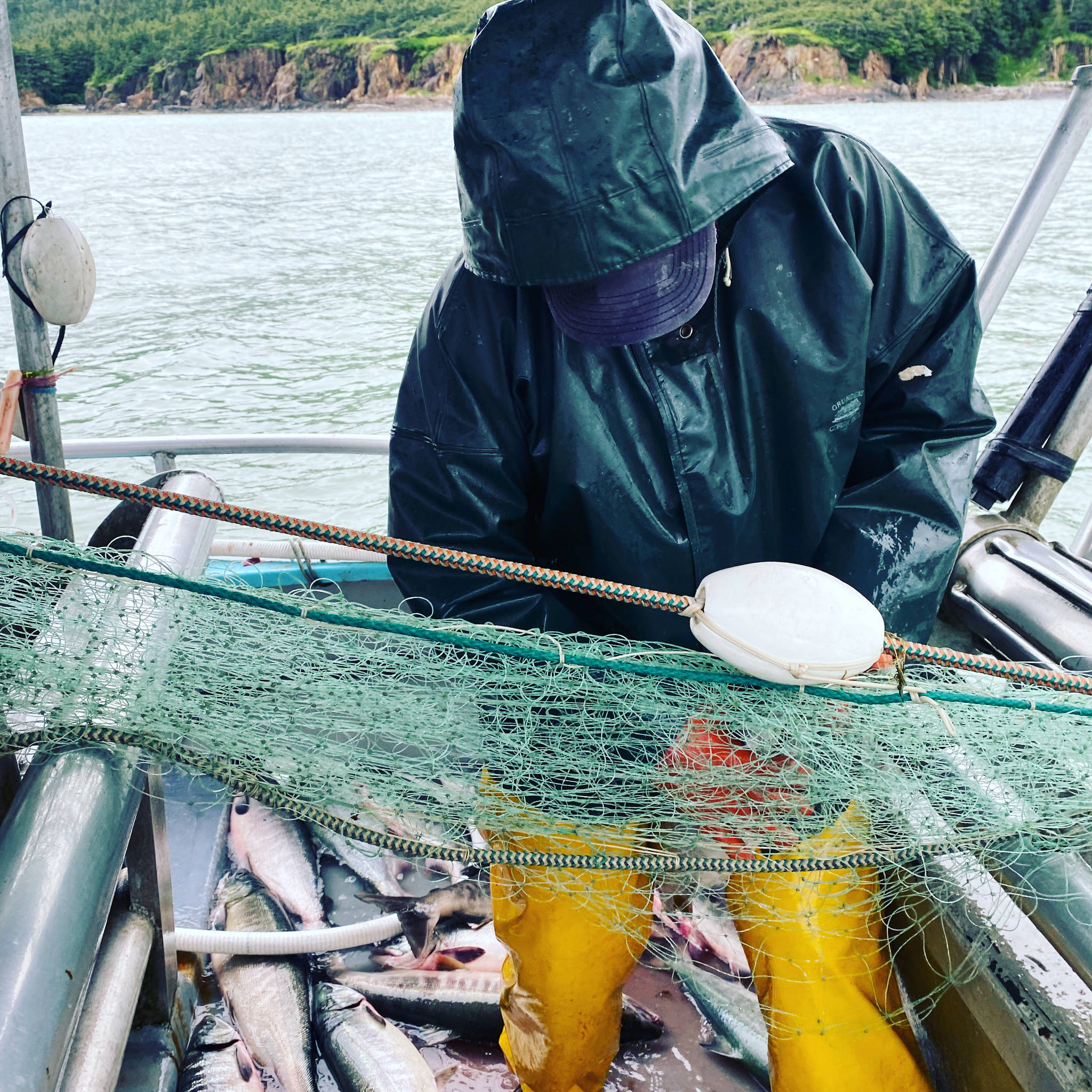
Courtesy Photo | Tyson Fick A fisherman cuts a log from his netting.
Strangeland is on the Board of Directors of United Southeast Alaska Gillnetters, and he said chum returns this year have been “devastating.”
“It’s unprecedented and staggeringly poor as well,” he said.
On top of poor returns, several people who spoke with the Empire reported seeing much smaller fish as well. Why both these things are happening is a question no one really has an answer to, but what is known is the problem isn’t on the freshwater side.
Experts can’t say exactly where a fish goes in its life, but many of the fish returning to Southeast spend their lives in the Gulf of Alaska, Harms said. Research is being done in the gulf, according to Harms, but hasn’t identified what’s affecting the salmon.
“Most of (DIPAC’s) fish go out to the Gulf of Alaska,” Harms said. “Maybe there’s a marine change there, maybe it’s warmer water. At this point, nobody knows for certain why returns have gotten smaller and fish size has diminished.”
There’s still a chance a large return could show up, but experts say that if returns were going to be closer to normal there would be more fish at this time of year. Harms said the more days there are without a large run, the less likely one becomes as the season progresses.
Not just chum
“Salmon have been underperforming pretty dramatically across the board,” said Dave Harris, area management biologist with the Alaska Department of Fish and Game. “DIPAC is well behind where they should be. Sockeye harvest have been like a quarter of what the 10-year average is.”
However, so far king salmon don’t seem to have been affected. DIPAC’s king returns were excellent, Harms said, and one fisherman said he was “cautiously optimistic” about the season.
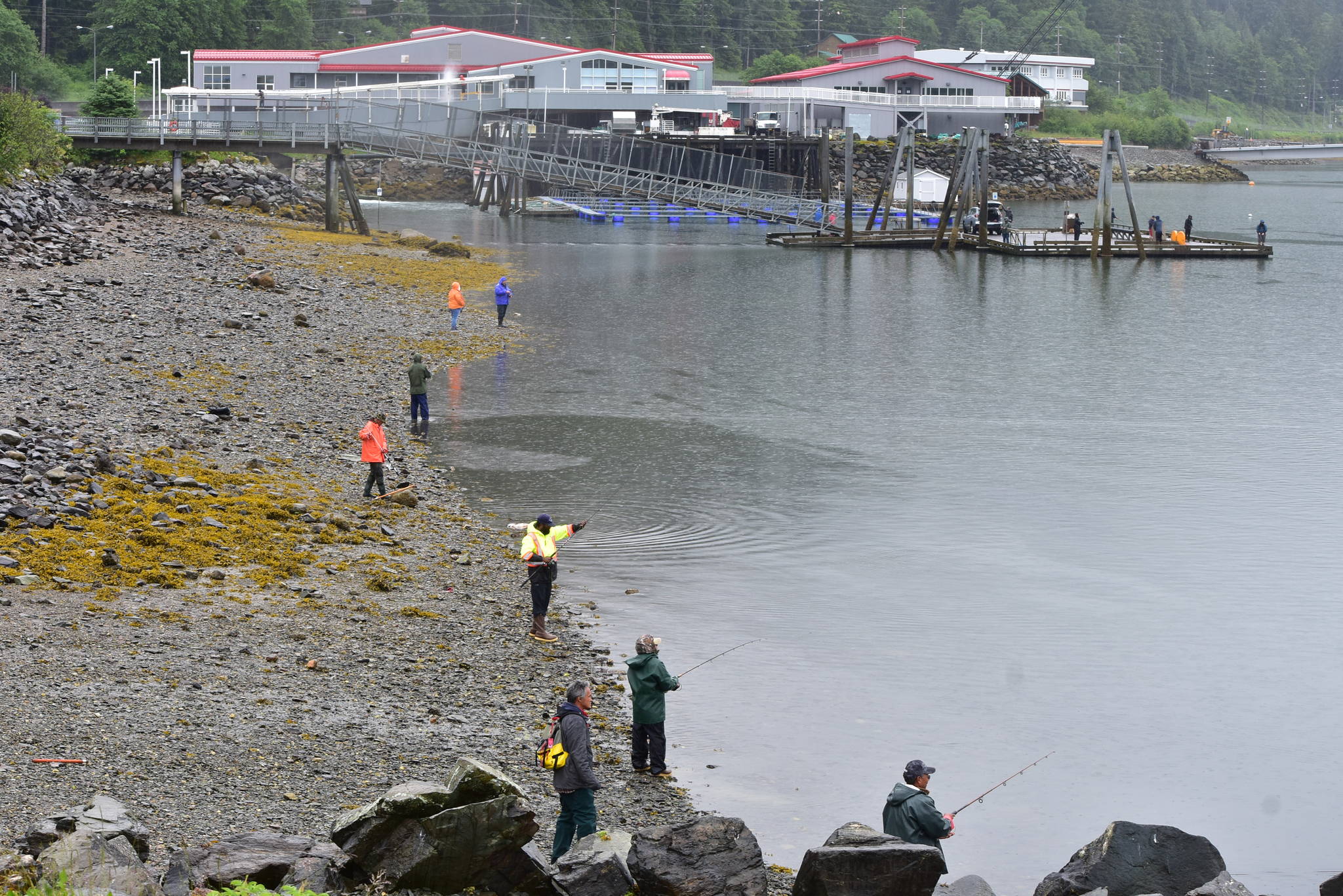
Peter Segall | Juneau Empire Fishermen along Channel Drive in Juneau on Friday, June 26, 2020. The Douglas Island Pink and Chum hatchery, seen in the distance, has reported much smaller returns of chum salmon this year. Hatchery officials are concerned about getting enough fish to maintain their broodstock.
“It’s better than last year, but not significantly better. It’s been a fair beginning, nothing really one can complain about,” said Joe Emerson, a commercial fisherman based out of Pelican and co-owner of Shoreline Wild Salmon. “It all depends on what species you’re fishing from. For the salmon trollers; things look pretty good, relatively normal.”
Emerson said prices for kings and cohos have gone up. Chum markets are often international, Emerson said, and have been disrupted by the pandemic. But kings and cohos are consumed domestically and sold at grocery stores, which in the face of restaurant closures have seen an uptick in business. On top of that, a rise in the price of meat has led to an increase in demand for seafood, Emerson said, and international competition from Norway and Scotland has been hampered by import issues.
[Ocean acidification effects may be especially pronounced in Alaska]
“If you talk to trollers, gilnetters, seiners; you’re going to get a different story,” he said. “Seiners and gilnetters are having a difficult season. Chinook and coho seem to be fairing fairly well.”
Looking ahead
It’s too early in the year to know what the coho return will be, but with poor returns on chum some Alaska fisherman are looking at yet another uncertainty during an economic and health crisis. Boats are fishing for cost recovery, Strangeland said, but this is the time of year when most Southeast fisherman make their money.
“We’re taking the openings, we’re going out and we’re trying to make the best of it,” he said. “It’s how we pay our bills so we have no choice but to just do it, and take what we can get.”
Asked about the climate among chum fisherman, Strangeland used one word — fear.
“We got a lot of young guys out there,” Strangeland said. “I’ve been around for a hundred years, I don’t have boat payments, I don’t have permit payments, I don’t have a lot of the big payments these young guys do. It’s fear, it’s worry. This is how we make our living and we make the lion’s share of it in a few months.”
• Contact reporter Peter Segall at psegall@juneauempire.com. Follow him on Twitter at @SegallJnoEmpire.
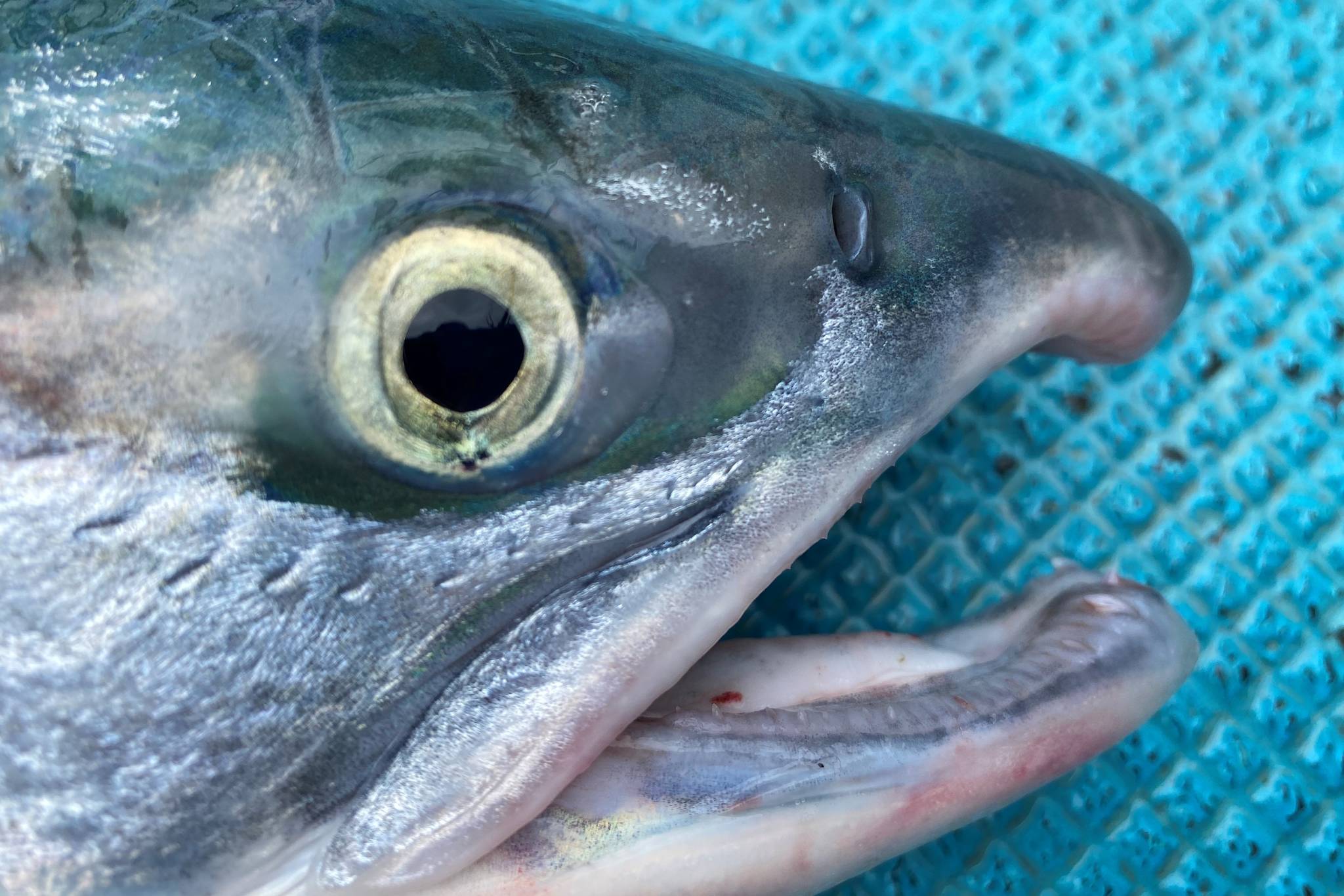
Courtesy Photo | Tyson Fick Southeast Alaska fisherman are reporting seeing much smaller salmon this year, and in the case of chum salmon, much fewer fish. That has some concerned about the future of fishing in the region.
