
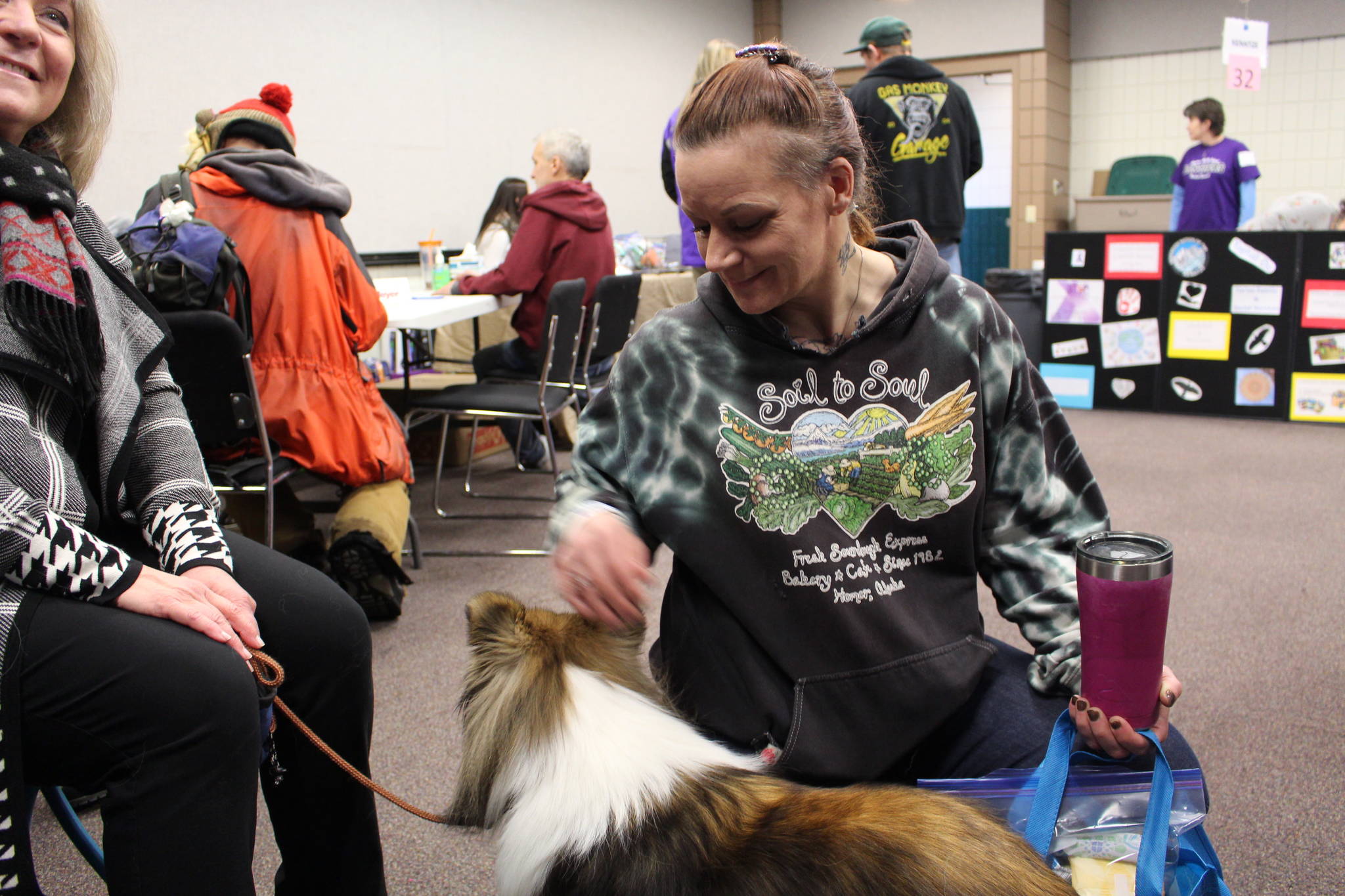
More people than ever participated in this year’s Project Homeless Connect on the central Kenai Peninsula, and about two-thirds of those people were attending for the first time, according to data compiled by the organizers of the event.
Project Homeless Connect is an annual event that consolidates support services like housing assistance, veterans services, vocational rehabilitation, haircuts and massages into one location so that those in the area who are experiencing homelessness or near-homeless can easily access the services they need. Thirty-four vendors and individuals provided services in Soldotna this year.
This year a Project Homeless Connect event was held on Jan. 29 in three locations on the Kenai Peninsula: Soldotna, Homer and Seward. Project Homeless Connect first began in San Francisco in 2004, and Soldotna has held an organized event since 2012.
During the Soldotna event, 147 of the 148 people who attended filled out a survey that asked for demographic information and explored the factors surrounding an individual’s homelessness. The data from the survey is used by agencies like the U.S. Department of Housing and Urban Development, the Homeless Action Coalition and the Kenai Peninsula Continuum of Care to determine what federal or state assistance may be available for the area.
According to the data collected during the event, the 147 people surveyed represented a total of 316 people in their households. The attendance was up from last year’s event, during which 126 individuals participated. Thirteen dogs also received care during the event, which was more than double the number of pets last year.
The gender divide among participants was split, with 71 men and 76 women in attendance. More than half of the participants, about 57%, were over the age of 45. American Indians and Alaska Natives represented about 25% of the participants. Eleven of the participants, or about 8%, were veterans.
About 46% of respondents reported being victims of domestic violence — of those, 79% were female. About 19% of those identifying as domestic violence victims also reported that they were actively fleeing a domestic violence situation.
A significant majority of the individuals, about 70%, reported that one or more disabling conditions was affecting their ability to retain housing. These conditions include alcohol abuse, a chronic health condition, drug abuse, mental health issues, a developmental or physical disability or having HIV/AIDS.
One in five respondents said that they had spent time in the foster care system, and 24 of those 29 individuals said that they spent a year or more in foster care.
Nearly a third of the participants, 31%, reported that they had spent 12 or more months homeless in the past three years.
The reported primary reason for being homeless varied significantly. The most common reason cited was the loss of a job at about 20%, but other reasons included an illness or injury, domestic violence, substance abuse and release from incarceration.
About 80% of the participants reported that they had either driven themselves or drove with others in order to attend the event, and 95% of them said that they would use a community bus route if one was available.
In addition to filling out the survey at the beginning of the event, 82% of the participants also completed an exit survey that asked what services they found the most helpful, what services were needed but not provided and where they heard about the event.
Some of the services requested included chiropractic services, legal help, mental health care, men’s housing, winter boots and jackets and an emergency cold weather shelter. About 90% of those who filled out the exit survey said they would use an emergency cold weather shelter if one was available.
A workgroup has been meeting monthly to establish a cold weather shelter on the peninsula, potentially by using local churches on a rotating schedule, but the group faces issues with complying with the building codes required of a shelter.
