
Environmentalists in Alaska and throughout the country expressed their elation Thursday as members of Congress introduced legislation to strengthen the 2001 Roadless Rule.
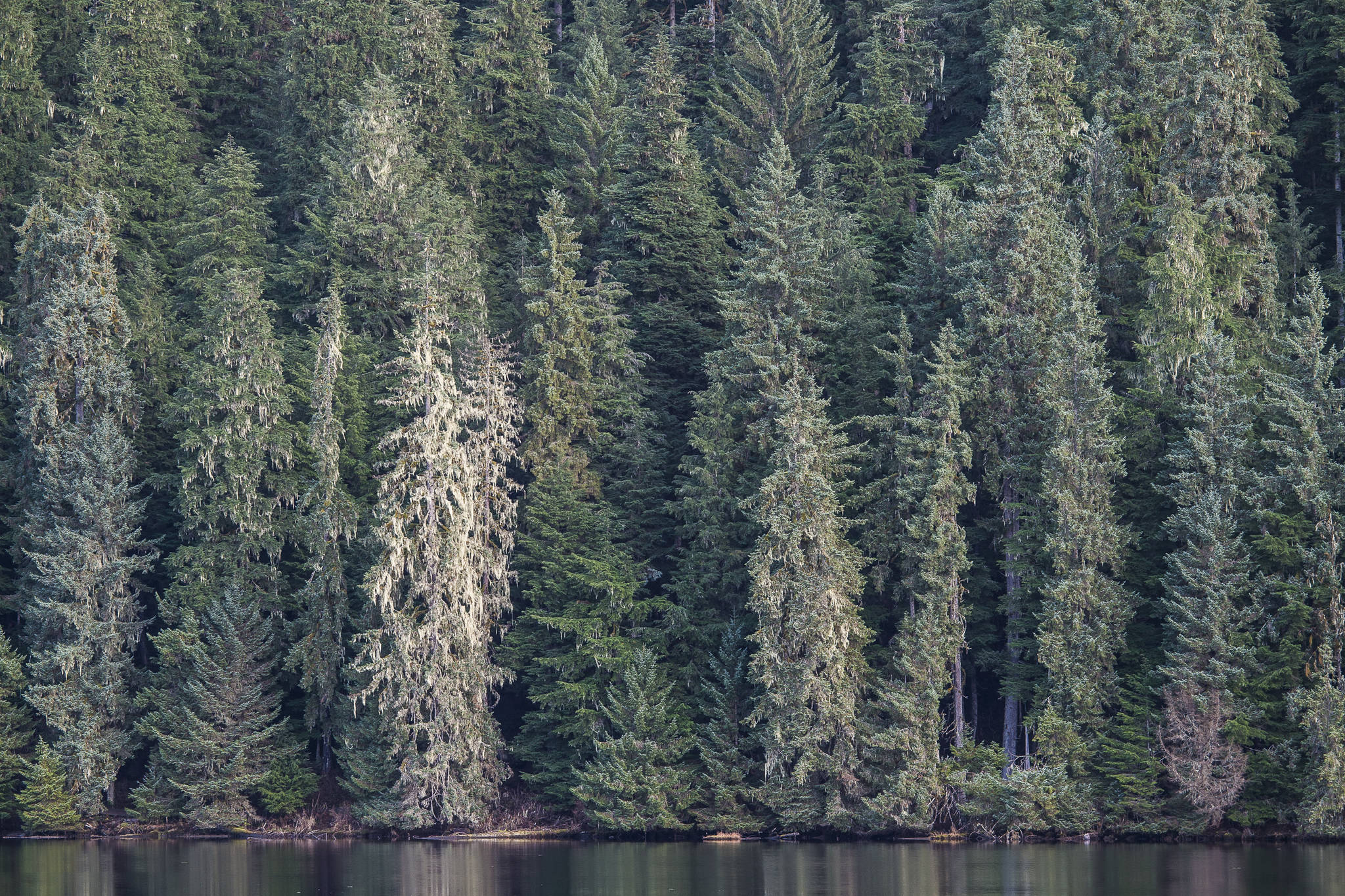
The rule, commonly referred to as simply the Roadless Rule, protects almost 60 million acres of National Forest Service land from roadbuilding or development. This includes 7.4 million acres in the Tongass National Forest.
The legislation introduced this week, known as the Roadless Area Conservation Act of 2019, would permanently protect the areas defined in the original Roadless Rule. It comes as the National Forest Service is considering an Alaska-specific Roadless Rule that could open up some of the roadless areas for development.
U.S. Sen. Maria Cantwell, D-Washington, and U.S. Rep. Ruben Gallego, D-Arizona, introduced the legislation. Cantwell spokesperson Bryan Watt said via email that this legislation would effectively prohibit the Forest Service from introducing a state-specific Roadless Rule, and that “the only way to change it would be legislation, rather than through agency rulemaking,” Watt said.
Dru Fenster, public affairs specialist for the Forest Service, said the opposite: She said via email that the Forest Services “rulemaking is administrative and separate from any action Congress may take.”
Cantwell tried to get this legislation through in 2018 as well, but the bill never made it out of committee. Fifteen senators and 36 representatives cosponsored the most recent bill, but nobody from Alaska’s congressional delegation did.
Meredith Trainor, executive director of the Southeast Alaska Conservation Council (SEACC), said in a statement that she hopes Alaska’s three congress members come around to the idea of preserving these roadless areas.
“This is real federal leadership on our public lands,” Trainor said, “and we hope the Alaska Delegation is taking notes as they instead work to exempt the Tongass National Forest from the federal Roadless Rule.”
Sen. Dan Sullivan told the Empire in March that he’s not in favor of keeping the Roadless Rule in place in its entirety, because access to resources is too limited as it is. In a March opinion piece for the Ketchikan Daily News, Sen. Lisa Murkowski that she’s in favor of greater access in the Tongass to promote resource development. U.S. Rep. Don Young was quoted in September 2017 that he was in favor of repealing the Roadless Rule.
[Opinion: Why the Tongass should be exempt from the Roadless Rule]
SEACC was one of many organizations that released statements Thursday morning praising the proposed legislation. SEACC was included in a joint statement issued by Defenders of Wildlife, the Alaska Wilderness League, Earthjustice and others about their support for the Roadless Area Conservation Act of 2019.
The Alaska-specific Roadless Rule has yet to be written, and is scheduled to be released in June 2020, according to the latest Roadless Rule bulletin from the USFS in March.
About 45 percent of the 17-million-acre Tongass National Forest isn’t open to timber harvest or the construction or reconstruction of roads under the Roadless Rule. About 20 percent of that total is Congress-designated wilderness blocked from development even under a modified roadless rule. The remainder is what’s under discussion.
The Forest Service sends out monthly updates about its progress on examining the Roadless Rule and will consult with Alaska Native corporations, according to the most recent bulletin. In July or August, the Draft Environmental Impact study should be completed, and there will be public meetings and a 60-day open period for written comments.
[Opinion: Phony Forest Service process]
During the recent public comment period (Aug. 20-Oct. 15, 2018), the Forest Service heard 144,000 comments.
In Southeast Alaska specifically, responses “generally opposed” increasing timber harvesting in the region, according to the Forest Service’s public comment summary.
Alaska Wilderness League’s Alaska Director Andy Moderow said in a statement Thursday that opening these lands up to the timber industry would be short-sighted.
“If we’re really willing to think long term,” Moderow said, “keeping the Roadless Rule in place will continue to help strengthen Southeast Alaska’s economy while maintaining the health of our forests and the communities and wildlife that depend on them.”
• Contact reporter Alex McCarthy at amccarthy@juneauempire.com. Follow him on Twitter at @akmccarthy.
