
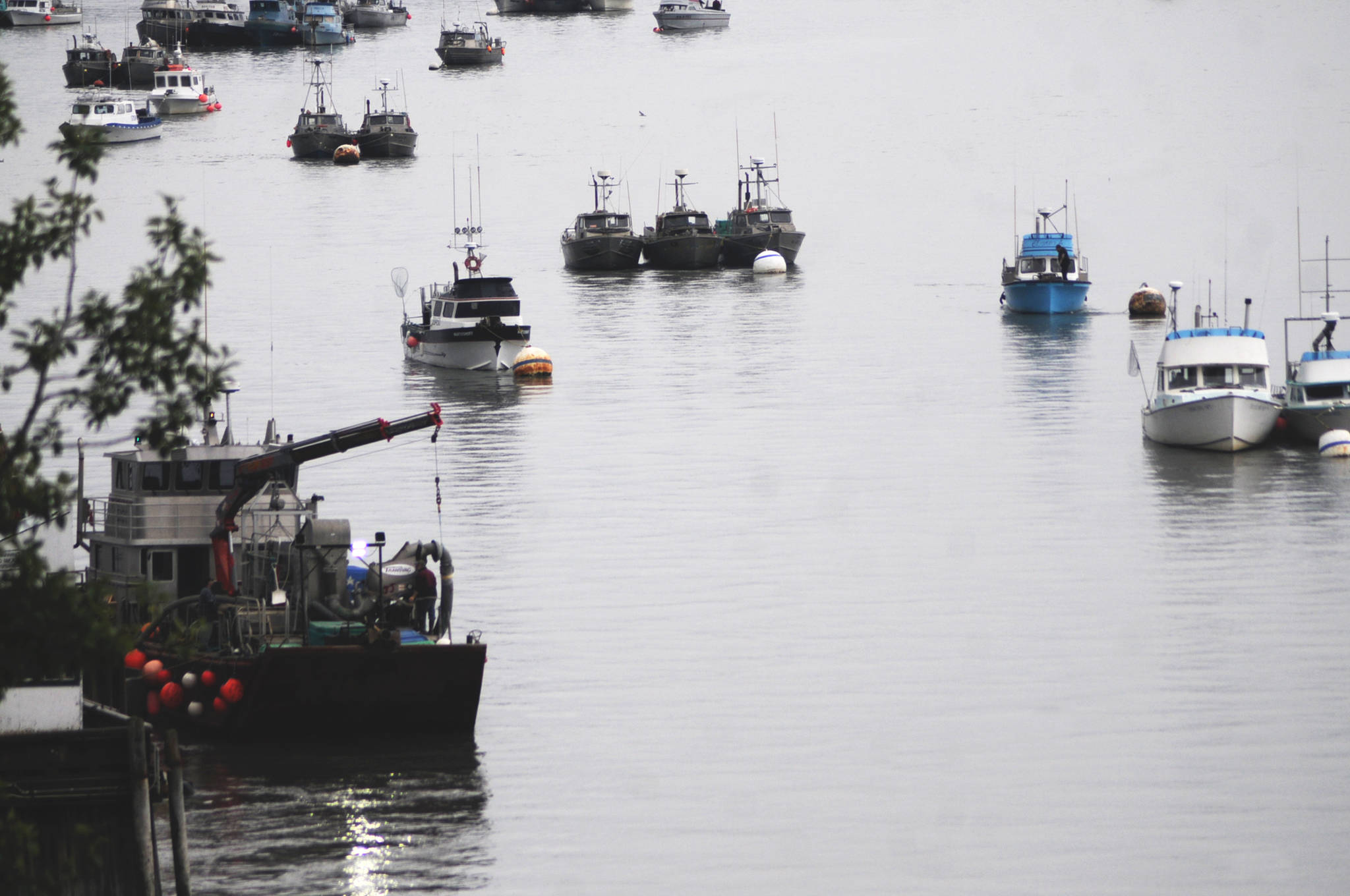
Commercial fisheries managers in Cook Inlet are moving forward with a cautious eye on salmon runs but relatively normal fishing regulations for the summer.
An Alaska Department of Fish and Game announcement released Friday detailed the 2018 commercial salmon fishing management strategy for Upper Cook Inlet.
Managers are predicting a somewhat lower Kenai River late-run king salmon return, but it’s still within the sustainable escapement goal; the sockeye salmon forecast for the Kenai River is predicted to be 2.5 million, which is about 1.1 million less than the recent 20-year average. After harvest by commercial, personal-use, subsistence and sport fishermen, manager still have to reach an escapement goal of 700,000–1.2 million sockeye for the Kenai River. The Kasilof River is predicted to see 866,000 sockeye salmon return, a little over 100,000 fish shy of the recent 20-year average according to the announcement. The Susitna River is expected to see 329,000 sockeye, below the average, and Fish Creek is expected to see 211,000 sockeye, more than double the recent average.
East side set gillnet fishermen in the upper subdistrict — from Ninilchik up to the East Forelands along the western shore of the Kenai Peninsula — will open with their regular periods to start. There are three sections — Kasilof, Kenai and East Forelands. The areas operate under different management plans and so have different opening dates and restrictions, but both open on Mondays and Thursdays for regular 12-hour fishing periods. Managers can open additional fishing hours if the inriver sonars indicate there are enough fish.
“Because the harvest of sockeye salmon by inriver users (sport and federal subsistence) above the sonar counter is not known inseason (although it is estimated for total run projections purposes), the primary inseason management objectives are the abundance based sockeye salmon inriver goals in the Kenai River and the (biological escapement goal/optimum escapement goal) in the Kasilof River,” the announcement states. “The Kenai River sockeye salmon (sustainable escapement goal) will be assessed after inriver sport and federal subsistence harvests above the sonar counter are accounted for.”
Setnetters in the Kasilof section can start fishing as early as June 20 if Fish and Game estimates that the Kasilof River sonar has counted at least 50,000 fish. Otherwise, the section’s first regular period falls on June 25. Setnetters in the Kenai and East Forelands sections don’t open until July 8. The drift gillnet season in Upper Cook Inlet will open June 21.
Managers reevaluate the run projection midseason, around July 20. If the run is larger than expected, they readjust the fishing strategy to help control escapement, as they did in 2017; a thin run early in the season led to commercial fishermen being closed for several regular periods, but as the fish started to show up, biologists readjusted their estimates to show that the run was late and opened commercial fishing for several extra periods in late July. If it’s smaller than expected, managers can adjust as they go and close commercial fishing periods. Sportfishing managers can do the same for king salmon inriver, in concert with commercial fishing restrictions.
Though the Northern District setnetters — who fish in the area of Upper Cook Inlet north of a line drawn across the inlet from the West Forelands — will get to fish for sockeye salmon after June 25 for two weekly 12-hour fishing periods, they won’t get to fish for king salmon this year. The Deshka River failed to meet its 2017 king salmon escapement goal and is projected to see a total run too small to meet its escapement goal again in 2017, so Fish and Game managers closed the entire Deshka and Yentna river drainages to king salon fishing and closed the Northern District setnet targeted king salmon fishery.
Setnetters in that area usually get four openings in May and June to specifically harvest king salmon. All four will be closed this year unless the run comes in much higher than expected, according to the announcement.
“Escapement of king salmon in the Deshka and Little Susitna rivers will be closely monitored during the 2018 season,” the announcement states. “If runs are better than expected and the Deshka River (sustainable escapement goal) is projected to be achieved with moderate levels of harvest, reopening the directed king salmon commercial fishery would be considered.”
Reach Elizabeth Earl at eearl@peninsulaclarion.com.
