
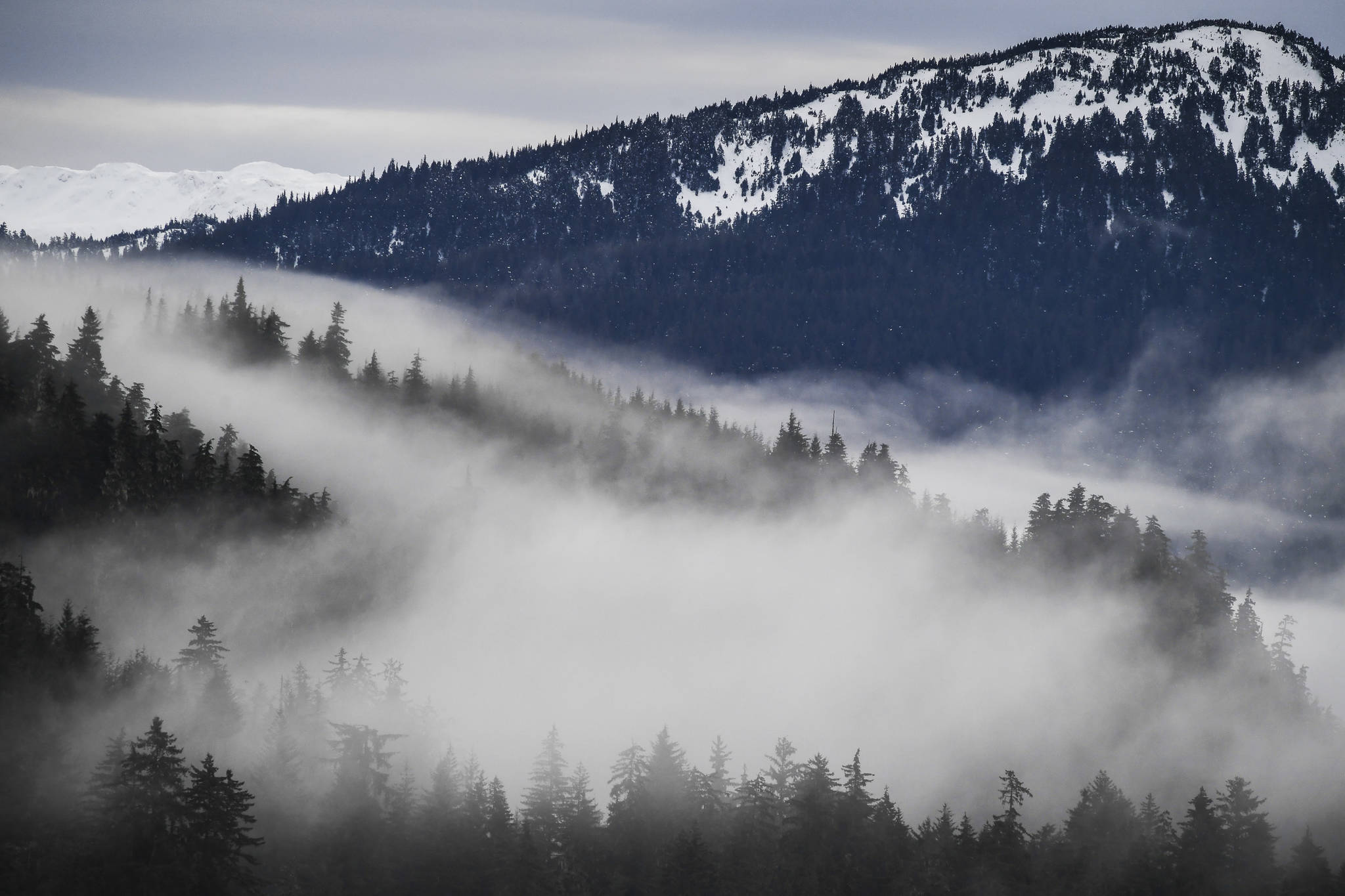
Nearly two dozen Alaska Native tribal governments, environmental groups, and other advocacy organizations banded together to file a lawsuit against the Trump Administration exempting the Tongass National Forest of Clinton-era protections.
Spearheaded by Earthjustice and the Natural Resources Defense Council and filed in U.S. District Court for the District of Alaska, the lawsuit seeks to halt sale of the land and reverse the ending of protections for more than half of the Tongass National Forest from road building and clear-cut logging, according to a news release from the 21 plaintiffs.
“There’s really been a loss of the habitats from road fragmentation and clear cuts. In terms of climate change, those forests have some of the most significant carbon stocks in the country,” said Sally Schlichting, a policy analyst for the Southeast Alaska Conservation Council, one of the plaintiffs, in a phone interview. “There are really valuable watersheds in the roadless areas that help sustain a billion-dollar salmon industry.”
[Eagle shot off Back Loop Road]
Plaintiffs include Tribal governments such as Organized Village of Kake, Organized Village of Saxman, Hoonah Indian Association, Ketchikan Indian Community and Klawock Cooperative Association.
Other organizations represented in the lawsuit include organizations like SEACC, Uncruise, the Sierra Club, the National Audubon Society, Greenpeace Inc., the National Wildlife Federation and others.
“Gutting the Roadless Rule imperils unique wildlife and salmon-producing waters, and threatens the livelihoods of commercial fishing families and small businesses in tourism and recreation,” said the news release. “The Tongass produces some 25% of West Coast salmon, and attracts millions of visitors from around the world.”
Fishing and tourism account for more than 26% of the economy of the Southeast, Schlichting said, while logging accounts for less than 1%. The rule repeal was made after a public comment period that failed to account for input from or even to consult Alaska Natives about their subsistence use of the land, which the Roadless Rule exemption will directly affect, Schlichting said.
“President Trump’s shortsighted rollback of the Roadless Rule goes against the will of the people — 96% of all unique public comments supported keeping Roadless Rule protections on the Tongass — and jeopardizes the ancestral homelands of the Tlingit, Haida and Tsimshian people,” the news release said. “Many Indigenous communities continue to rely on the Tongass for fishing, hunting, foraging and traditional ways of life. Removing forest protections will have staggering consequences for their culture and food.”
The lawsuit argues that the rollback violated a wide number of regulations, including the Administrative Procedure Act, Multiple-Use Sustained-Yield Act, Organic Administration Act, National Forest Management Act, National Environmental Policy Act and the Alaska National Interest Lands Conservation Act.
“It’s about calling out the Forest Service about how arbitrary about this rule they came up with,” Schlichting said. “You can’t be arbitrary and capricious in your rulemaking.”
Many of the plaintiffs voiced their support, highlighting thousands of years of coexistence with the land that they say was ignored in the decision to exempt the Tongass.
“We are deeply concerned about the protection of the Tongass National Forest, where our ancestors have lived for 10,000 years or more,” said Joel Jackson, Tribal President of the Organized Village of Kake, in the news release. “We still walk and travel across this traditional and customary use area, which is vast and surrounds all of our communities to the north, south, east and west. It’s important that we protect these lands and waters, as we are interconnected with them. Our way of life depends on it.”
Read the full complaint below:
Contact reporter Michael S. Lockett at (757) 621-1197 or mlockett@juneauempire.com.
