
By Mark Thiessen
Associated Press
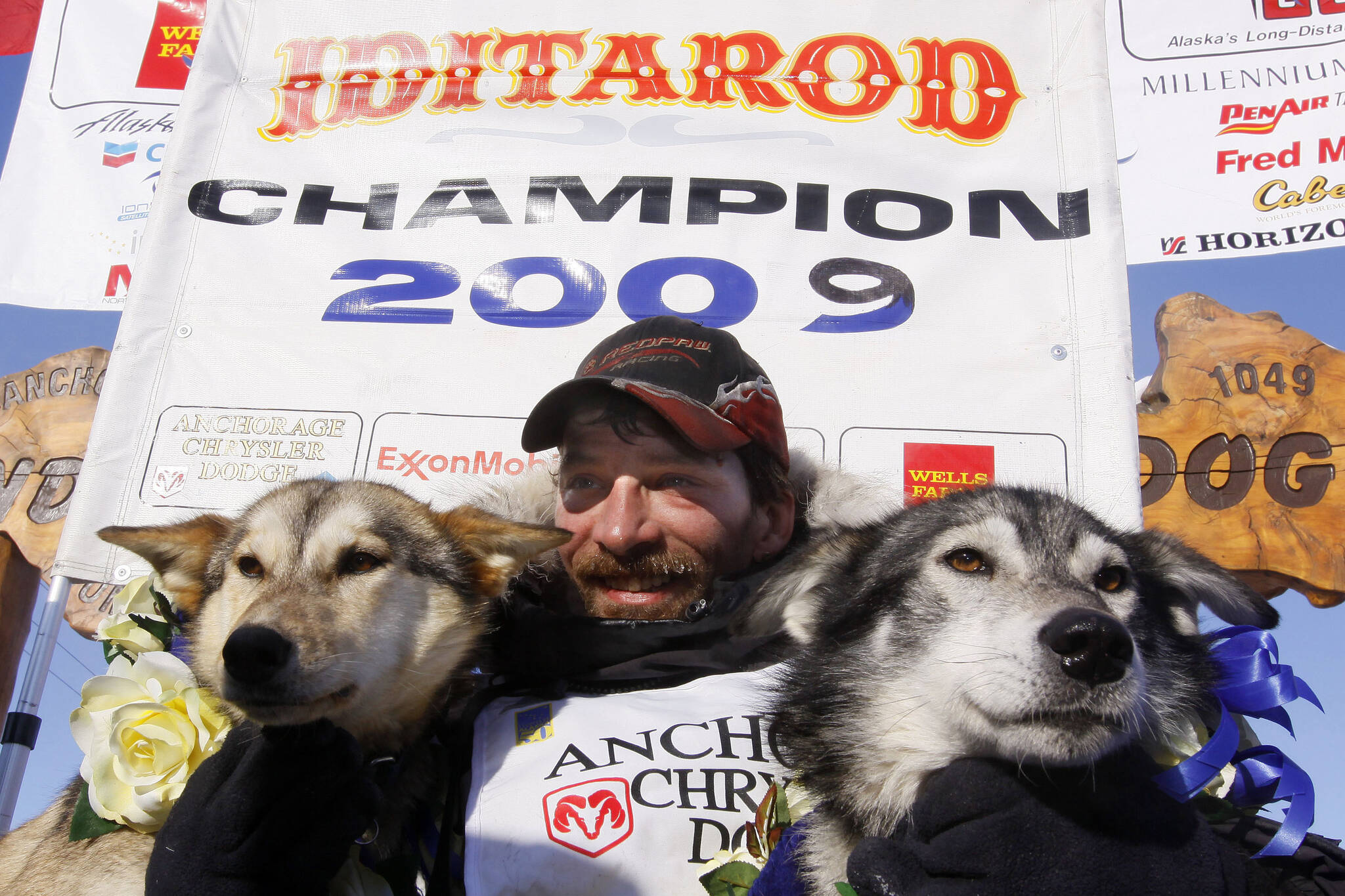
ANCHORAGE — Lance Mackey, one of mushing’s most colorful and accomplished champions who also suffered from health and drug issues, has died.
The four-time Iditarod Trail Sled Dog Race winner died Wednesday from cancer, his father and kennel announced on Facebook. He was 52.
Officials with the world’s most famous sled dog race said Iditarod Nation was in mourning.
“Lance embodied the spirit of the race, the tenacity of an Alaskan musher, displayed the ultimate show of perseverance and was loved by his fans,” officials said in a statement.
The son of 1978 Iditarod champion Dick Mackey and brother of 1983 champion Rick Mackey, Lance Mackey overcame throat cancer in 2001 to win an unprecedented four straight Iditarod championships, from 2007 through 2010.
It wasn’t just the 1,000-mile race across Alaska where he excelled. During his Iditarod run, twice he also won the 1,000-mile Yukon Quest International Sled Dog Race between Canada and Alaska with only two weeks’ rest between races.
But after the string of wins, he was beset by personal problems, health scares and drug issues that prevented him from ever again reaching the top of the sport.
The treatment for his throat cancer cost him his saliva glands and ultimately disintegrated his teeth.
He was then diagnosed with Raynaud’s syndrome, which limits circulation to the hands and feet and is exacerbated by the cold weather that every musher must contend with in the wilds of Alaska.
In the 2015 race, he couldn’t manipulate his fingers to do simple tasks, like putting booties on his dogs’ paws to protect them from the snow, ice and cold. His brother and fellow competitor Jason Mackey agreed to stay with him at the back of the pack to help him care for the dogs.
It was a life-changing blow for Lance Mackey, who knew no other lifestyle.
“I love this sport,” he told an Iditarod TV crew during that race while choking back tears. “I can’t do it no more.”
Documentary filmmaker Greg Kohs spent two weeks with Mackey during the 2013 Iditarod, filming “The Great Alone.” He was waiting in the tiny, remote village of Takotna for Mackey to arrive, and he was encouraged to go there because village residents make amazing pies to serve the mushers as they come through the race checkpoint.
“I realized Lance Mackey was a lot like a piece of pie. Once you got a taste of his story and personality, you wanted to share it with others,” he said in a statement issued after learning of Mackey’s death.
“And like a homemade pie, the tin is often dinged up, and the crust might not look perfect, but inside is a delicious recipe richened by time, wisdom and soul,” Kohs wrote.
Whether he won or lost, or when talking about problems, Mackey was always transparent.
“That honesty is what allowed him to be fearless,” five-time champion Dallas Seavey told The Associated Press on Thursday. “He didn’t have to see himself in a different light than he actually was.”
Seavey said Mackey gave it everything, racing to the limit.
“If it didn’t work, it didn’t work, and that was fine by him,” Seavey said. “It made him a heck of a competitor.”
Another musher, four-time Iditarod champion Jeff King, said Mackey was a fabulous competitor.
“He will be missed and always remembered as a great dog man,” King said.
After his string of first place finishes, Mackey dropped back in the standings, finishing a career-worst 43rd in 2015. The next year he scratched and didn’t race the Iditarod again until 2019, when he placed 26th.
In the 2020 race, his last, he carried his mother’s ashes in his sled to the finish line in Nome to honor her, but he was later disqualified after testing positive for methamphetamine. He entered rehab on the East Coast.
Before the Iditarod began drug testing in 2010, Mackey also acknowledged using marijuana on the trail.
Months after the 2020 race finished, his partner Jenne Smith died in an all-terrain vehicle accident. They had two children.
Last month, he told the Iditarod website that an examination after a car accident discovered more cancer, and he thought treatment had taken care of it. “But came up with some other issues that aren’t gone and seem to have moved rapidly and left me in the position I’m in at the moment,” he said, noting he was on oxygen and had lost 30 pounds.
When asked if he was fearful, Mackey responded: “I’m not fearing nothing. You know, it is what it is, but I’m not any different than the rest of the people on the planet. When it’s my bus stop, I’ll get off.”
He also used the opportunity to apologize to his fans for his past problems.
“I’m still, like never before, embarrassed and ashamed and disappointed,” he said following his disqualification.
He said he knew he had lost fans and wasn’t looking to change their opinion of him.
“I am truly sorry for the many embarrassing moments, but I’m also grateful for the support that I also received from a lot of the same people,” he said.
DeeDee Jonrowe, a retired musher who had known Lance since he was a junior musher, went through cancer treatments about the same time as Mackey.
“I admire him for what he fought through, but I’m really sad for the fact he wasn’t able to survive the dysfunction of it all,” she said, noting the loss of mother, partner and the substance abuse, which didn’t help the cancer treatments.
“He’s a legend,” Jonrowe said. “But I don’t think he would want anybody to follow his lifestyle footsteps. He would wish that they would learn from the stumbles that he made.”
