
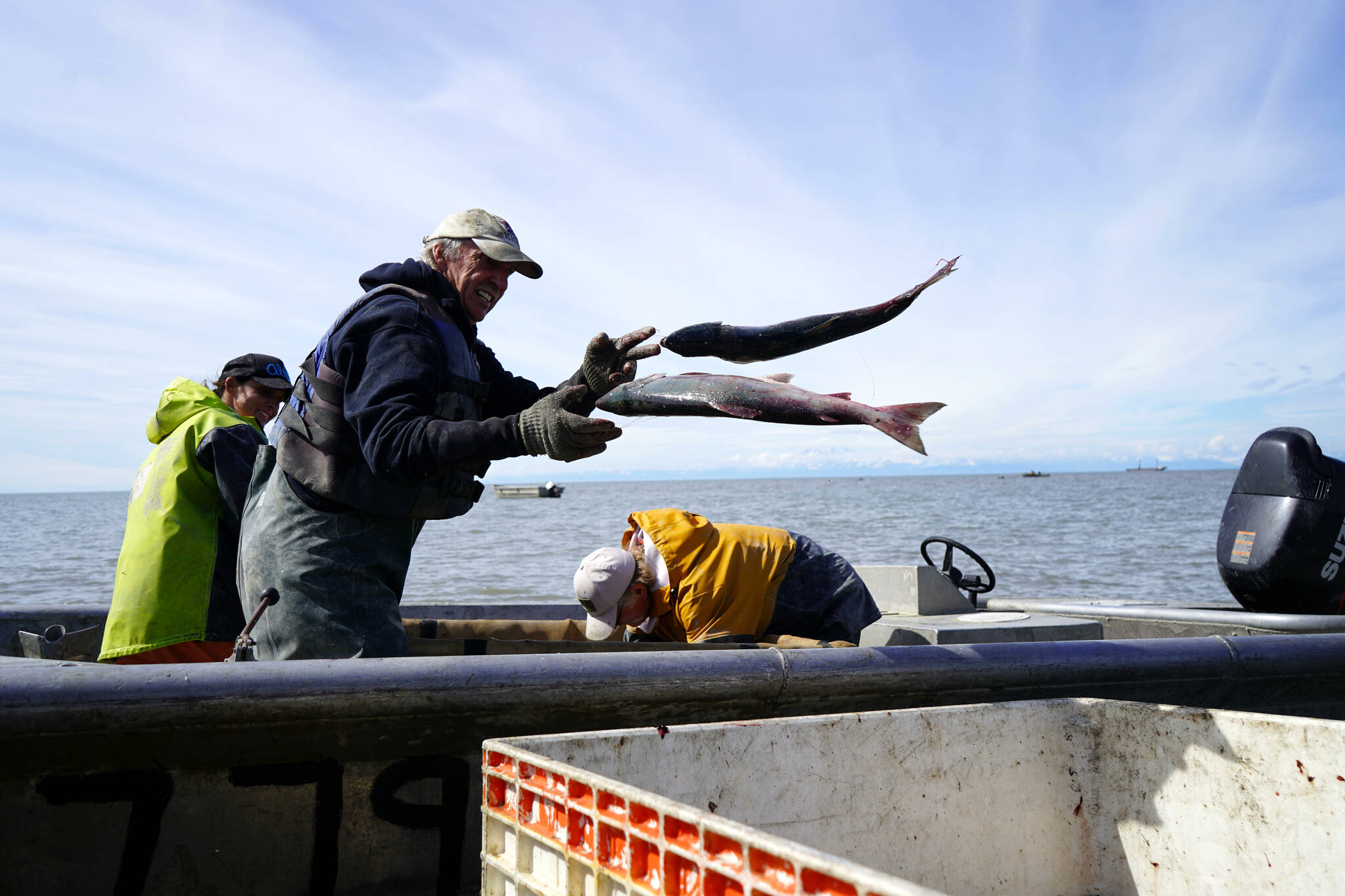
For the first time since 2022, east side setnetters were lining Cook Inlet beaches on Tuesday and Wednesday to haul out their piece of a record-breaking sockeye salmon run.
The setnet fishery has been closed entirely for the last few years to protect declining king salmon returns. The east side setnet fishery targets sockeye salmon, which have been abundant in recent years, but also has historically caught some king salmon as well.
Kenai River late-run king salmon in 2023 were named a stock of management concern and an action plan approved by the state board of fisheries bars setnetters from fishing locally unless more than 14,250 large king salmon are projected in the run. If that number is projected, setnetters can operate only under limited hours and with limited gear.
An emergency order by the State Department of Fish and Game says that the projected king salmon run is nearly 17,000 large fish. That’s why a pair of openings were authorized, for eight hours each, on Tuesday and Wednesday.
Gary Hollier fishes a setnet site just off of Kalifornsky Beach Road, well south of the mouth of the Kenai River. On Wednesday, he was picking fish from his net and operating his site with a small crew of family and friends like he hadn’t missed a beat. In recent years, Hollier has been involved in multiple test fisheries seeking opportunity for his fishery by reducing or eliminating king salmon mortality — testing shallow nets in 2023 and seine nets in 2024 and 2025 — but this week is the first time in years that he’s been able to setnet in a standard operation with his usual gear.
“We’ve been ready to fish for three years and that’s what we’re doing right now,” he said. “Be safe, catch fish, have fun.”
Despite little notice and reduced gear, Hollier said he was still thrilled to be out fishing this week. There were, he said, “lots of smiles” on the beach this week. He said any fisher whose livelihood is tied to escapement goals and run projections knows to expect the unexpected. He’d pulled his buoys out of the water last week because he hadn’t expected the chance to fish — but he put them right back in when he heard there would be an opening.
“If you’re not ready to fish, then that’s your fault,” he said. “Nobody put my running lines out for me.”
Fishing under the action plan still doesn’t resemble a fully functioning setnet fishery, Hollier said. The plan limits fishers to shallower nets, and imposes a limit of one net per person. Hollier said that many setnetters hold multiple permits — each of which allows for the use of three nets under regulation. He holds two permits and formerly could fish up to full nets — now he’s fishing one net that’s also required to be smaller than before.
Expanding that math up and down the beach, he said, there are far fewer fishers manning far fewer nets, which cover a smaller area. They also fish at specific times to further try to avoid king salmon, but in two days of fishing, Hollier said he hadn’t encountered a single king.
The action plan allows for up to six days of fishing, across three possible two-day windows, at times when the projection hits the key 14,250 large king number. As this year has seen a stronger than average king return, Hollier said he was disappointed that the department didn’t allow fishing until the third and final window. Fishing one day in July, he said, they could have caught “10 times” the fish.
“I would like to have a piece of that 4.9 million that they’re projecting in the Kenai River,” he said. “When you see that kind of numbers up the creek, it’s pretty hard to take.”
The department manages sockeye salmon for an escapement goal of 750,000-1.3 million fish. This year, nearly 4 million have been counted and the department projects a final tally of around 5 million. More than 100,000 sockeye have been counted daily for more than 20 consecutive days and the July 21 single-day count of more than 247,000 is the largest on record. Fishers have said that the overescapement means a wasted resource, lost economic value and potential impacts to future returns.
Hollier on Wednesday said that the millions of fish that are going uncaught this year represent money that fails to reach the Kenai Peninsula.
“Setnetters put a lot of money into the economy,” Hollier said. “It’s a college kid going to education. It’s a down payment on a truck. It’s part of a house payment. It’s something. We’re sitting here idling, it’s pretty frustrating.”
Kenai Peninsula Borough Mayor Peter Micciche during a meeting of the borough assembly on Tuesday spoke similarly, saying that the borough this year alone is losing “tens of millions of dollars of missed commerce opportunity for your friends and neighbors.” That means, he said, “significant negative impact to our economy.”
State and federal governments have recognized economic disasters in the setnet fishery for five of the last seven years. Emergency relief funds began to be distributed for the first of those disasters earlier this year. Hollier said that setnetters should contribute some of those earnings to support the Kenai Peninsula Fishermen’s Association — who advocate to the Alaska Legislature and the State Board of Fish on their behalf.
Hollier said he’s hoping to see king salmon return and his fishery be allowed to fish in full again. He supports efforts like the beach seine to find opportunity below the 14,250 large king projection. He wants to keep gill nets in Cook Inlet.
“I’m happy to be fishing today,” he said. “I wish we could make some changes to get a little more opportunity for all these setnetters.”
Reach reporter Jake Dye at jacob.dye@peninsulaclarion.com.
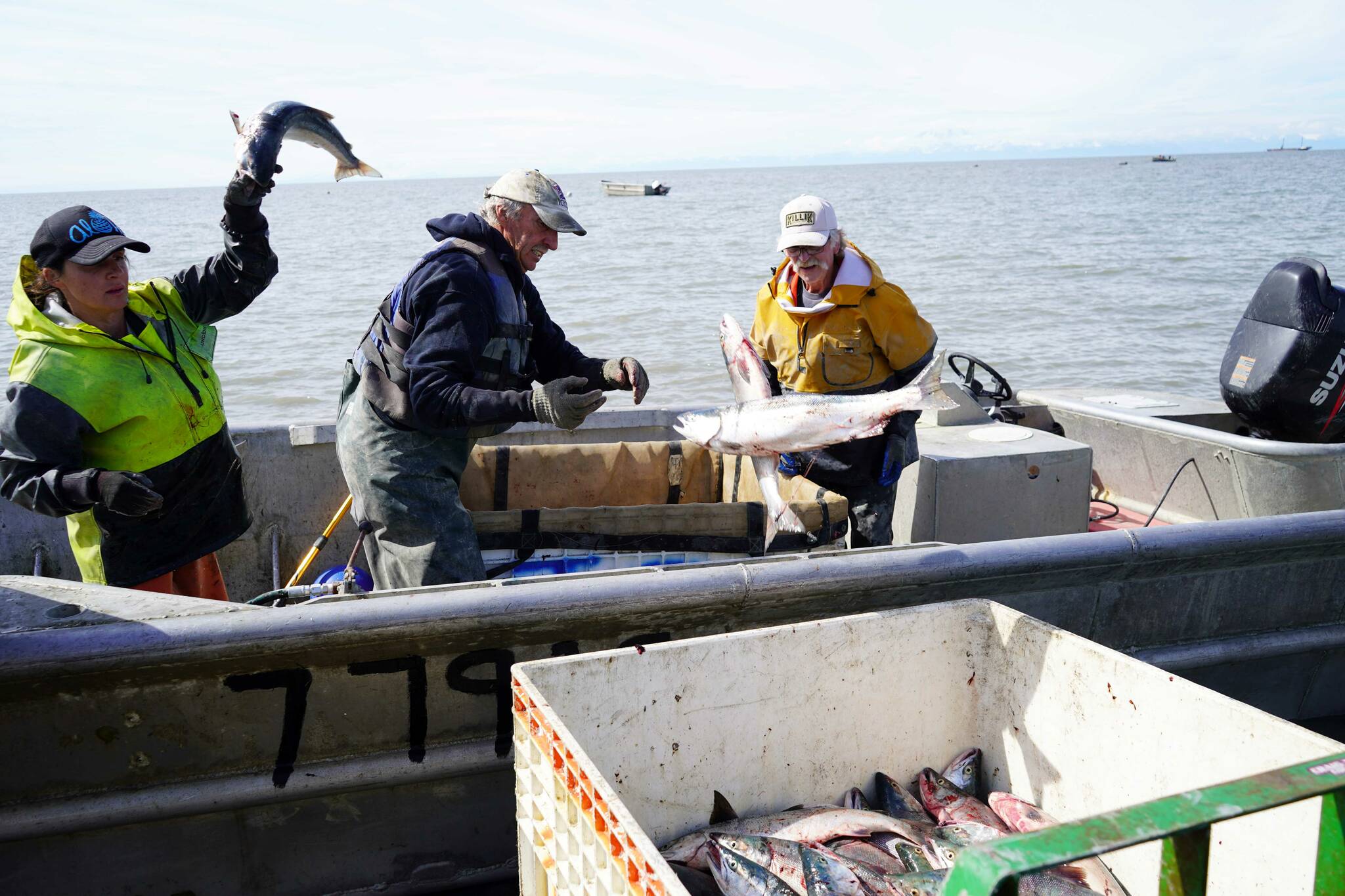
Gary Hollier, center, and other east side setnetters offload sockeye salmon on a beach in Kalifornsky, Alaska, on Wednesday, Aug. 6, 2025. (Jake Dye/Peninsula Clarion)
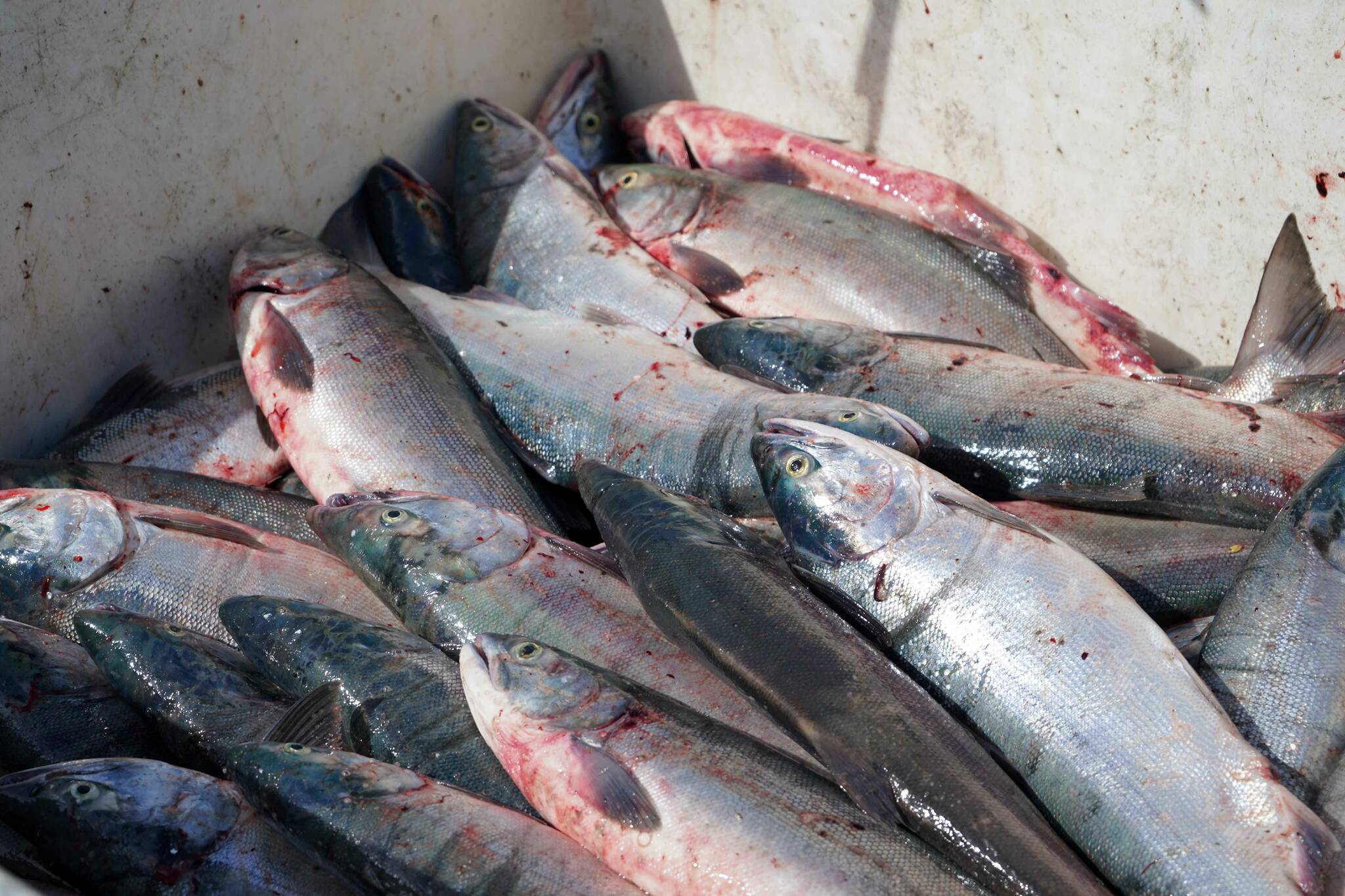
Sockeye salmon are piled in a crate on a beach in Kalifornsky, Alaska, on Wednesday, Aug. 6, 2025. (Jake Dye/Peninsula Clarion)
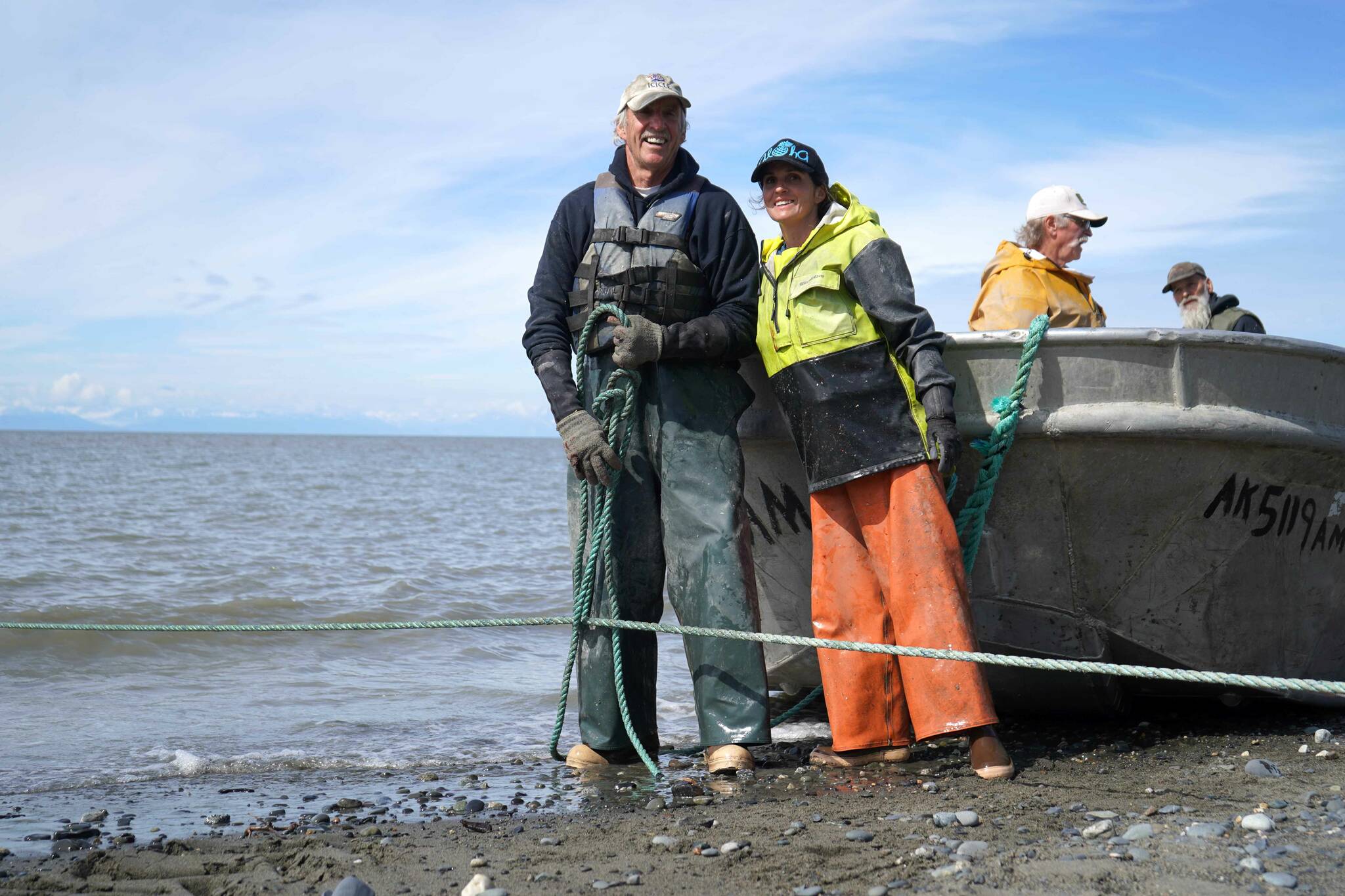
Gary Hollier ties his boat to shore in Kalifornsky, Alaska, on Wednesday, Aug. 6, 2025. (Jake Dye/Peninsula Clarion)
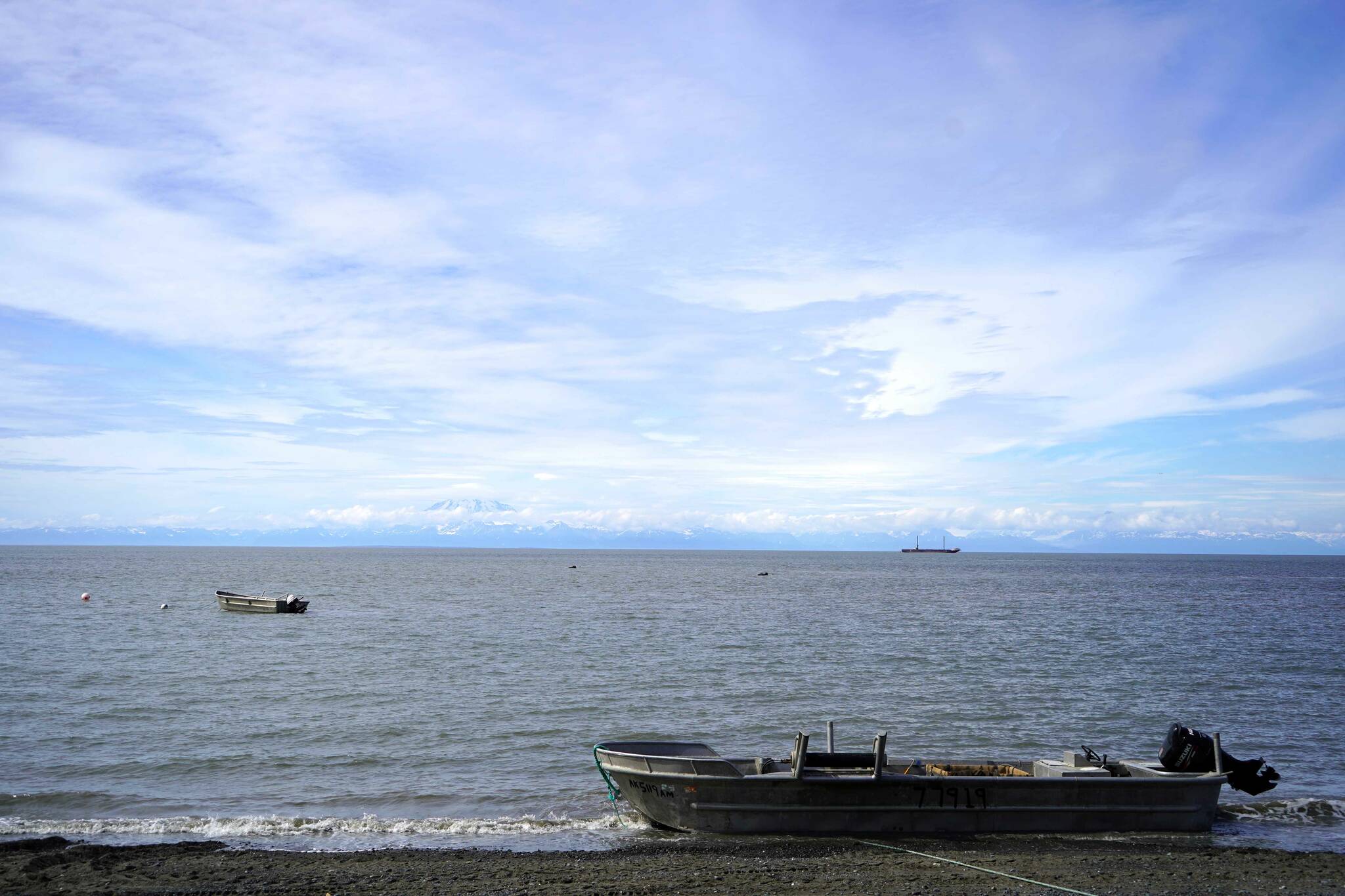
A boat rests on the shore of a setnet site in Kalifornsky, Alaska, on Wednesday, Aug. 6, 2025. (Jake Dye/Peninsula Clarion)
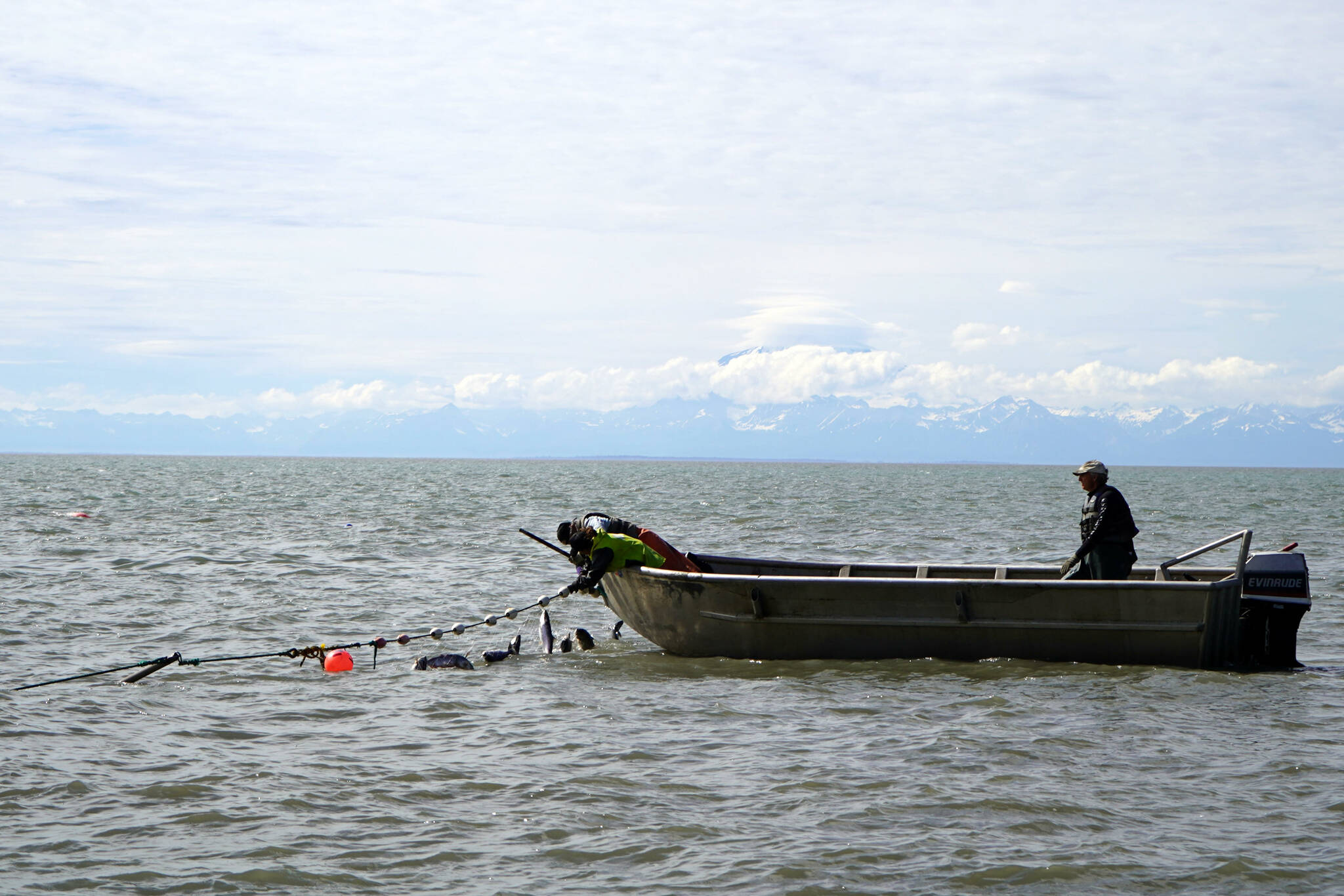
Gary Hollier, right, watches as a setnet is pulled into a boat in the waters of Cook Inlet in Kalifornsky, Alaska, on Wednesday, Aug. 6, 2025. (Jake Dye/Peninsula Clarion)
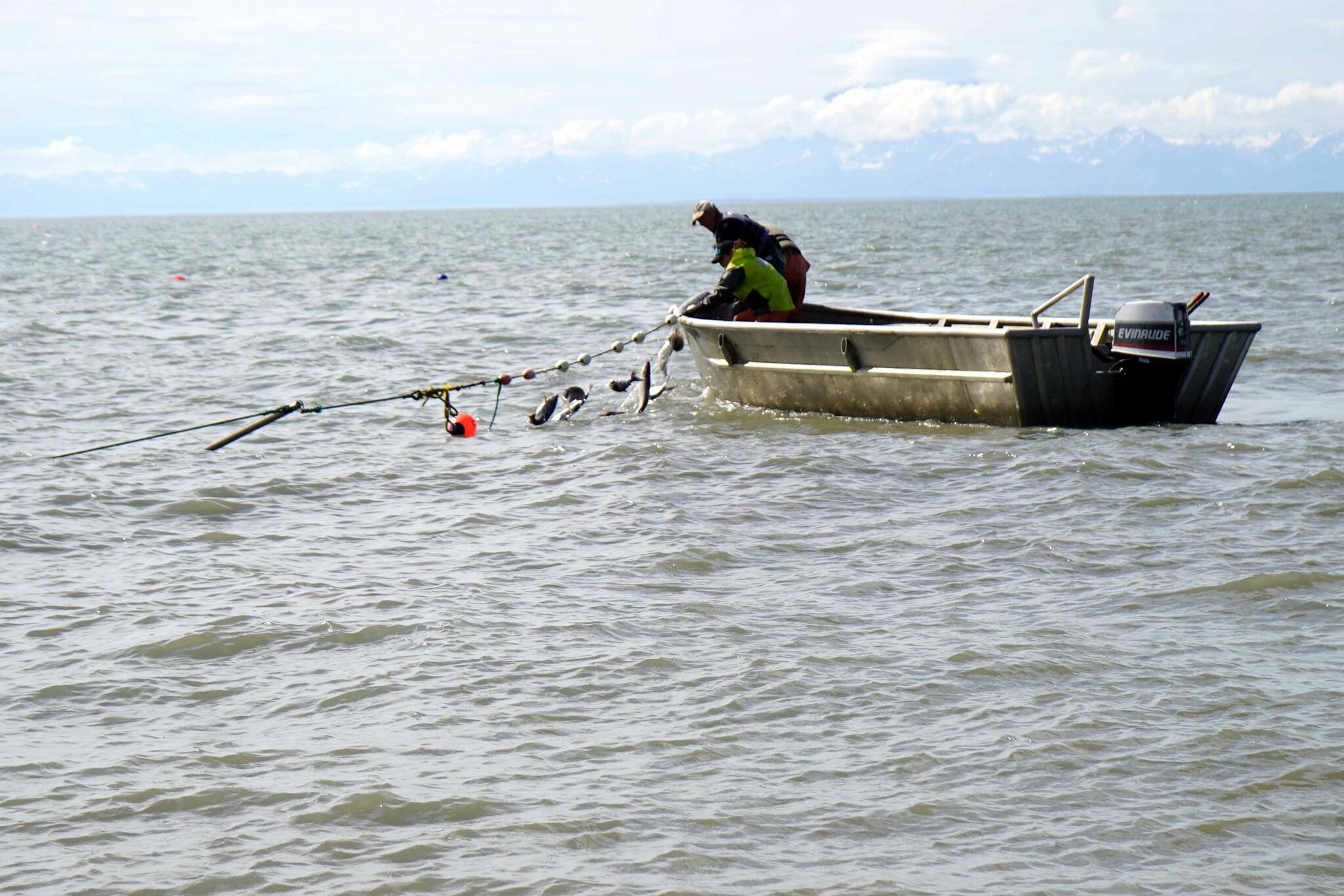
Gary Hollier and other east side setnetters pull a setnet filled with sockeye salmon onto a boat in Kalifornsky, Alaska, on Wednesday, Aug. 6, 2025. (Jake Dye/Peninsula Clarion)
