
By MATTHEW DALY
Associated Press
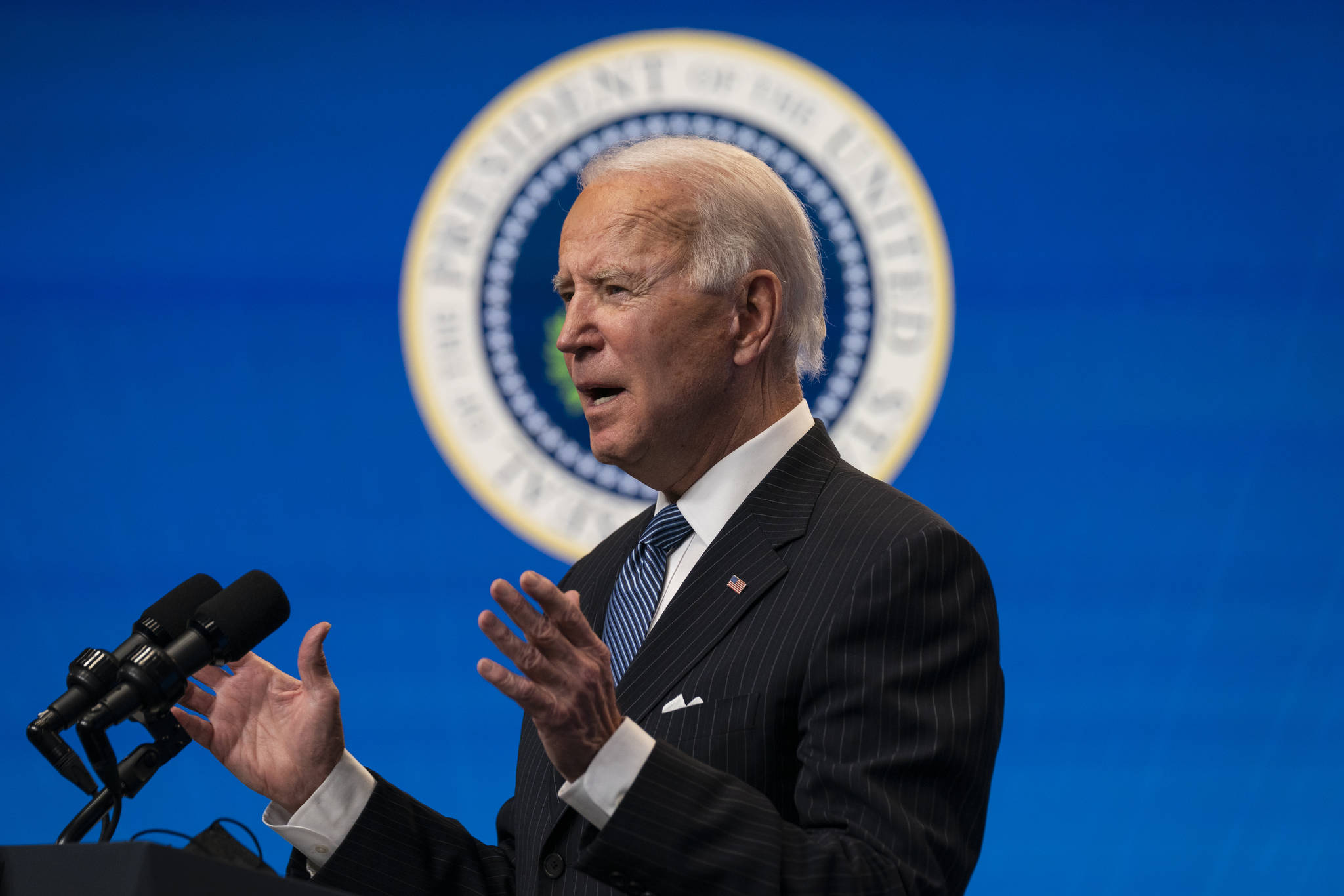
WASHINGTON — President Joe Biden is set to announce a wide-ranging moratorium on new oil and gas leasing on U.S. lands and waters, as his administration moves quickly to reverse Trump administration policies on energy and the environment and address climate change.
Two people with knowledge of Biden’s plans outlined the proposed moratorium, which will be announced Wednesday. They asked not to be identified because the plan has not been made been public; some details remain in flux.
The move follows a 60-day suspension of new drilling permits for U.S. lands and waters announced last week and follows Biden’s campaign pledge to halt new drilling on federally controlled land and water as part of his plan to address climate change. The moratorium is intended to allow time for officials to review the impact of oil and gas drilling on the environment and climate.
Environmental groups hailed the expected moratorium as the kind of bold, urgent action needed to slow climate change.
“The fossil fuel industry has inflicted tremendous damage on the planet. The administration’s review, if done correctly, will show that filthy fracking and drilling must end for good, everywhere,” said Kierán Suckling, executive director at the Center for Biological Diversity, an environmental group that has pushed for the drilling pause.
Oil industry groups slammed the move, saying Biden had already eliminated thousands of oil and gas jobs by killing the Keystone XL oil pipeline on his first day in office.
“This is just the start. It will get worse,” said Brook Simmons, president of the Petroleum Alliance of Oklahoma. “Meanwhile, the laws of physics, chemistry and supply and demand remain in effect. Oil and natural gas prices are going up, and so will home heating bills, consumer prices and fuel costs.”
Kathleen Sgamma, president of the Western Energy Alliance, which represents oil and gas drillers in Western states, said the expected executive order is intended to delay drilling on federal lands to the point where it is no longer viable. Her group pledged to challenge the order in court.
“The environmental left is leading the agenda at the White House when it comes to energy and environment issues,” she said, noting that the moratorium would be felt most acutely in Western states such as Utah, Wyoming and North Dakota. Biden lost all three states to former President Donald Trump.
The drilling moratorium is among several climate-related actions Biden will announce Wednesday. He also is likely to direct officials to conserve 30% of the country’s lands and ocean waters in the next 10 years, initiate a series of regulatory actions to reduce greenhouse gas emissions and issue a memorandum that elevates climate change to a national security priority. He also is expected to direct all U.S. agencies to use science and evidence-based decision-making in federal rule-making and announce a U.S.-hosted climate leaders summit on Earth Day, April 22.
The conservation plan would set aside millions of acres for recreation, wildlife and climate efforts by 2030, part of Biden’s campaign pledge for a $2 trillion program to slow global warming.
Under Trump, federal agencies prioritized energy development and eased environmental rules to speed up drilling permits as part of the Republican’s goal to boost fossil fuel production. Trump consistently downplayed the dangers of climate change, which Biden, a Democrat, has made a top priority.
On his first day in office last Wednesday, Biden signed a series of executive orders that underscored his different approach — rejoining the Paris Climate Accord, revoking approval of the Keystone XL oil pipeline from Canada and telling agencies to immediately review dozens of Trump-era rules on science, the environment and public health.
A 60-day suspension order at the Interior Department did not limit existing oil and gas operations under valid leases, meaning activity would not come to a sudden halt on the millions of acres of lands in the West and offshore in the Gulf of Mexico where much drilling is concentrated. The moratorium also is unlikely to affect existing leases. Its effect could be further blunted by companies that stockpiled enough drilling permits in Trump’s final months to allow them to keep pumping oil and gas for years.
The pause in onshore drilling is limited to federal lands and does not affect drilling on private lands, which is largely regulated by states.
Oil and gas extracted from public lands and waters account for about a quarter of annual U.S. production. Extracting and burning those fuels generates the equivalent of almost 550 million tons of greenhouse gases annually, the U.S. Geological Survey said in a 2018 study.
Under Trump, Interior officials approved almost 1,400 permits on federal lands, primarily in Wyoming and New Mexico, over a three-month period that included the election, according to an Associated Press analysis of government data. Those permits, which remain valid, will allow companies to continue drilling for years, potentially undercutting Biden’s climate agenda.
The leasing moratorium could present a political dilemma for Biden in New Mexico, a Democratic-leaning state that has experienced a boom in oil production in recent years, much of it on federal land.
Biden’s choice to lead the Interior Department, which oversees oil and gas leasing on public lands, is New Mexico Rep. Deb Haaland.
If confirmed, she would be the first Native American to lead the agency that oversees relations with nearly 600 federally-recognized tribes.
Haaland, whose confirmation hearing has been delayed until next month, already faces backlash from some Republicans who say expected cutbacks in oil production under Biden would hurt her home state.
Tiernan Sittenfeld, a top official with the League of Conservation Voters, called that criticism off-base. “The reality is we need to transition to 100% clean energy” in order to address climate change, she said Tuesday. “The clean energy economy in New Mexico is thriving,” Sittenfeld added, citing gains in renewable energy sources such as wind and solar power.
Rob Black, president of the New Mexico Chamber of Commerce, said the expected moratorium would be “devastating” to his state, while failing to reduce carbon emissions in the Southwest.
A leasing moratorium “won’t reduce demand for oil,″ Black said, but would merely move production from federal lands to private lands in New Mexico and Texas, where an oil boom is occurring in the Permian Basin. Only 2% of land in Texas is federally controlled, compared with about one-third in New Mexico.
The Biden administration has pledged to spend billions to assist in the transition away from fossil fuels such as oil, gas and coal, and Biden has said creating thousands of clean-energy jobs is a top priority.
