
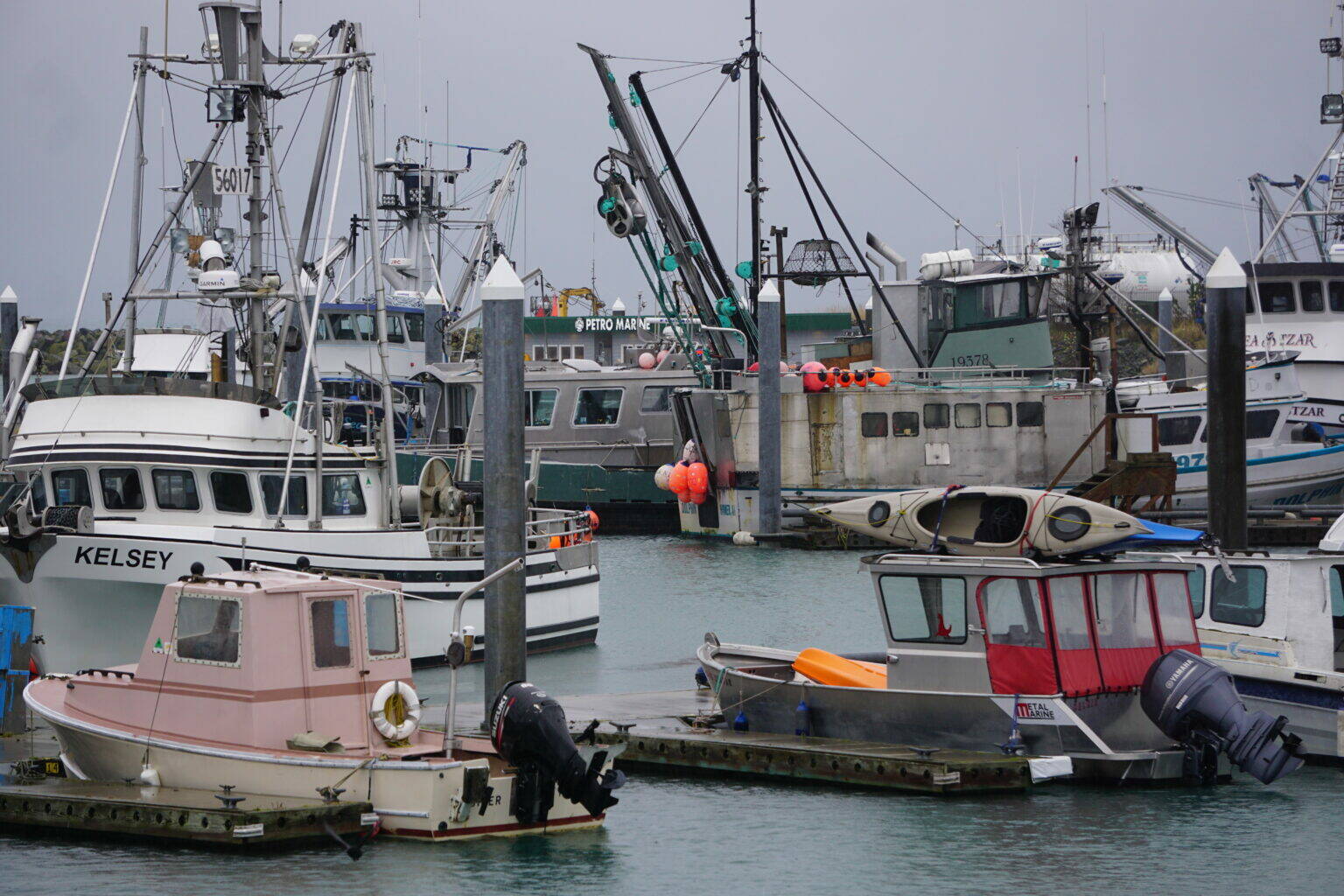
For Alaska’s fishing industry and fishing-dependent communities, 2025 was a year of turmoil and uncertainty, much of it imposed by ideological pursuits from the new Trump administration.
The short-lived agency called the Department of Government Efficiency hacked away at federal funding for science across the board. The National Oceanic and Atmospheric Administration in particular was in its crosshairs; the Heritage Institute’s Project 2025 blueprint for the second Trump administration heaped scorn on NOAA, saying its National Weather Service, National Marine Fisheries Service and other agencies “form a colossal operation that has become one of the main drivers of the climate change alarm industry and, as such, is harmful to future U.S. prosperity.” The NMFS’ Alaska Fisheries Science Center, which does the bulk of the research on which fishery managers depend, was among the agencies that suffered deep budget and staffing cuts.
The prospect of more cuts is unsettling, some officials said. “I guess now we’re getting to a point that I’m getting really concerned and almost freaked out about how much data that we’re potentially losing that we’re used to having,” Anne Vanderhoeven, a member of the North Pacific Fishery Management Council, said on Dec. 4 during that body’s December meeting.
Even as the Trump administration cuts the support fishery management, it is demanding that the industry harvest more fish, in line with an administrative order issued by the president on April 17.
The federal government shutdown created more problems for fisheries managers, but the North Pacific Fishery Management Council used data from last year to set next year’s harvest limits for Alaska pollock — the nation’s top-volume commercial seafood — and other groundfish in the Bering Sea and Gulf of Alaska.
Alaska’s seafood industry continues to endure a variety of economic challenges — competition in markets that are glutted, rising costs, declines of some important fish stock and labor shortages, among them. There are fewer people harvesting seafood commercially in Alaska than at any time on record.
Alaska legislators have tried to address some of those woes. A legislative task force made numerous recommendations about financial systems, marketing, industry diversification, workforce development and other subjects. Those recommendations produced a series of bills. Two of them passed during the 2025 session, gaining unanimous support, but Gov. Mike Dunleavy vetoed one of them, which would have shored up the Alaska Commercial Fishing and Agriculture Bank. The Legislature has the opportunity to address the subject again in the coming session.
The Dunleavy administration ran into trouble with two of its other fishery-related efforts. The governor introduced a bill that would legalize salmon farming, which is widely disdained in the state. The bill went nowhere. The administration is also continuing to try to overturn federal subsistence management on federal sections of the Kuskokwim River, but it has lost in court so far.
There were some notable improvements in 2025.
Bering Sea snow crab stocks are starting to rebound after a massive crash that closed harvests for two years, the first. However, there has been a puzzling boom in the number of snow-tanner crab hybrids. The Alaska Department of Fish and Game is treating the hybrids as snow crabs for harvest-management purposes.
The overall salmon harvest was much bigger and more lucrative than last year’s dismal totals. Bristol Bay reds were not as small as last year’s record tiny fish, and the region also had a bigger run than predicted. However, salmon runs in the Yukon River continue to be poor.
But trouble is brewing in the marine and freshwater environments that support fish.
In areas of thawing permafrost, particularly Northwestern Alaska, a phenomenon called “rusting rivers,” has released such high levels of metals that conditions at times are toxic for fish. The thaw creates acid rock drainage, similar to the type of pollution that can come from hardrock mining. Iron and other metals that are freed through the process turn clear waters orange or red. The problem is serious enough to have merited a chapter in this year’s Arctic Report Card, issued on Dec. 16 by NOAA.
Alaska scientists have also confirmed that invasive northern pike, a bane to native salmon runs in Southcentral Alaska, can swim across Cook Inlet to colonize new territory. The freshwater pike, which gobble up salmon fry and other fish, are too entrenched in the Matanuska-Susitna Borough to be eradicated from waterways there. Biologists have been working to keep Kenai Peninsula pike-free and believed they were successful in 2018, until scientists discovered that pike are able to survive the relatively short swim through the inlet’s saltwater into new freshwater sites. The eradication work has continued, and state biologists believe the peninsula is again pike-free.
Another looming threat comes from the south. Resource managers with the Metlakatla Indian Community, the tribal government in Alaska’s most southeastern spot, have been battling what its officials term an “explosion” of invasive European green crabs. The first Alaska discovery of the invasive crabs, which can devastate native fish stocks, was in 2022 in the Metlakatla area. At first, there were only a few shells. But this year, workers in the tribal program trapped more than 40,000 of the crabs, which have been steadily expanding north.
Yereth Rosen came to Alaska in 1987 to work for the Anchorage Times. She has reported for Reuters, for the Alaska Dispatch News, for Arctic Today and for other organizations. This article originally appeared online at alaskabeacon.com. Alaska Beacon, an affiliate of States Newsroom, is an independent, nonpartisan news organization focused on connecting Alaskans to their state government.
