Less than a year after a law was signed to cut off legislators’ per diem in the event of a late budget, there’s talk in the Capitol of changing part of the law back.
House Bill 44 deals with a variety of ways to hold lawmakers accountable, including a conflict of interest provision and a portion stating that legislators wouldn’t receive a per diem — a daily payment meant to cover living and eating expenses — if they didn’t pass a budget on time. Under the law, legislators would not get paid back for the per diem they missed, but there’s a way for lawmakers to change that.
This session, the Legislature did not pass a budget during its 121-day regular session and has still not done so as the 30-day special session approaches its end. Legislators have not gotten a per diem — which is $302 per day for non-Juneau-based legislators, according to the Legislative Affairs Agency — since the end of regular session. Per diem comes out of the Legislature’s operating budget, according to LAA.
[Million dollar special session? This is how much it could cost the state]
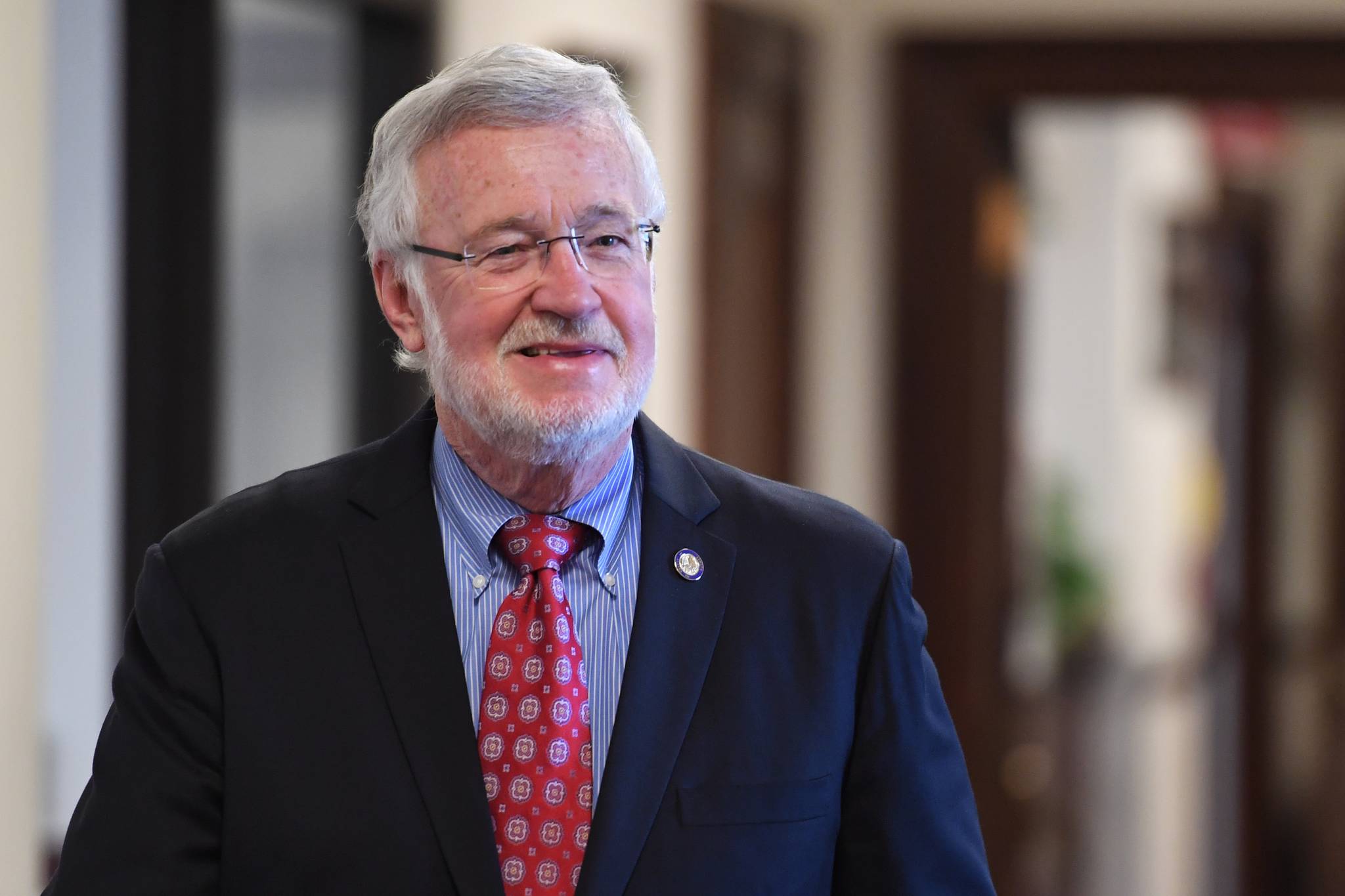
Sen. Gary Stevens, R-Kodiak, said lawmakers are watching their bank accounts dwindle as session wears on.
“Nobody should be expected to lose money doing this job, and of course everyone is right now,” Stevens said. “Juneau’s an expensive place to stay.”
Stevens is the chairman of the Legislative Council, a 14-member body that addresses issues related to the Legislature when lawmakers are not in session.
With a majority vote, the council has the ability to grant legislators back pay, Stevens said. The Legislative Council would not address that, he said, until after the Legislature tackles more important issues such as the budget and the amount of the Alaska Permanent Fund Dividend.
[Lawsuit pits role of Legislature against power of governor]
Former Rep. Jason Grenn, who proposed HB 44 and watched it pass into law, said that if legislators gave themselves back pay after not passing a budget, “that would be an egregious action and slap in the face to public in my opinion,” he told the Empire recently.
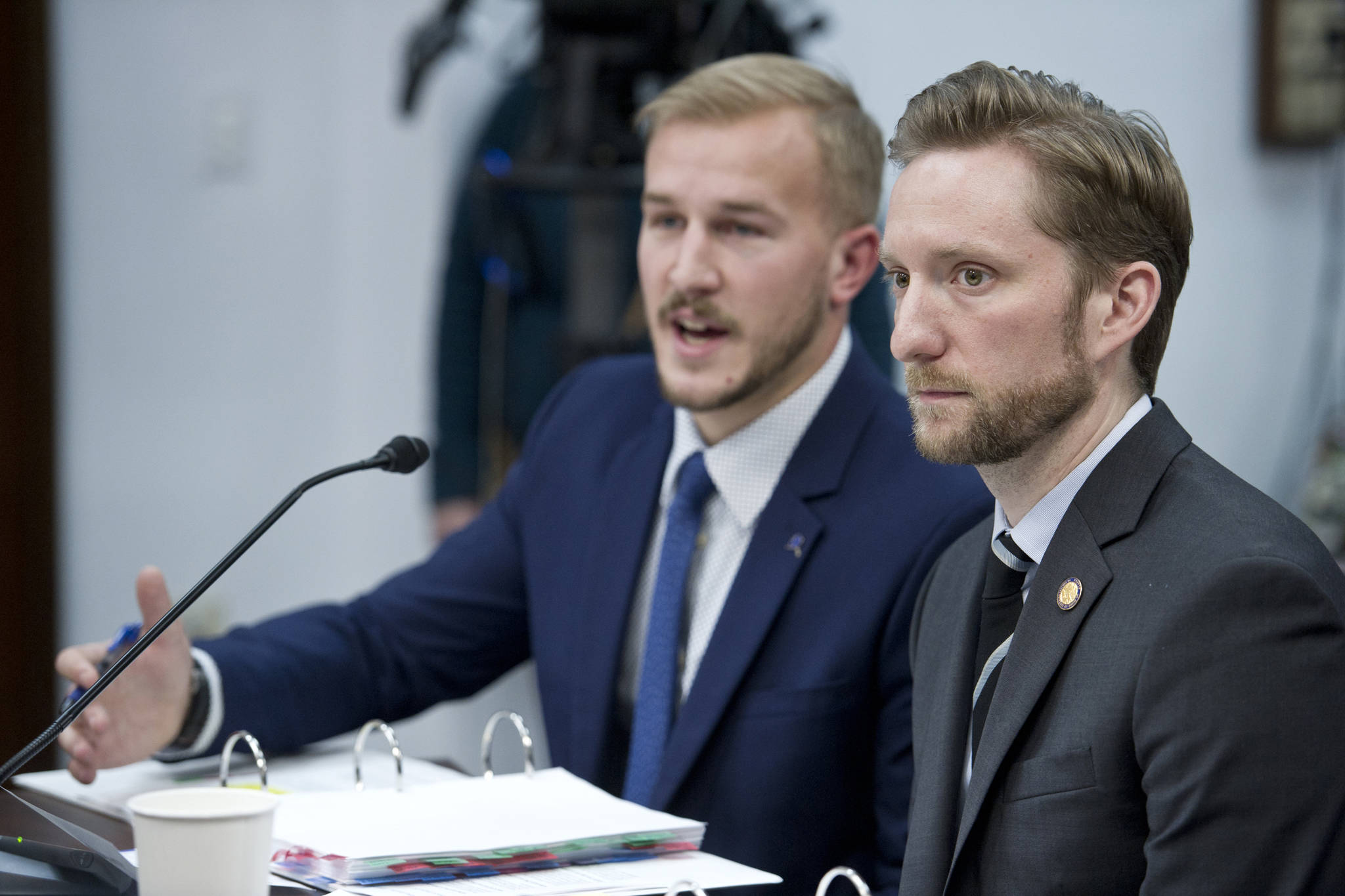
Rep. Jason Grenn, NA-Anchorage, right, and his staff Ryan Johnston, introduce HB 44 in the House Judiciary Committee at the Capitol on Friday, Jan. 24, 2017. (Michael Penn | Juneau Empire File)
Stevens said the idea of securing back pay has not been brought up in any official capacity. He said that not every legislator is able to afford living in another city without a stipend.
“I don’t think it’s fair to ask people to spend their own money to do their job,” Stevens said. “Hotels are expensive, a couple hundred dollars. I’m staying at the Baranof, and my wife is with me, so it’s a larger room. It’s expensive. I’m paying for it, I can afford it, but I don’t think it’s fair to ask other people who don’t have the money to do that.”
Legislators do collect an annual salary, Stevens said. According to LAA, that salary is $50,400.
Grenn flipped that argument about fairness around.
“It’s not fair to the public that Legislators continue to take money our state doesn’t have just because they failed to accomplish their only constitutional duty on time,” Grenn said. “In the private sector, you wouldn’t pay workers extra overtime and bonuses if they continually failed at doing the job they signed up for.”
[Behind the gridlock: Two arguments divide Senate on PFD]
Legislators’ per diem fluctuates based on the season and based on special sessions, LAA Executive Director Jessica Geary said via email Wednesday. This session, the rate has been $302 per day throughout, and that the Legislative Council voted in April to keep that rate instead of raising the per diem to $322 per day.
Per diem fluctuates from year to year as well, as it is tied to the federal rate set by the U.S. Department of Defense, Geary said. In 2018, for example, per diem was $275 for non-Juneau legislators and $206.25 per day for Juneau lawmakers. Juneau legislators’ per diem is 75% of what non-Juneau lawmakers do, as they live at home during session.
Per diem for a 30-day special session would be $9,060 per lawmaker, or $516,420 total. According to LAA cost estimates, Juneau lawmakers do not receive a per diem in special session.
This wouldn’t be the first part of HB 44 to not make it through the session. Earlier this session, the Legislature rolled back the conflict of interest portion of the bill as well as lawmakers found the legislation to be too constrictive to conversation on the floor and committee meetings. They did that through Senate Bill 89, which went to the governor’s desk May 1 for final approval.
Recent per diem amounts (per day, per legislator)
2018
Out-of-town amount: $275
Juneau amount: $206.25
2017
Out-of-town winter amount: $213 (January-April), $275 (May)
Special session amount: $295
Juneau amount: $159.75 (January-February), $206.25 (March-April), $221.25 (May 1-May 17), $206.25 (special sessions)
2016
Out-of-town amount: $223 (January-February), $213 (March-April), $247 (May)
Special session amount: $247
Juneau amount: $167.50 (January-February), $159.75 (March-April), $185.25 (May), $185.25 (special session)
2015
Out-of-town winter amount: $237 (January-February), $225 (March-April)
Out-of-town special session amount: $223 (April), $249 (May), $292 (May 21-June 11 in Anchorage*), $223 (Oct. 24-Nov.6)
Juneau amount: $177.75 (January-February), $167.25 (March-April)
Juneau special session amount: $167.25 (April), $186.75 (May), $292 (May 21-June 11 in Anchorage), $167.25 (Oct. 24-Nov.6)
*Anchorage lawmakers got a per diem of $219
Statistics courtesy of the Legislative Affairs Agency
• Contact reporter Alex McCarthy at amccarthy@juneauempire.com. Follow him on Twitter at @akmccarthy.