
Editor’s note: The story has been updated to show that Chenault was previously, not currently, Speaker of the House.
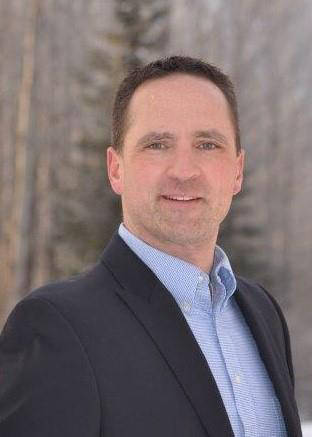
Ahead of next week’s election, the Clarion is talking to candidates vying to represent peninsula communities. Independent Shawn Butler and Republican Ben Carpenter are competing for Alaska House of Representatives District 29. District 29 includes areas in Nikiski, Seward, Hope, Cooper Landing, Sterling and Funny River. Butler or Carpenter would be replacing longtime representative Mike Chenault. Chenault was first elected in 2001 and was previously Speaker of the House.
If elected, what would your first priority be?
The first priority would be helping secure our population from the criminal issues that we have. We need to repeal SB 91 and redo it with effective solutions. There are some things in SB 91 that are worthwhile to keep, but there are others that are not. The public is feeling the ineffectiveness of those policies. The first thing is to help us feel safer.
What ideas do you have to offset the state budget deficit?
I think the state deficit is a problem of spending, not a problem of resources and revenue. So, to offset the deficit we need to reduce our spending, and that needs to be a conversation that’s different than it’s been in the past. We talk about cuts and we draw our battle lines and those on one side think we need to cut services and those on the other that says we don’t need to cut services and it becomes an interesting, tractable problem. What we need is to have a conversation about how to do things more efficiently, to lean our government down, to lean our organizations down and lean our services down so they don’t cost as much. We overestimate how much it costs to do government. Every time the government gets involved, things are more inefficient. So there’s plenty of room for us to reduce the cost of government and its inefficiencies. If we need to have discussions on which services to cut, we should do that, but we need to have the conversation about being more efficient in what we do first. Now, that being said, with the price of oil being back up where it’s at, I anticipate if everything stays the same or increases, we’re not going to have a deficit this next session. The pressure will be off, so to speak, on reducing the cost of government. I intend to keep that pressure up as best I can.
Where do you see the future of the PFD?
I hope that we can codify something in the constitution that requires the vote of the people before the Permanent Fund Dividend checks portion of the fund gets spent by the government on government. I think the people need to weigh in before that happens. It’s not just a political decision. I would be in favor of codifying something in the constitution to protect it, and return to the formula that is used — not a political arbitrary decision on how much of the fund to use to fund the government. Philosophically, I’m against a ‘free source of money’ funding government. People need to have a dog in the fight funding their government, otherwise the government is always going to rise the highest level of funding … Philosophically, I’m against the PFD — the permanent fund — funding government.
How can you, or the legislature, help cope with the ongoing opioid crisis?
Well, I have had a couple conversations down here, and I visited one of the prisons down here, and I’ve come to believe and understand that our judicial system is not using rehabilitation … in the opioid crisis as a mechanism for dealing with crime. There are many organizations down here on the Kenai that exist to alleviate the opioid crisis — to help people get off of drugs. But there’s waiting list for people to participate, and they have a lack of funding. So, I think we need to have a discussion — if we’re going to solve the crime problem, we have to deal with the drug problem. To deal with the drug problem we got to deal with getting people off of drugs and setting them on a better path. That being said, that’s a personal choice. We cannot force people to rehabilitate themselves, but we can do a better job at making those services available. I think there’s a vested interest in the people to have some state support or state funding for rehabilitative services. I think it is also in the best interest of the donors and patrons of society to fund this. So I’m looking in new business interests. People on drugs and heroin cost our businesses money. So why don’t we pool our resources as business owners and help solve this problem. We don’t have to look to the government to solve our problems. We can do it ourselves. I think if we would just have the discussion, we could figure out a way to fund this ourselves without having the government do it.
