
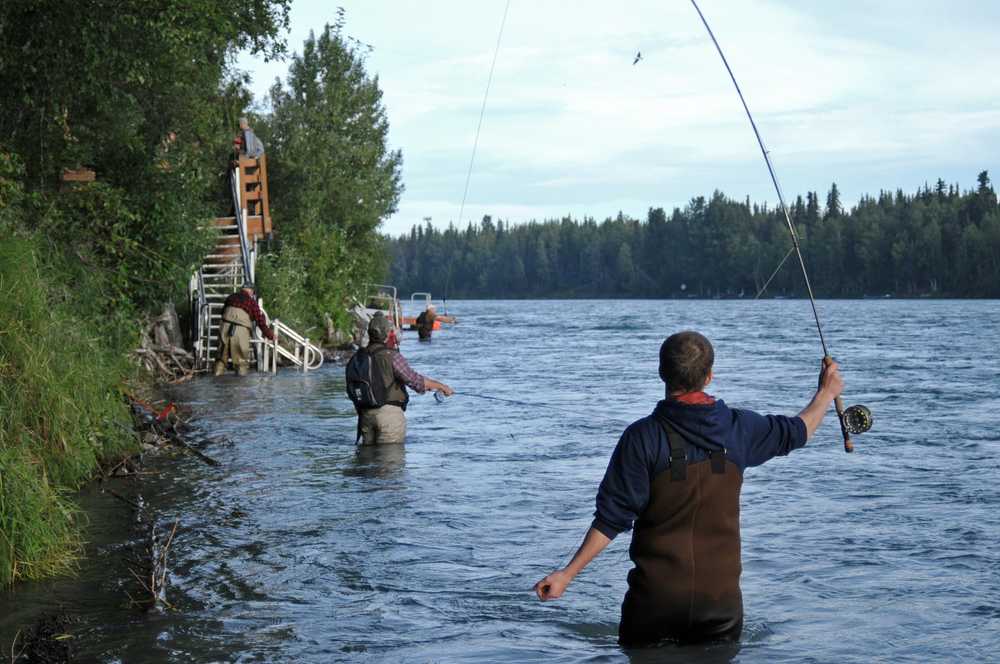
Anglers may have to work a little harder this week on the Kenai River as the fishing has slowed down.
The banks of the Kenai River in Soldotna were lined with fishermen Wednesday morning, but few had any fish to show — a few who had been out since the wee hours of the morning had a set of sockeye, but most fishermen reported the same thing: fishing has been slow.
Though there are still sockeye coming into the Kenai, the passage rates are lower than a few days ago— the number of sockeye entering the river has fallen sharply since last week, with 34,572 fish passing Fish and Game’s sonar on Monday and 18,300 passing on Tuesday.
There is a lot of competition on the river — the personal use dipnet fishery near the mouth is in full swing and the commercial fishermen are operating at least two days each week in addition to the inriver rod-and-reel anglers.
King fishing has slowed down as well since Friday — it takes the average angler about 15 hours to catch a king salmon in the sport fishery right now. The number of fish passing the sonar daily has fallen after surging ahead of counts in the last few years, with 545 fish passing the sonar on Sunday and 700 on Monday for a cumulative total of 11,792 fish since July 1.
In short, there’s one way to describe how the fishing on the Kenai River has been this week, said Jason Pawluk, the acting area management biologist for the Division of Sportfish in Soldotna.
“Slow, slow, slow,” he said.
Besides the somewhat mediocre sonar numbers — 30,000 sockeye passing the sonar is not a spectacular count, Pawluk said — the improving water quality is a double-edged sword. Anglers can see the fish better, but conversely, the fish can see the anglers better, too, helping them avoid lines of dipnets or the legs of anglers in the river.
As the water temperature warms in the river, the sockeye move further out into the river as well, he said.
“They’re running two to three meters further out than normal,” Pawluk said. “When the water gets warm, they tend to push off into deeper and cooler water.”
The increased sportfishing effort after the river opened to bait two weekends ago, in combination with slowing passage rates, has dramatically decreased catch rates, he said. The late-run kings are still projected to make the escapement goal, and the fish that Fish and Game is seeing in both its netting projects and the creel surveys show that the kings coming in now tend to be the older, larger fish, Pawluk said.
Off the Kenai, which is crowded with anglers and boats at the moment, there are still opportunities on the Kasilof and Russian rivers. The king salmon fishing on the Kasilof has stayed consistently good, with less effort on it, based on Fish and Game’s logbook data. The late run of Russian River sockeye is now coming in as well, with more than 1,000 fish passing the weir at Lower Russian Lake on Monday and Tuesday for a cumulative total of 5,525 fish so far.
Fish and Game will very likely open the Kenai River personal use dipnet fishery to 24-7 fishing later this week and may also increase the bag limit for sockeye in the river. The liberalization does not necessarily correlate with the fishery performance, Pawluk said — it has more to do with the provisions in the Kenai River Late-Run Sockeye Salmon Management Plan for managing runs where more than 2.3 million sockeye are projected to return to the Kenai River. When the Division of Commercial Fisheries projects or expects a run that large, which it does this year, managers can liberalize the fishery.
So if Fish and Game does issue the emergency order, it doesn’t mean that anglers should expect fishing to pick up immediately, he said.
“It’s just an opportunity to catch those fish if the run does improve later,” Pawluk said.
Reach Elizabeth Earl at elizabeth.earl@peninsulaclarion.com.
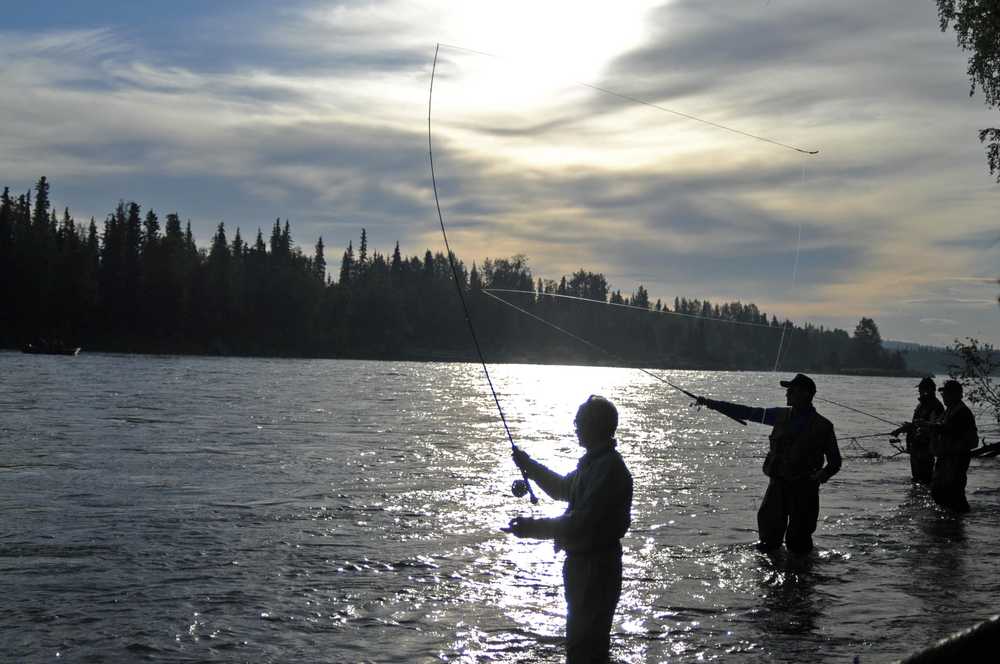
Photo by Elizabeth Earl/Peninsula Clarion Anglers cast on the banks of the Kenai River on Wednesday, July 20, 2016 in Soldotna, Alaska.
