Surgery Center of Kenai seeks transfer agreement with CPH
Published 5:47 am Friday, July 25, 2014
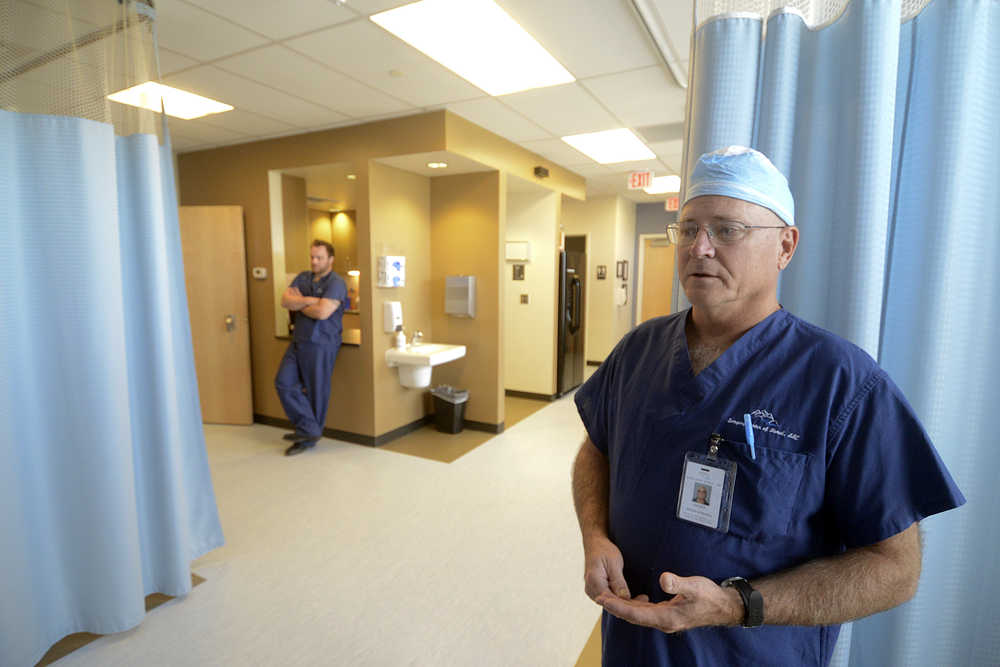
The Surgery Center of Kenai recently opened its doors to patients on Trading Bay Road in Kenai, but it is facing some restrictions on which patients can be treated.
Harold Gear, vice president of the outpatient surgery center, said because Central Peninsula Hospital won’t enter a transfer agreement with the center, it cannot perform procedures on Medicare and Medicaid patients.
When the center was beginning constructed, Gear said it requested agreements with Alaska Regional Hospital, Providence Alaska Medical Center and Central Peninsula Hospital.
“The transfer agreement is just a protocol for how if you have an emergent patient how you will present them to the emergency room,” he said. “It’s just a ‘we’ll do this, you’ll do that’ delineation of responsibilities. It’s not a business agreement; it’s just a hand-shake protocol.”
Within two weeks, Gear said Alaska Regional gave the center an agreement and Providence offered an agreement. After discovering the center had one with Alaska Regional, Providence said it would be available if necessary.
“Central Peninsula Hospital ignored us,” Gear said.
After writing a letter to the Central Peninsula General Hospital Board of Directors in June, Gear said he was told it was CPH CEO Rick Davis’ decision, who declined to enter an agreement with the center. Gear said the discussion started in January and he received a final verbal “no” earlier this month.
“We’re owned by the borough and the borough has a lease operating agreement with the board to manage the hospital,” Davis said. “And one of the requirements of that operating lease is that we remain self-sufficient and off the taxpayer rolls, and that’s what we’re trying to do here.”
The surgery center is a Class C minor outpatient facility with a 23-hour maximum patient stay, Gear said.
In July 2013, Gear received notice from the Department of Health and Social Services that it would not need a certificate of need because its project cost was below the $1.45 million threshold that requires a CON.
Gear previously opened the Pain and Headache Center, which focuses on treating chronic and acute pain, with offices in Wasilla and Anchorage.
Gear said while the surgery center meets state licensing requirements, because the Centers for Medicare and Medicaid Services requires a local transfer agreement to treat those patients, it needs an agreement with CPH.
“So we’re being blocked from half of our patients by Central Peninsula’s unwillingness to give us a transfer agreement,” he said.
Davis said he doesn’t see any benefits for CPH in a transfer agreement with the surgery center.
“We’re really just focused on running the hospital here and making sure that we stay successful,” Davis said. “The community owns us and we want to remain successful for our community.”
Gear called CPH’s denial of an agreement “heavy-handed behavior” and said it actually hurts the hospital.
“Right now they’re forcing us to only see all the most profitable patients,” Gear said. … “And we don’t think it’s fair that the hospital take on all the burden of all the lowest (reimbursed patients). I mean we should be helping them do that.”
Davis said while Medicaid and Medicare patients are low-payers, CPH is “very happy” to treat them.
If the surgery center is unable to get a local transfer agreement, the center would have enough business without government-insured patients to be profitable. While being profitable is an obvious goal of the center, another is to treat 100 percent of the patient population, Gear said.
Davis said 26 percent of the hospital’s business is Medicare and 16 percent is Medicaid. About 30 percent of the hospital’s business is insured patients.
“The reality is we would not see many (Medicaid and Medicare) patients leave here,” Davis said. “It would be more the insured folks.”
While Gear thinks the surgery center is more cost effective and more convenient than the hospital, if CPH doesn’t enter a transfer agreement patients are being put at a higher risk. If a patient becomes emergent at the center, it has to transfer the patient to the hospital and with an agreement, CPH would get all the patient information, he said.
Kaylee Osowski can be reached at kaylee.osowski@cmg-northwest2.go-vip.net/peninsulaclarion.