
“I must confess something: Even though I have hunted in wild places across Alaska for almost a decade, I am not a great hunter. I grew up in northern Wisconsin, a place where manliness is still determined by the size of the antlers on your dead November buck. The first whitetail I ever managed to shoot was missing an antler. Talk about emasculation.”
— From “Other Bloods” by John Messick
When John Messick, a Soldotna English teacher entered his story, “Other Bloods,” in the 2021 Kenai Peninsula Writer’s Contest, he did so in the hopes of building a body of publications and connecting with other writers.
“I was looking to less for an immediate validation of my writing and more for a way to engage with the rich writing community here on the Peninsula,” he said.
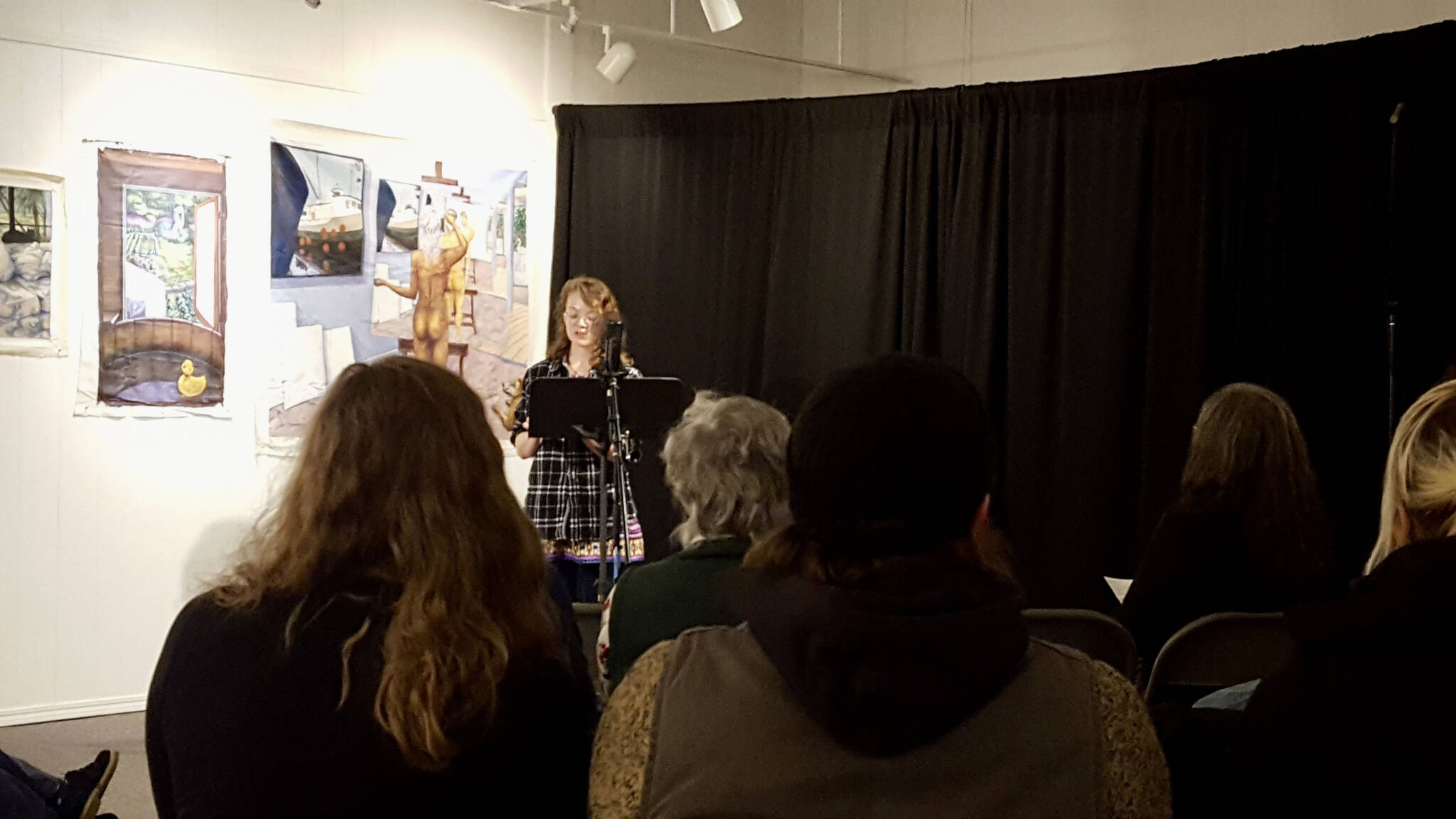
Messick’s story won first place in the Adult/Open Nonfiction category and is now a part of his collection, “Compass Lines” coming out this March. He admits that winning certainly boosted his confidence, and shared that the opportunity to read his story alongside other contest winner’s during the public presentation was a highlight.
“I was honored to win, but more honored to hear and share with a group of other people,” he said. “Local writing competitions serve as a way of engaging with the community at every level. It was very humbling to participate in the reading and to hear everyone’s voices.”
This year, the Kenai Peninsula Writers Contest returns for its 25th year. Coordinated by the Homer Council on the Arts, the contest is open to writers of all ages across the Kenai Peninsula.
Joy Steward was the director of HCOA when former Homer News editor Mark Turner broached the idea of a local writing contest.
“HCOA has always been highly focused on the performing arts and being able to touch the literary community, provide a way to recognize their work, and encourage new literary art was a great opportunity,” she said.
HCOA staff like Steward and board members like former board members Kathy Pate and Mary Langham have always taken the lead on marketing the contest, putting the call out for writers, organizing judges, and gathering prizes. The Homer News in turn creates a special section to showcase the winners. The contest opens in October, with a December deadline, and culminates in the spring with a public reading.
“To be in the audience watching and listening to youth and adults share their writing is really heartwarming,” Steward said. “Some of those early winners have continued to write, like Wendy Erd who writes poetry and (Homer News Editor) Michael Armstrong, who everyone knows writes for the paper, but also writes science fiction.”
The contest has also served as a learning tool for teachers like Fireweed Academy’s Kim Fine, who has been a contest judge over the years, as well as for Kiki Abrahamson, founder of Fireweed Academy, who used it during her 20-year teaching career.
“My objective was to make learning authentic and to connect students with the community,” Abrahamson said. “The writer’s contest was critical to my curriculum because through it we not only explored the different writing genres, but the students were provided with a connection to the real world. We weren’t just writing for writing’s sake. We were doing writing exercises with the ultimate goal to build something that was publishable or performance-ready.”
She takes great satisfaction in many of her students continued passion for writing.
“One year, a student called me in August, telling me that they were trying to write a story about chickens, but couldn’t figure out how to start it,” she said. “Here they were, in the middle of their summer vacation, calling for a writer’s conference. Maggie Bursch got an award at Fisher Poets in Anacortes and Oceana Wills continues to write and do her art.”
Abrahamson is so passionate about the contest that she was one of the people who advocated for its return after it ebbed for several years due to a lack of submissions. Today, she is a HCOA board member, prior board president, and actively helps to organize the contest.
“I think interest in it just waned over time as can happen,” she said. “We brought it back last year and the quality of the writers who submitted pieces was fantastic. This contest provides an opportunity for creative community interactions in a safe and positive, non-divisive way. It’s a low-key way to take a risk in sharing your writing and getting feedback.”
A panel of judges made up of writers and teachers from the community volunteer their time to read and provide input without which the contest could not happen. All writing is submitting electronically and receives a code so the judges never see author’s names, keeping all submissions anonymous during the judging. The judges read the submissions, narrow them down, conference with other judges, and then choose first-, second- and third-place winners in the categories. As integral to the contest as the judges are, are the sponsors who donate prizes, including cash, Homer Bucks, and local gift certificates for first-, second- and third-place in each category and division.
In conjunction with the contest, HCOA hosts writing workshops. A workshop for youth took place last week. On Nov. 5, Mercedes O’Leary will host “Power of Play: Poetry and Micro Workshop, a workshop focused on generating new work, and on Dec. 10, a workshop for revising that work. Participants can attend one or both workshops, which offer another great opportunity to gather with other writers.
Micro, or Flash fiction, is the newest genre to be added to the Adult/Open category, with the other categories being Poetry, Nonfiction and Fiction, with divisions Grades K-3, Grades 4-6, Grades 7-9, Grades 10-12 and Adult/Open. Winning pieces will be shared on the Homer Council on the Arts website and in the Homer News, with those writers invited to a public reading in the spring.
“The thing that happens with writing is that we believe our writing has to be really big or we’re not good enough, but I think that no matter where you’re at in you’re writing, submit something,” he said. “There’s a great community of writers out here and this contest is easy and fun way to participate.”
This year’s deadline is 11:59 p.m., Dec. 16. Last year’s winning submissions, workshop information and registration, and the Writer’s Contest information and submission can be found at homerart.org.
This article has been updated to correct the spelling of Joy Steward’s last name.
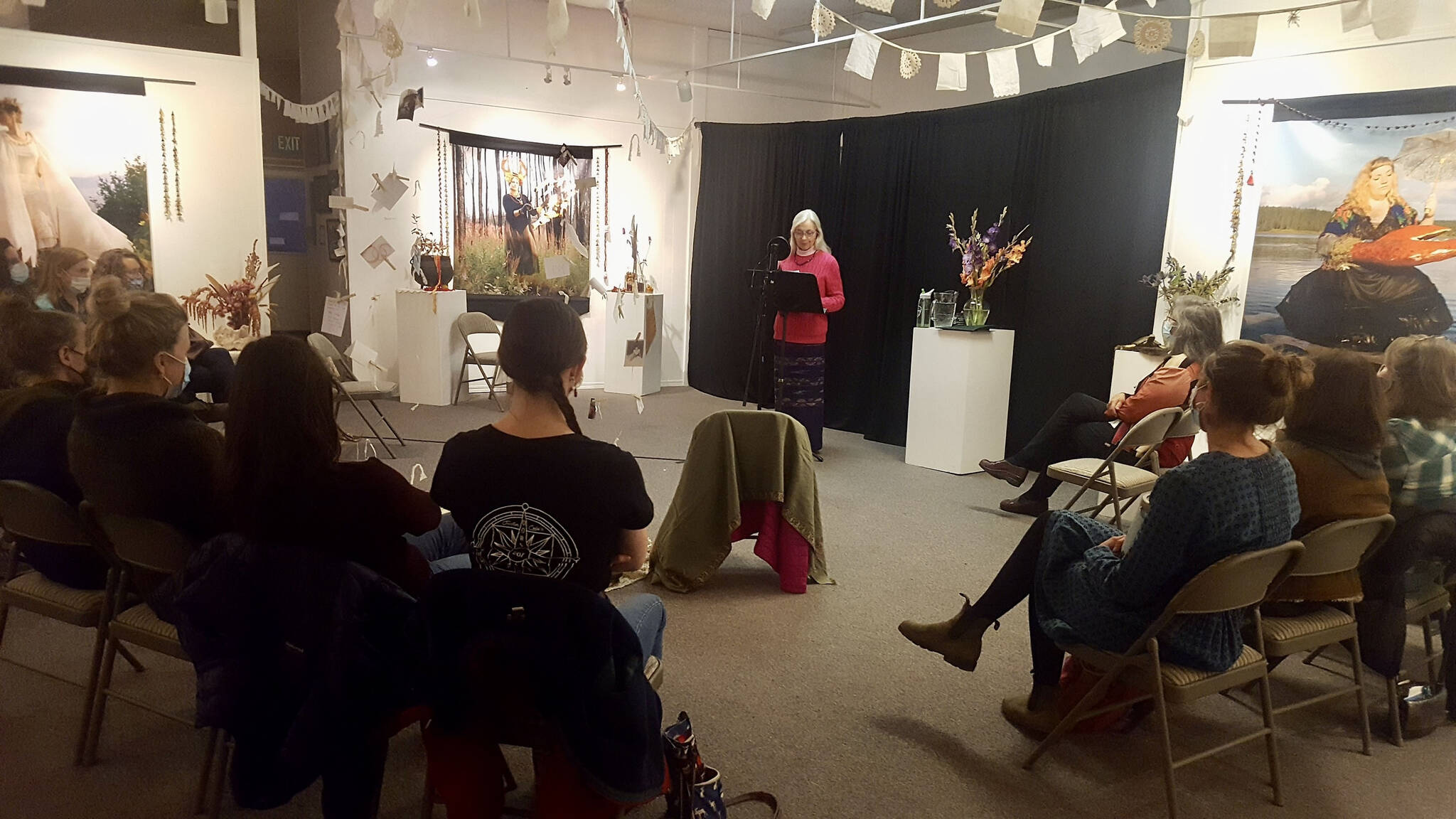
Homer writer Vivian Finlay (2020/21 non-fiction runner up) reads “Thank you, Naw Thamee,” on Oct. 21, 2021, at Homer Council on the Arts, 24th Kenai Peninsula Writer’s Contest. (Photo provided by HCOA)
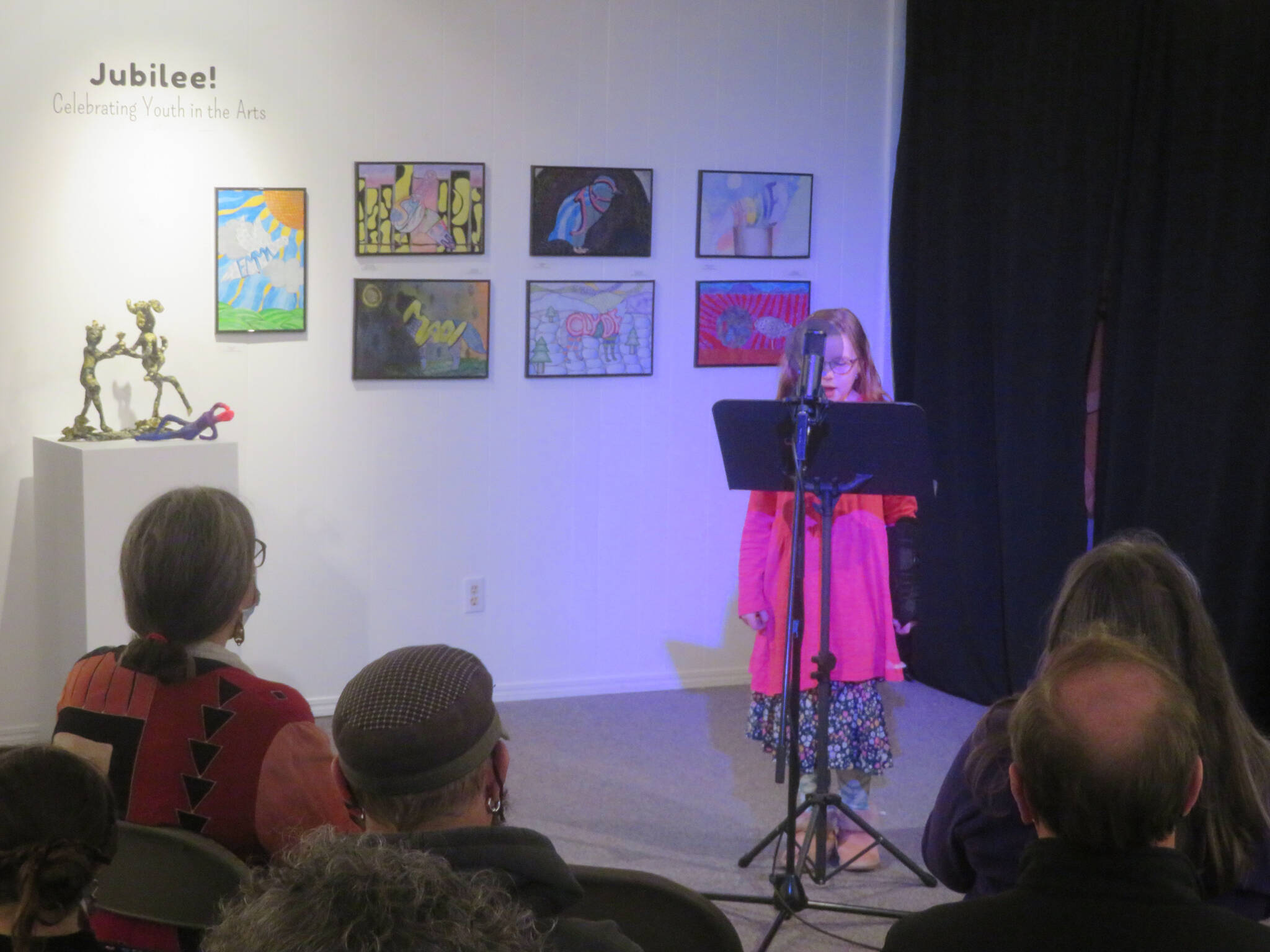
Harper Bross of Soldotna, reads “Judy the Sled Dog,” which placed first in fiction, grade K-3), in the the 2021 Writer’s Contest at Homer Council on the Arts. (Photo provided)
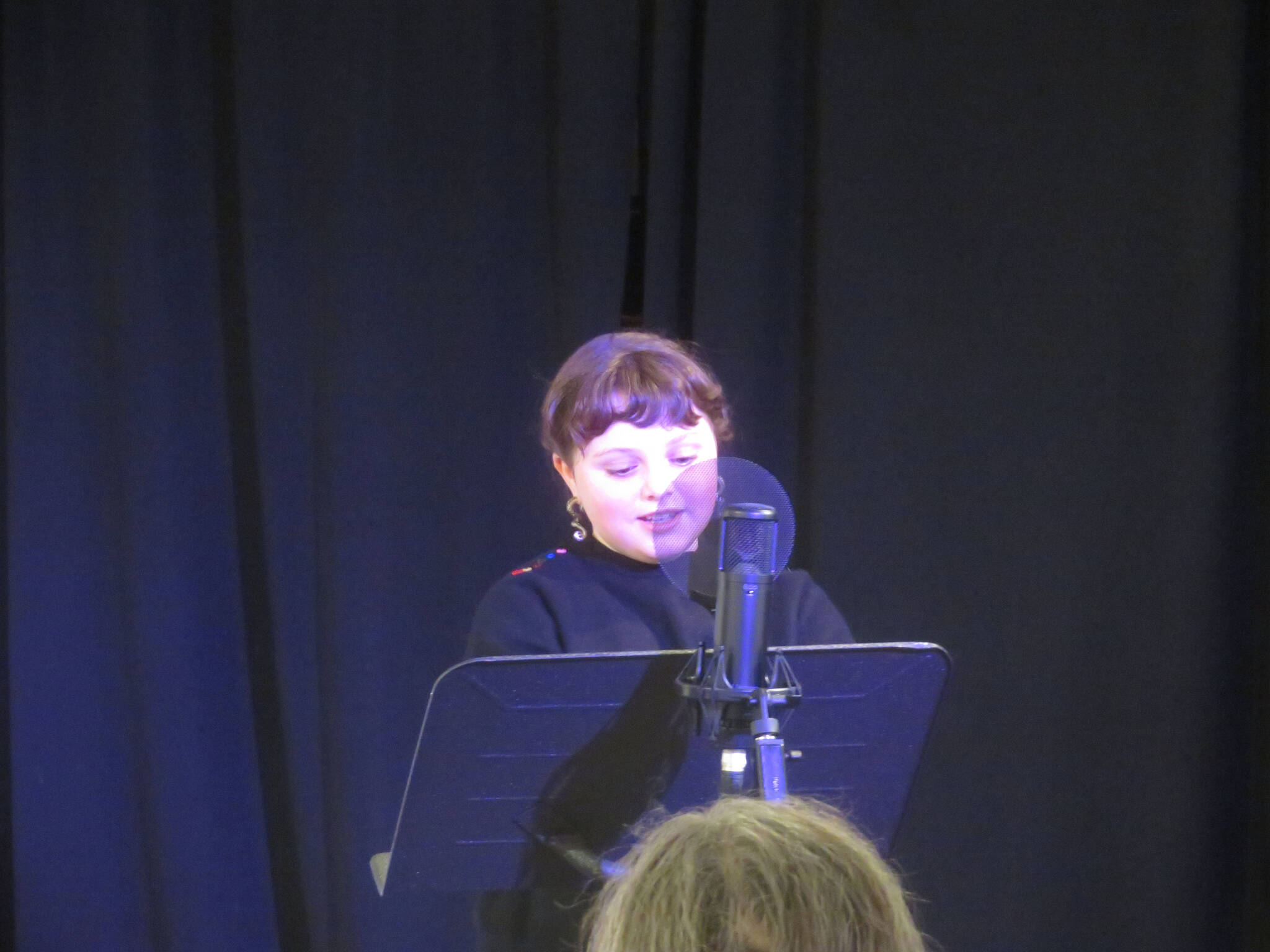
Isolde Panarelli of Homer, reads “Snow in Googerville,” which received second place in fiction, grade 4-6), during the 2021 Writer’s Contest Winner’s presenations at the Homer Council on the Arts. (Photo provided)
