
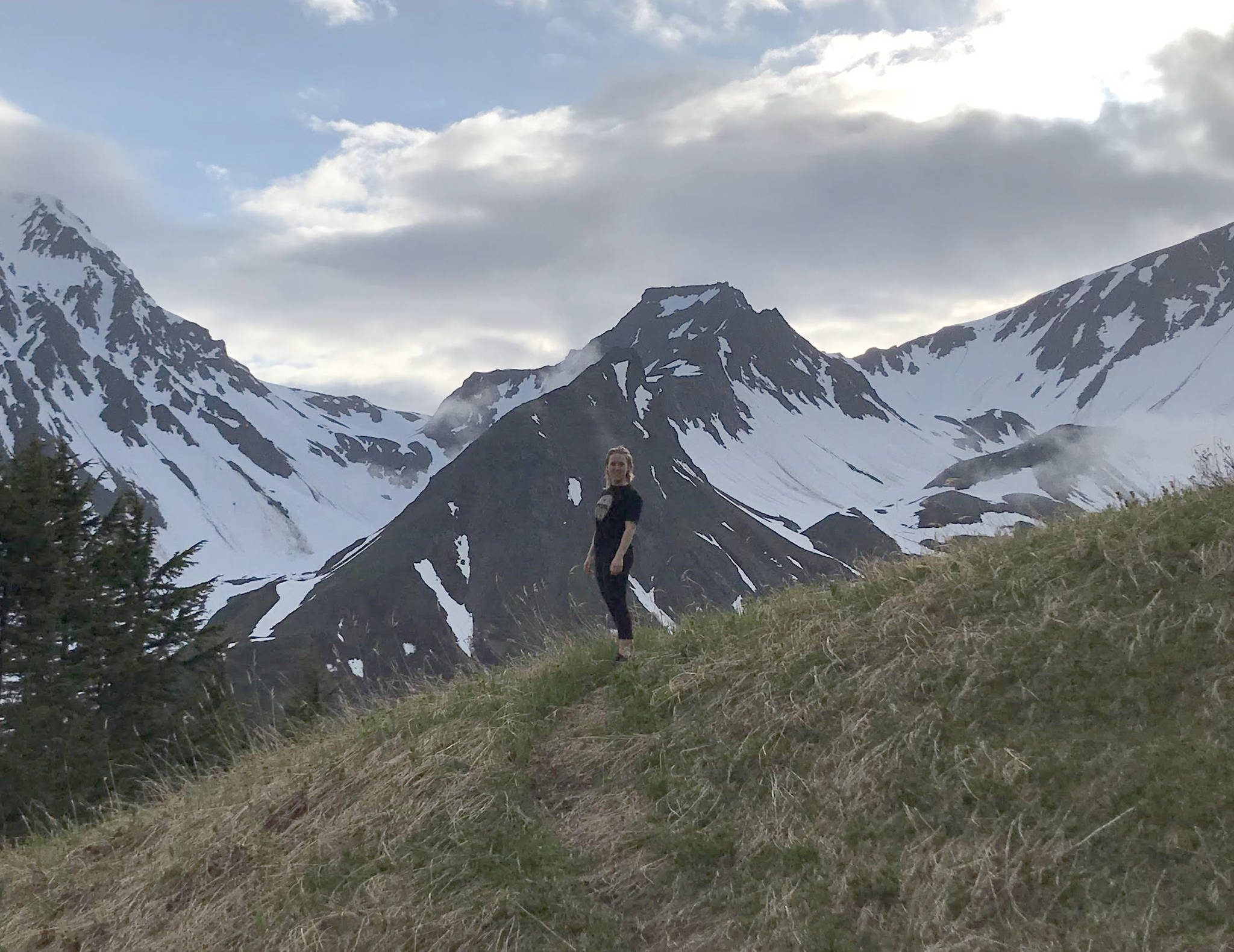
A lot has been said about love. A lot has been said about running, but I never thought I’d look for a way to say something about both in the same breath. I didn’t grow up loving to run. I don’t even know if I love to run now, but I do know that I’d love to run right now and I can’t.
“You don’t know what you’ve got till it’s gone,” is one of those tried and true statements about love, but it fits my current feelings about running too.
I lost running on the Harding Icefield Trail with the twist of an ankle a few weeks back. I tried to shake it off, but by the time I reached the parking lot I knew that something had changed. Over the course of the next week my ankle swelled, my foot turned blue and I became more acquainted with an ice pack than the local trails on which I had just started to find speed.
I didn’t realize how fond I had grown of being able to get outside and into the woods with just my feet to propel me. I didn’t realize how addicted to the thrill of running down a rooted trail, thinking six steps ahead to make sure that each step was successful, I had become until I ran into one unsuccessful step.
They say absence makes the heart grow fonder.
I saw people running along the road at ungodly hours. I saw people running in the rain. I saw people running up mountains. I saw people running on treadmills. I saw all of this from the sidelines of a decidedly nonspectator sport while I rested, iced, compressed and elevated my sprained ankle. I yearned for a 5 a.m. run along the Seward Highway or a soaked jog to Tonsina Creek. I was willing to take running at its worst, if only I was at my best.
I found replacements for running here and there. I swam and biked and swam and biked. Eventually I started walking, but mostly I rested, iced, compressed and elevated.
Someone said love hurts, but so does trying to get back into running with a sprained ankle. Each time I went for a walk along the harbor in Seward, I’d think maybe today was the day I could run a little. I’d start jogging for a minute here and there, only to be sidelined by a sharp pain emanating from my ankle.
Worse than the pain, though, was the fear. It was a week since I twisted it, then two weeks and three weeks, but each time I started to lightly jog the thought of having to start that recovery all over again made me apprehensive. I feared every misstep, even donning a wrap around my ankle during a light walk on the beach.
Pain and fear kept me off my feet longer than I probably needed to be, but it’s hard to jump back into something when apprehension is holding you back. (I think there’s a love metaphor in there too.)
During one of my nights spent elevating, in between icing and compressing, I got around to reading “What I Talk About When I Talk About Running,” a memoir by Haruki Murakami. I wanted keep my motivation high and found a passage that helped spur me to my feet.
“Pain is inevitable. Suffering is optional. Say you’re running and you think, ‘Man, this hurts, I can’t take it anymore. The ‘hurt’ part is an unavoidable reality, but whether or not you can stand anymore is up to the runner himself.”
So I decided to see what I could stand on the Lost Lake Trail earlier this week. I’m signed up for the Lost Lake Run on Aug. 25, a 16-mile trail run from the Primrose Campground through to the Lost Lake trail head outside Seward. I hit the trail and started with a brisk walk.
Up the switchbacks, I started jogging more and more. I would stop, fear and a little bit of out-of-shape exhaustion taking over, but would start running again soon after. I ran so much that I decidedly called the outing a “run” versus “hike” on my Strava account.
As I was running down the trail back to my car all I could think was, “This feels good. This feels like love.”
