Refuge Notebook: Tracking time in the New and Old Worlds
Published 12:37 am Friday, July 11, 2014
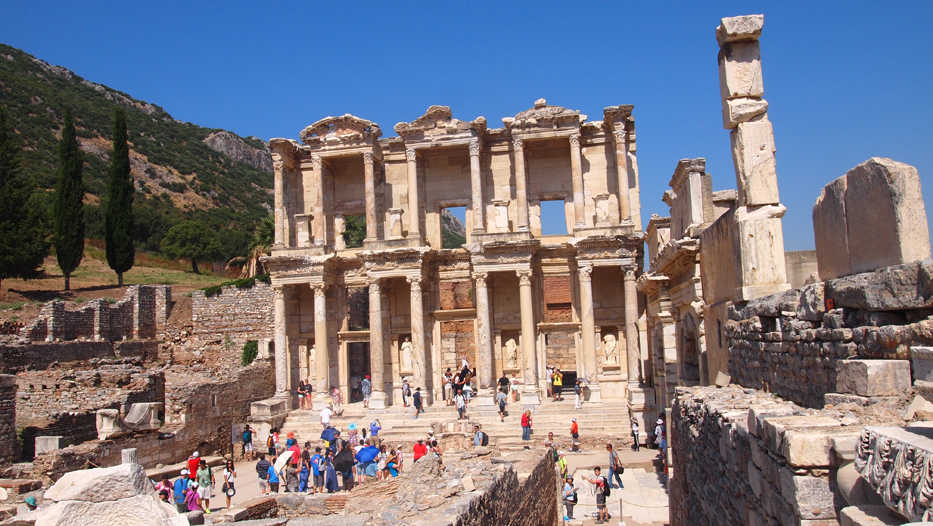
I had the good fortune to take a cruise through the Mediterranean this summer, focusing on ports with archaeological sites. My family marveled at Greco-Roman ruins that once hosted the Temples of Zeus and Artemis, and the Colossus of Rhodes — three of the seven wonders of the ancient world — and Venice, an ancient yet modern city that offers one solution for other coastal cities responding to rising sea levels.
Our visit was a snapshot of history that spanned thousands of years. It got me thinking about how time in the Mediterranean, one of the longest settled areas of the Old World, is tracked by human manipulation of the environment. In contrast, time on the Kenai Peninsula, a sliver of the Last Frontier in the New World, is tracked by natural history sometimes captured by science and sometimes by oral histories of indigenous cultures.
To make my case, I’ve drawn some information from a 2006 article coauthored by retired refuge ecologist Ed Berg and colleagues. Entitled “Holocene development of boreal forests and fire regimes on the Kenai Lowlands of Alaska,” this study analyzed pollen and plant macrofossils found in sediment cores from three lakes on the Kenai National Wildlife Refuge.
Although humans have been in the Mediterranean for the past 100,000 years, North America was colonized by Paleolithic hunter-gatherers crossing the Bering land bridge less than 20,000 years ago, coinciding with glaciers receding at the end of the Wisconsin Ice Age. Carbon-14 dating shows the first Sphagnum peatlands were indeed being laid down in the Kenai Lowlands 18,000 years ago.
As white spruce colonized woodlands composed of alder, willow and birch on the Kenai Lowlands 8500 years ago, Neolithic humans in the Mediterranean were transitioning to early agriculture. Evidence of early settlements show up at this time around what is to become Ephesus in the 10th century BC, a city that ebbed and flowed for 2,500 years in the hands of Hittites, Greeks, Romans and Byzantines before being abandoned by the Ottomans in modern-day Turkey. This is the same city that Paul the Apostle supposedly had in mind when he penned his Letter to the Ephesians.
By the time black spruce shows up in the pollen record from the Kenai Lowlands in 2600 BC, the Sumerians had invented writing and the Greeks were making bronze.
Shortly after the Parthenon was built on the Athenian acropolis in 440 BC, Paleo-Aleuts began settling on the western Kenai Peninsula. By the time Dena’ina arrived 1000-1500 years ago, the Roman Empire had already come and gone from the Mediterranean.
Tree coring of mature mountain hemlock in the Kenai Lowlands indicate that some may have been seedlings when Suleiman the Magnificent laid siege to the fortress of the Knights of St. John on Rhodes, a Greek island off the coast of Turkey. The Colossus of Rhodes, destroyed by an earthquake well before the Turks arrived, was a 100-foot statue of Helios originally erected in the harbor to celebrate a Greek win over a much earlier siege by a Cypriot army in 305 BC.
There’s a point to all of this. Ancient Greeks and Romans were around for centuries, at a time when technological and environmental changes were slow compared to today’s frantic rates. They adapted to the environment by moving and shaping rock into Doric and Corinthian columns that supported the likes of the Parthenon, transporting water to arid places with aqueducts, and living in houses with indoor plumbing, through-the-floor heating and marble facades.
Alaskan Natives have also been around for centuries, adapting to post-Pleistocene warming by learning the seasonal movements of wildlife and phenology of plants, and developing the technology to harvest and store wild foods. Although early humans in the New World likely contributed to the extinction of large mammals like woolly mammoths, their collective impact on the natural world was comparatively minimal.
In contrast, American society hasn’t been around all that long. We haven’t had to think much about land stewardship as we expanded ever westward over the last two centuries in pursuit of natural resources that added states and territories to the original thirteen colonies.
But we’ve run out of new space to colonize even as the remaining landscape is changing rapidly in response to increasing human populations and a warming climate. These are directional drivers, pushing us towards an outcome that is still uncertain but doesn’t appear particularly rosy to me. Consider that the total area of gray infrastructure (buildings, roads, parking lots) that has been laid down since the founding of the U.S. is expected to double in the next forty years! Locally, 1.5 housing units are built on the Kenai Peninsula every day.
The bad news is that we don’t have the time that previous cultures had to address the consequences of our actions because the world is changing faster than societal norms. The good news is that humans are adaptable. But we may have to explore sustainable lifestyles and innovative natural resource management on the fly, without the luxury of transitioning slowly or the benefit of careful experimentation, regardless of how we choose to track time.
John Morton is the supervisory biologist at Kenai National Wildlife Refuge. You can find more information about the refuge at http://kenai.fws.gov or http://www.facebook.com/kenainationalwildliferefuge.