
Last autumn, as I strolled through downtown Anchorage to meet a friend at Snow City Cafe, I gazed downward, in constant scrutiny of the flora along the sidewalk. The bold purple blooms of bird vetch with its delicate, thin spiraled stem commanded my attention — I find its unwanted beauty revolting for it climbs over and chokes out our native plants. The cheerful yellow pops from clusters of butter-and-eggs, another plant that invokes an overreaction of disdain for its toxicity to grazing animals, absorbed my thoughts.
Where there is one patch, there’s a heightened chance of finding another nearby, and so the search intensifies. And that’s when, in a state of compulsive observation and mental annotation, I realize I am consumed in work mode and laugh at myself.
This same, slightly-neurotic quest happens in my own yard, where I mercilessly dug the root system out from under charming oxeye daisies last summer. I then moved on to painstakingly pull the mint leafed hemp-nettle from a gravel corner of my yard. I can’t help but wonder if the hemp-nettle arrived with the gravel. Did this weed infiltrate my yard because it was growing in the source gravel pit? And where is this gravel pit? How many other locations around the Kenai Peninsula now have this weed because of a “typhoid Mary” gravel pit?
It was precisely this kind of thinking that prompted the State’s Division of Agriculture (within the Department of Natural Resources) to launch the Certified Weed-Free Gravel and Forage programs in 2010. Soil & Water Conservation Districts in Kenai and Homer administer the programs locally.
Three years ago an opportunity arose to use the certified weed-free gravel program to help better manage invasive plants on the Kenai National Wildlife Refuge. In 2012, when Hilcorp Alaska acquired the Swanson River oil and gas lease, and commercial activities were renewed within the Refuge, the Refuge required the use of certified weed-free gravel for maintenance of well pads and roads. Hilcorp then leveraged this action by developing its own Invasive Species Management Plan last year, not only for the Swanson River Unit, but also the Beaver Creek and Birch Hill Units.
The Refuge will also require the Alaska Department of Transportation & Public Facilities to use certified weed-free gravel on their project, slated to begin this summer, to improve 22 miles of the Sterling Highway. Most of the stretch from MP 58-79 is within the Refuge, including a new bridge over the East Fork of the Moose River. Although headwaters of most of our salmon streams are protected with the Refuge, and the East Fork of the Moose is no exception, roads that intersect them are vectors for the introduction of invasive plants. Perhaps the worst offender is reed canary grass, which unfortunately has encroached and ultimately destroyed instream habitat in the Midwest and Pacific Northwest.
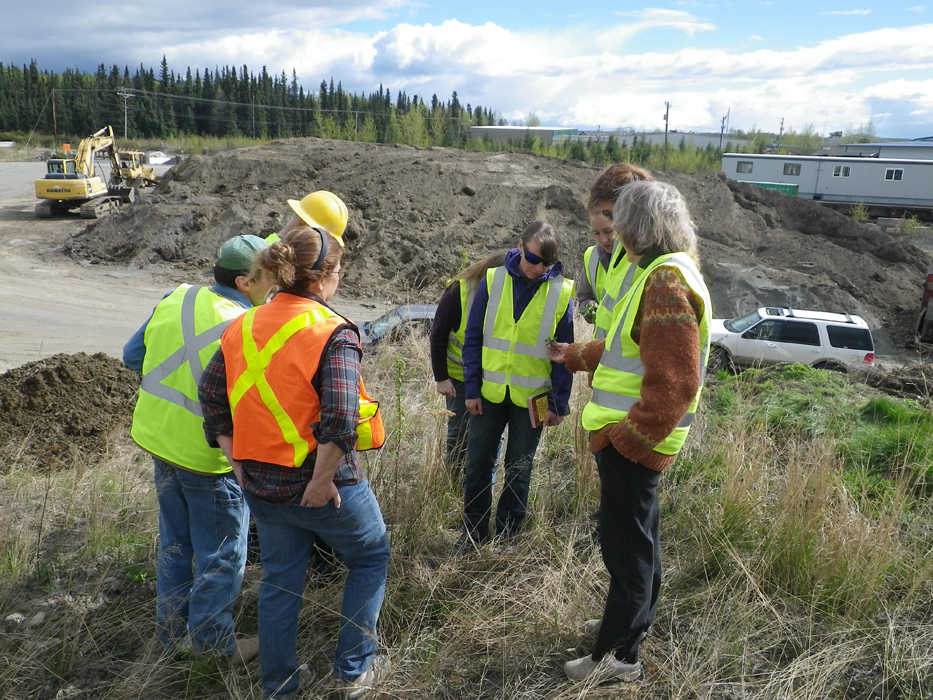
Earlier this month, local gravel suppliers had an opportunity to learn what’s involved in maintaining a certified weed-free gravel pit at a workshop sponsored by the Kenai Peninsula Cooperative Weed Management Area (hint: non-invasive weeds are OK). Janice Chumley, with the University of Alaska Fairbanks Cooperative Extension Service, is one of several trained inspectors who can certify pits and offer options for tackling any invasive plants that are found. Certification is completely voluntary. The inspection request form and information regarding weed-free standards can be found at http://plants.alaska.gov/invasives/weed-free-gravel.htm or by calling the Kenai Soil & Water Conservation District at 283-8732.
Demand for weed-free gravel has created the need for sources, and an opportunity for gravel suppliers to fill this niche, the same way an increased demand for weed-free forage has created a business niche for local growers. I hope to see soil become the next step. Restoration and construction projects on the Refuge need certified weed-free soil and, ideally, a supplier will soon be able to fill this niche as well once the state defines those requirements for certification.
Although weed-free gravel, forage, and soil are slightly more expensive, the long term cost effectiveness weighs heavily in its favor. Detecting, treating and monitoring invasive plants requires staff dedicated to those purposes as well as costs associated with herbicide application, which is both monetarily and environmentally taxing. It is by safeguarding fish and wildlife populations and habitats, and thereby protecting commercial and recreational opportunities, that the weed-free policy supplies long term economic benefits to the Kenai Peninsula.
Jen Peura is a seasonal biotech at the Kenai National Wildlife Refuge. Find more information at http://www.fws.gov/refuge/kenai/ or http://www.facebook.com/kenainationalwildliferefuge. More information on invasive plants can be found at www.kenaiweeds.org.
