
A hidden, secure place to give birth to and rear young is vital to many carnivorous mammals. This is especially true for solitary carnivores in the weasel, skunk and cat families where the mother must leave her young behind, alone and unprotected, for extended periods while she hunts for prey. These vital places are known as natal or “birth” dens. If the natal den is discovered by another predator or a human, the mother often moves her young, carrying them in her mouth, to a hopefully more secure place.
However, sometimes when she returns to the den she may discover her young have been killed by another predator. Males in the cat family sometimes practice infanticide, in which they will kill young they have not fathered so they can later breed with the female and leave their own offspring to survive rather than that of a rival.
When young solitary carnivores are mobile enough to follow their mother, she moves them about in her home range and leaves them in other secure places while she hunts nearby. Later still, the young may actually accompany their mother during her hunting episodes. The same denning behavior generally applies to wolves although being social, rather than solitary carnivores, wolves have the added protection of other pack and family members to help feed and protect the pups.
Natal dens vary with the landscape and presence of other animals. Female striped skunks I once studied in a farming and marsh landscape often located their natal dens deep within old abandoned burrows dug by woodchucks. However, where farmers had eliminated woodchucks, striped skunks denned under old barns and sheds, discarded piles of lumber and sometimes under the farmhouse porch.
In the treeless, sagebrush-dominated high desert on the basaltic eastern Snake River Plains in southern Idaho, female bobcats I studied selected small lava tubes, collapsed roof debris of large lava tubes, and small vents in the sides of ancient shield volcanoes as natal dens.
Interestingly, bobcats often shared their natal den sites with prairie rattlesnakes. One cave that female bobcats regularly used as a natal den was appropriately named “Rattlesnake Cave” where hundreds of rattlesnakes gathered each year to overwinter.
In South Africa, where I studied leopards, natal dens of females were difficult to locate in the densely vegetated subtropical “bushveld.” I once narrowed down the location of one female leopard’s suspected natal den to a dense patch of phragmites – a tall, dense tropical grass. One day when the female was away hunting, I safely examined the site. There I found the entrance to a burrow dug by an aardvark—a mammal with large claws that digs into termite mounds to feed—and assumed her kittens were inside. Then I witnessed a huge African python enter the aardvark burrow and within days the female abandoned the suspected den site and traveled widely each day an indication she had probably lost her young. I often wondered if the python had made a meal of her small cubs.
Here on the Kenai Peninsula, I had the opportunity to examine the natal dens of lynx and wolves. Female lynx often have their kittens under fallen trees in almost impenetrable patches of mature forest characterized by dense stands of spiny Devil’s club.
One female had her kittens under a dense stand of fallen and burned black spruce trees burned during the 1947 wildfire. Another female had her kittens in the rocky terrain along eastern Skilak Lake on the Kenai National Wildlife Refuge. She happened to be caught in the May 1996 Hidden Creek wildfire which completely burned over the area where I suspected she had her kittens.
Fearing she had perished in the fire, I followed her radio collar signal and hiked through burned debris into the rugged area several days after the fire had been suppressed. To my surprise, I found her and her young kittens alive and well under an overhanging rock cliff face that the fire had not reached.
Most of the wolf dens I examined were in burrows dug by wolves (or perhaps brown bears) in the sides of steep glacial moraines or under the root wads of large blown-down trees. One wolf den in a remote area was in a deep fissure along a fault line caused by shifting ground of the Great Alaska Earthquake of 1964.
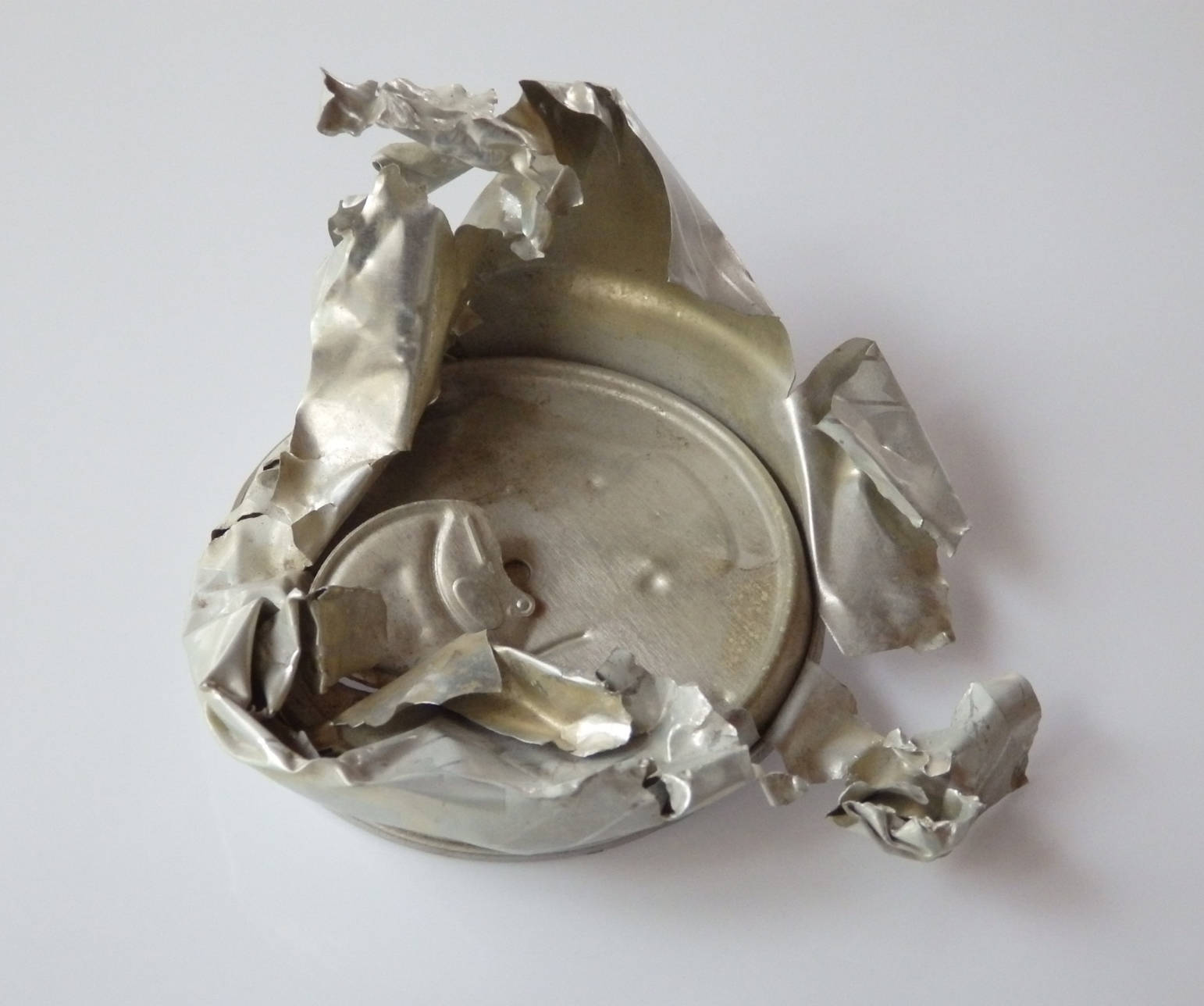
Interestingly, among the various chewed bones of prey scattered around the den site, I found what was left of a chewed-up aluminum soda can (Diet Coca Cola) that a wolf had apparently carried a great distance for the pups to play with and chew on.
In my mind, I sometimes picture the wolf proudly trotting through the forest carrying an aluminum soda can in its mouth, intent on bringing the pups a novel item that it had found.
Dr. Ted Bailey was supervisory wildlife biologist at the Kenai National Wildlife Refuge before retiring in 2001. He has lived on the Kenai Peninsula for over 40 years. Find more information about the Refuge at http://kenai.fws.gov orhttp://www.facebook.com/kenainationalwildliferefuge.
