
People (including my mother) often confuse National Wildlife Refuges with National Parks, thinking they serve similar purposes. But parks are about people and refuges are about wildlife.
When you visit many refuges in the Lower 48, it’s obvious a lot of active management is happening, often taking the form of diked wetland impoundments for wintering waterfowl. On Kenai National Wildlife Refuge, we do a lot of management but it may not be readily apparent. Here’s how resource management has evolved on the refuge over the past eight decades.
When the refuge was first established as Kenai National Moose Range in 1941, moose populations were declining after decades of commercial guided hunts. Caribou had already been hunted out of existence circa 1917 and wolves, too, had been wiped out by human persecution. Red fox were so heavily harvested for both pelts and to seed commercial fox farms in the 1920s that they haven’t recovered even to this day. Salmon populations were so low that the Territory of Alaska offered bounties to reduce seal populations in salt waters surrounding the Kenai Peninsula.
Mining and its toxic residues were commonplace on much of what was to become refuge lands after Alexander King discovered gold in 1888. In 1951, the Sterling Highway was completed across the Moose Range, which brought more homesteaders and visitors. Shortly thereafter, in 1957, the first oil in Alaska was discovered near the Swanson River, setting the stage for a half century of commercial oil and gas development on leased lands within the refuge.
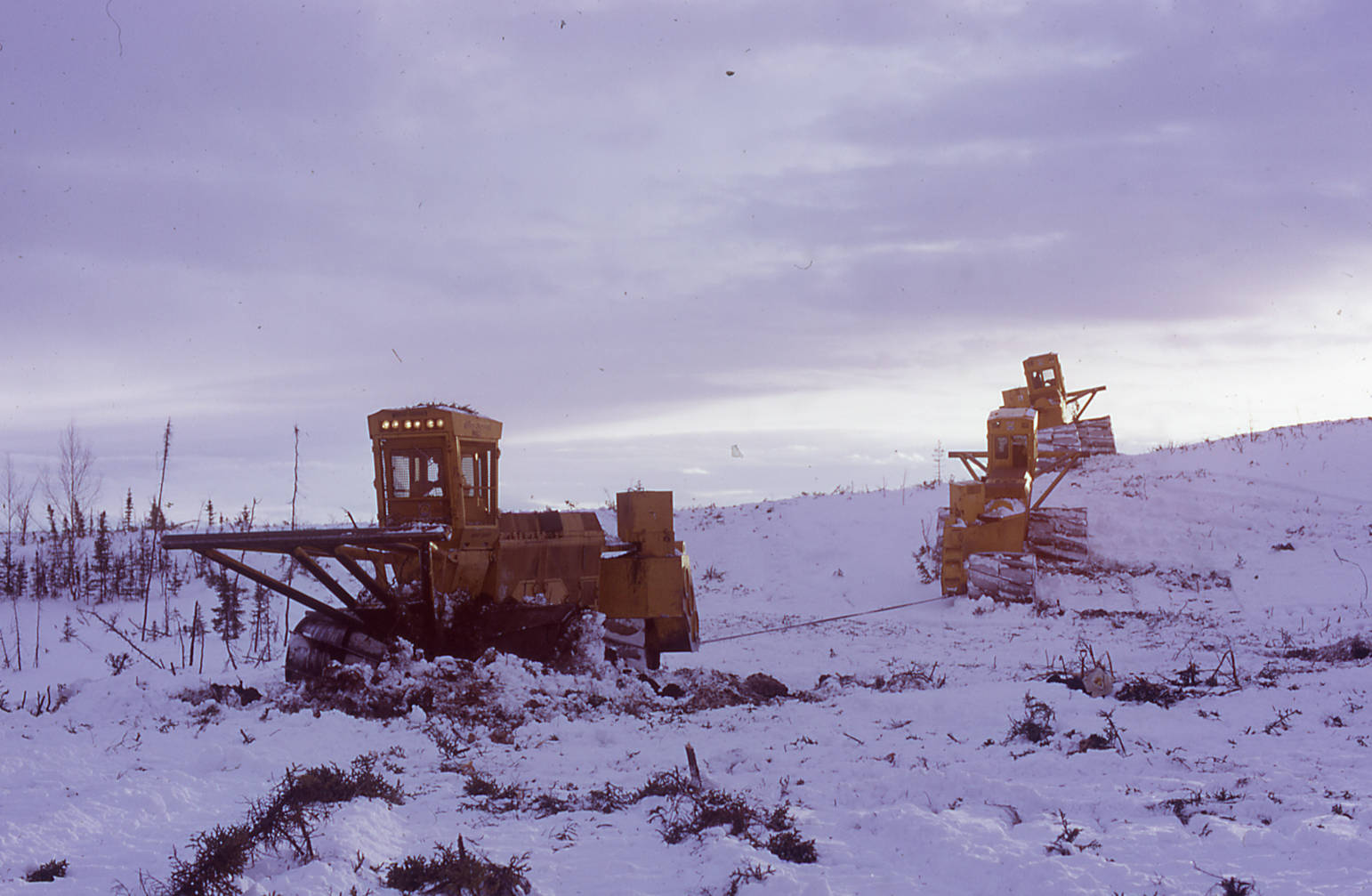
During the early years, the Kenai National Moose Range responded to this historical legacy in multiple ways. With the Alaska Department of Fish and Game, we co-established the Kenai Moose Research Center in 1966 to research moose nutritional requirements and physiology, and the effects of habitat manipulation and browsing on carrying capacity. We used giant LeTourneau tree crushers to create moose browse in the Kenai Lowlands. Trumpeter swans were a high priority during the early years, and we removed or regulated commercial hunting camps, floatplane access and other sources of human disturbance. We jointly reintroduced caribou from the Nelchina herd in the 1960s and 1980s. Wolves naturally recolonized the Kenai Peninsula in the 1960s, only to find that coyotes had also colonized the peninsula during their absence.
In 1980, the Alaska National Interest Lands Conservation Act established the Kenai National Wildlife Refuge with one of its two primary purposes to “conserve fish and wildlife populations and habitats in their natural diversity”. Responding to this new mandate, we broadened our resource management.
Fire management was refocused on ensuring a natural wildfire regime, particularly within Congressionally-designated Wilderness. We co-established the Interagency Brown Bear Study Team in 1984 to collect data useful for managing brown bears across jurisdictional boundaries peninsula-wide. We co-developed the Kenai River Comprehensive Management Plan in 1986 to ensure interjurisdictional management of fishery and wildlife resources, sensitive habitat areas, recreation, and development activities within the Kenai River Special Management Area. Our 1988 Furbearer Management Plan mandated annual reporting by permitted trappers for better harvest management. We completed an interagency caribou management plan in 1994, subsequently revised to recognize the four re-established herds. A 1996 Moose Habitat Management Plan provided guidelines for prescribing fire to enhance habitat, established management objectives for population composition, and recommended assessing mortality including those by predators and vehicle collisions.
We protected vegetation by prohibiting snowmachines above treeline in alpine areas and elsewhere on the Refuge when snow was sparse—we prohibited all-terrain vehicles all together. Remediation of oil spills, accidental release of xylene, PCBs released from a compressor plant explosion, and other industrial accidents on leased lands within the refuge were (and still are) a management priority.
More recently, the urbanizing landscape outside our western boundary that runs 175 miles from Point Possession to the Fox River has become a new management focus. We can now use prescribed fire in Wilderness, primarily to reduce fuels loads along the wildland-urban interface. We have practiced early detection and rapid response for exotic and invasive plant species since 2005. We helped apply Rotenone™ and fluridone for the first time in 2012 and 2014, respectively, to eradicate northern pike and elodea, one deliberately and the other accidentally introduced to the peninsula.
We restore (including boardwalks) banks on the Kenai River heavily used by recreational anglers. We replace culverts to improve fish passage. We work with the Alaska Department of Transportation to construct wildlife underpasses as part of the ongoing Sterling Highway MP58-79 improvement project. We co-developed the Kenai Mountains to Sea partnership that aims to maintain riparian corridors outside the refuge along some of our most important waterways.
In the not-so-distant future, we expect the dramatic effects of rapid, human-caused climate change will challenge our ability to conserve natural diversity. The peninsula was the epicenter of a spruce bark beetle outbreak that killed 4 million acres of spruce forest in southcentral Alaska over 15 years, sustained by consecutive summers of above-average temperatures. As climate has warmed over the past half century, treeline in the Kenai Mountains rose 165 feet, wetlands decreased 6-11% per decade, the Harding Icefield lost 11% of its surface area and 70 feet in elevation, and available water declined almost 60%. Spring fires in bluejoint grasslands now replace late summer canopy fires in spruce. Water temperatures in nonglacial streams already exceed salmon physiological thresholds during July. Modeling suggests forests and more snow will likely replace alpine tundra in the not-so-distant future, but forecasts for lower elevations range from more hardwood to almost catastrophic deforestation, and less snow.
Whether the cumulative changes are dire enough for us to consider planting trees or transplanting novel wildlife or prescribing grassland fires to sustain ecosystem functions and biodiversity remains to be seen, but we’ve begun collecting the data that will allow us to think intelligently about this new management paradigm. I suspect new wildlife diseases, increasingly introduced to Alaska due to a warming climate and by domestic animals, will also eat our lunch as the 21st century unfolds.
So the next time you recreate on Kenai Refuge, I hope you’ll appreciate more than the cabins, campgrounds, trails, and boat launches. There’s a lot of behind-the-scenes work to help Mother Nature in a world where Man has an increasingly heavy hand.
Dr. John Morton is the supervisory biologist at Kenai National Wildlife Refuge. Find more information about the Refuge at http://www.fws.gov/refuge/kenai/ or http://www.facebook.com/kenainationalwildliferefuge.
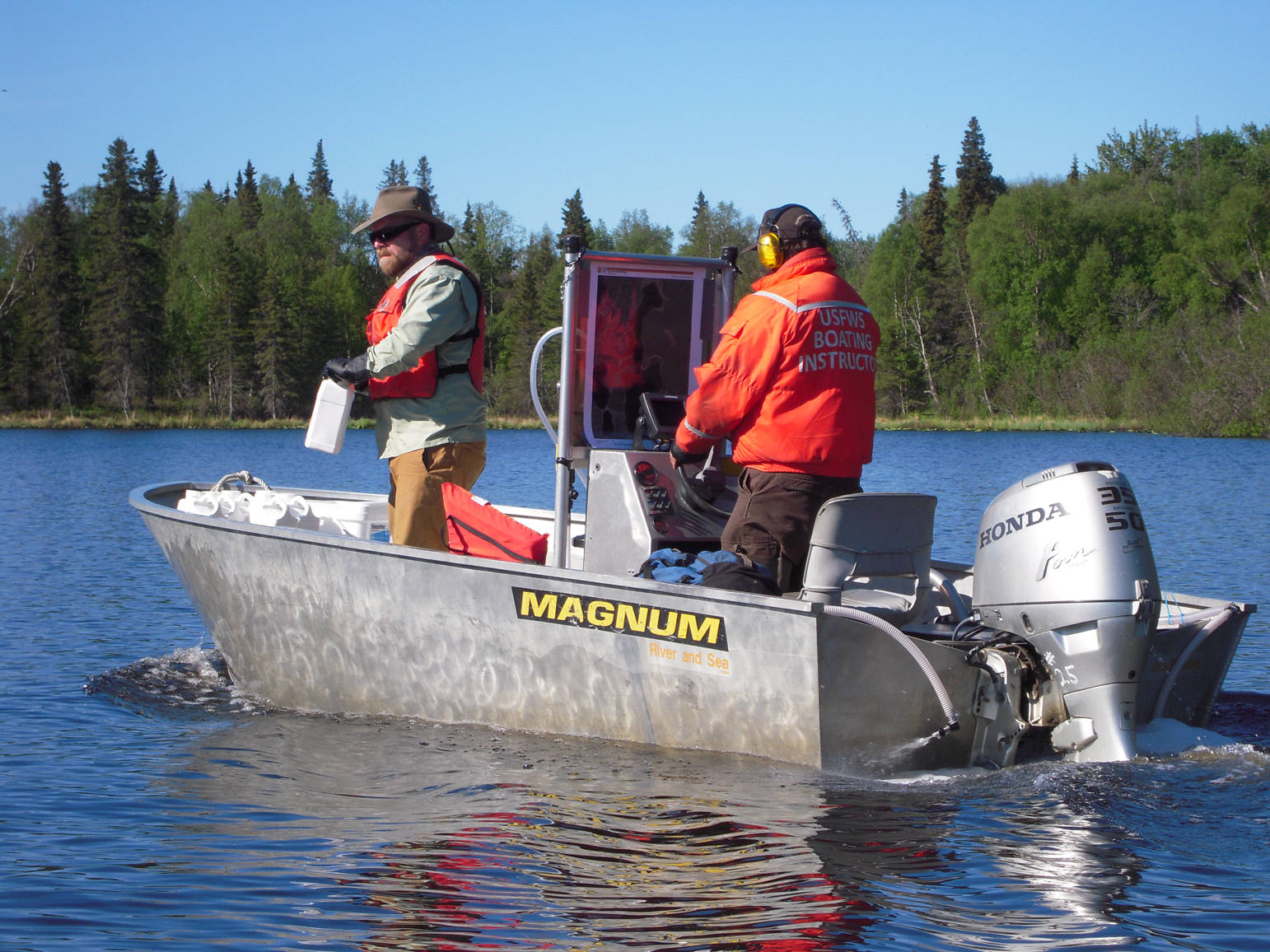
Terrestrial and aquatic invasive plant management has become increasingly more complex since herbicides were first used on Kenai National Wildlife Refuge in 2005. (Photo courtesy Kenai National Wildlife Refuge)
