
A couple of weeks ago, the Peninsula Clarion carried a story about the Bunny Task Force, formed to deal with the 200 or so once-domesticated rabbits that are now living in the wilds around Juneau. The bunnies have gone feral, meaning they escaped or were released from captivity and are now breeding in the wild.
Pets and other domesticated animals that go feral typically become problems. In the case of bunnies, they can literally eat up the landscape. Perhaps the best example is the initial escape of captive rabbits in Australia in 1788, and then a well-meaning deliberate introduction in 1859, which set the stage for rabbits to compete with kangaroos as the primary herbivore Down Under. I read one account that 2 million rabbits were being killed annually with no appreciable dent in their population. It got so bad that over 2,000 miles of fence were constructed in the early 1900s to try (unsuccessfully) to keep rabbits out of Western Australia.
Here in the U.S., as many as 60 million feral cats may roam the Lower 48. One published study in 2013 estimated free-ranging domestic cats may kill up to 4 billion birds, 22 billion mammals, 822 million reptiles and 300 million amphibians EACH YEAR in the U.S. Ironically, some of those mammals are rabbits, as well as mice, voles, shrews and squirrels. A University of Nebraska study from 2010 found that cats were responsible for the extinction of 33 bird species worldwide. Cats’ death and destruction of native fauna is only compounded by the fact that feral cats have high infection rates of feline leukemia virus, feline immunodeficiency virus, rabies and ectoparasites like ticks and fleas, many of which can be transmitted to wildlife (and sometimes people).
Our own Captain James Cook, namesake of the Cook Inlet, was responsible for introducing goats to Hawaii in 1778. Initially presented as gifts, the goats spread rapidly in the wild, eventually numbering 75,000 on the Big Island by 1930. In recent decades, the National Park Service and other agencies have aerial gunned feral goats in an effort to save endemic flora in spectacular places like Volcanoes and Haleakala National Parks. In 2013, federal courts even went so far as to mandate the aerial shooting of feral sheep and goats on the slopes of Mauna Kea to protect habitat of the palila, an endangered Hawaiian honeycreeper.
Closer to home, Norway rats escaped onto Rat Island, a 7,000-acre island in the Aleutians, in the aftermath of a Japanese shipwreck in the 1780s. Although rats from a ship aren’t really domesticated, they are considered “commensal” in that they have a living arrangement (like it or not) with humans. As rats became feral on the island, they eliminated burrowing seabirds like tufted puffins, and severely reduced populations of black oystercatchers, glaucous-winged gulls, pigeon guillemots, rock sandpipers, common eiders, red faced cormorants and gray-crowned rosy finches. A successful aerial application of rodenticide in 2008 has begun the restoration of the island’s ecology even as the island’s name was restored to Hawadax, the original Aleut name.
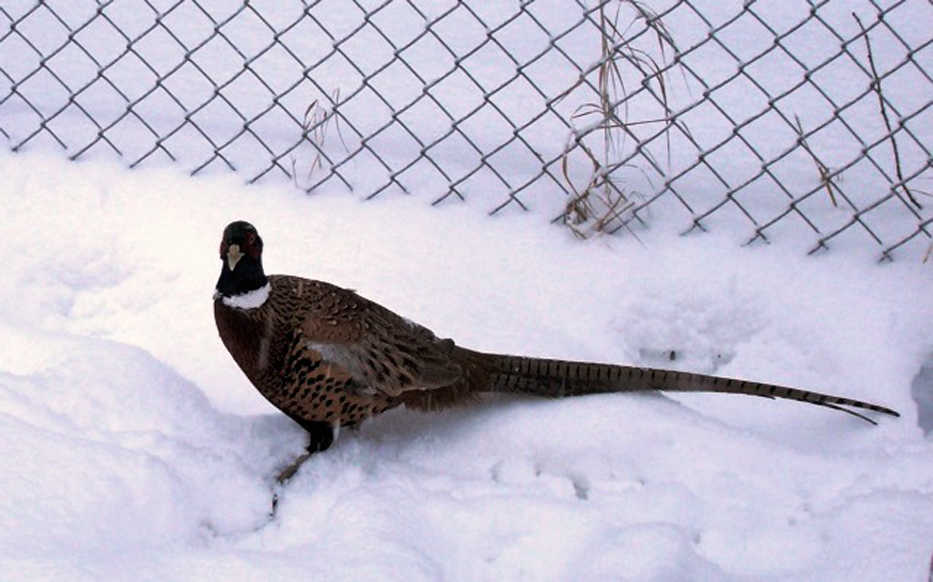
Even closer to home, there’s pretty good evidence that non-native game birds have gone feral. Chinese ringed-neck pheasants, chukar, quail and turkey have been released accidentally and deliberately on the Kenai Peninsula, and at least pheasants may be breeding near Homer. As much as feral game birds may be an opportunity to go hunting, they can also introduce avian diseases. For example, in 1999, Newcastle virus (commonly carried by poultry) was suspected of killing an entire cohort of double-crested cormorants that nest on Skilak Lake within Kenai National Wildlife Refuge.
The Alaska Department of Fish and Game tries to minimize the likelihood of feral wildlife becoming established in our wilds. Take a look at the hunting regulations and you’ll see that there are no closed seasons and no harvest limits on the take of feral ferret, feral swine, or feral pheasant, chukar, quail, wild turkey and partridge (with the exception of GMU 14C).
What’s intriguing is how exotic plants and animals are managed differently in Alaska. The Alaska Division of Agriculture maintains a list of prohibited (14 species) and restricted (9 species) noxious weeds, and a quarantine on 5 freshwater aquatic plant species including Elodea, essentially establishing a black list. In contrast, ADF&G maintains a “clean” list of more than 44 animal taxonomic groups that may be possessed, imported, exported, bought, sold, or traded without a permit but may not be released into the wild. This list includes some strange bedfellows such as nonvenomous reptiles, African pygmy hedgehogs, one-humped camels and, ironically, some of the very species that can cause problems when released into the wild — European rabbit, European ferrets and any pheasant species.
At the end of the day, love your rabbit or eat your rabbit, but keep it penned. And the same can be said of most of our livestock, pets, and other domesticated critters — DON’T LET ‘EM LOOSE, Alaska!
Dr. John Morton is the supervisory biologist at Kenai National Wildlife Refuge. Find more information at http://www.fws.gov/refuge/kenai/ or http://www.facebook.com/kenainationalwildliferefuge.
