
Most mornings I wake up, take my vitamin D supplement and drive to the office or plop down at the desk in my living room. When I get up from my laptop to refill whatever warm beverage I’m sipping on and look out the window, it’s usually grey outside and there’s usually something falling from the sky.
Usually.
Last Wednesday was an exception. The sun tickled the tips of the mountains, slowly painting them pink, then meandered above the horizon, bathing the channel in a soft golden light. Folks skated on the frozen lake I pass on the way to work. Everyone in town seemed to collectively wake up, shake the flurries off and turn their faces to the sun.
“9 a.m. to 5 p.m. is more of a suggestion in this industry,” my editor had said with a chuckle when I once asked if I could work evenings on sunny days. The forecast called for another day of sun, and Thursday was bound to be a late night at work anyway.
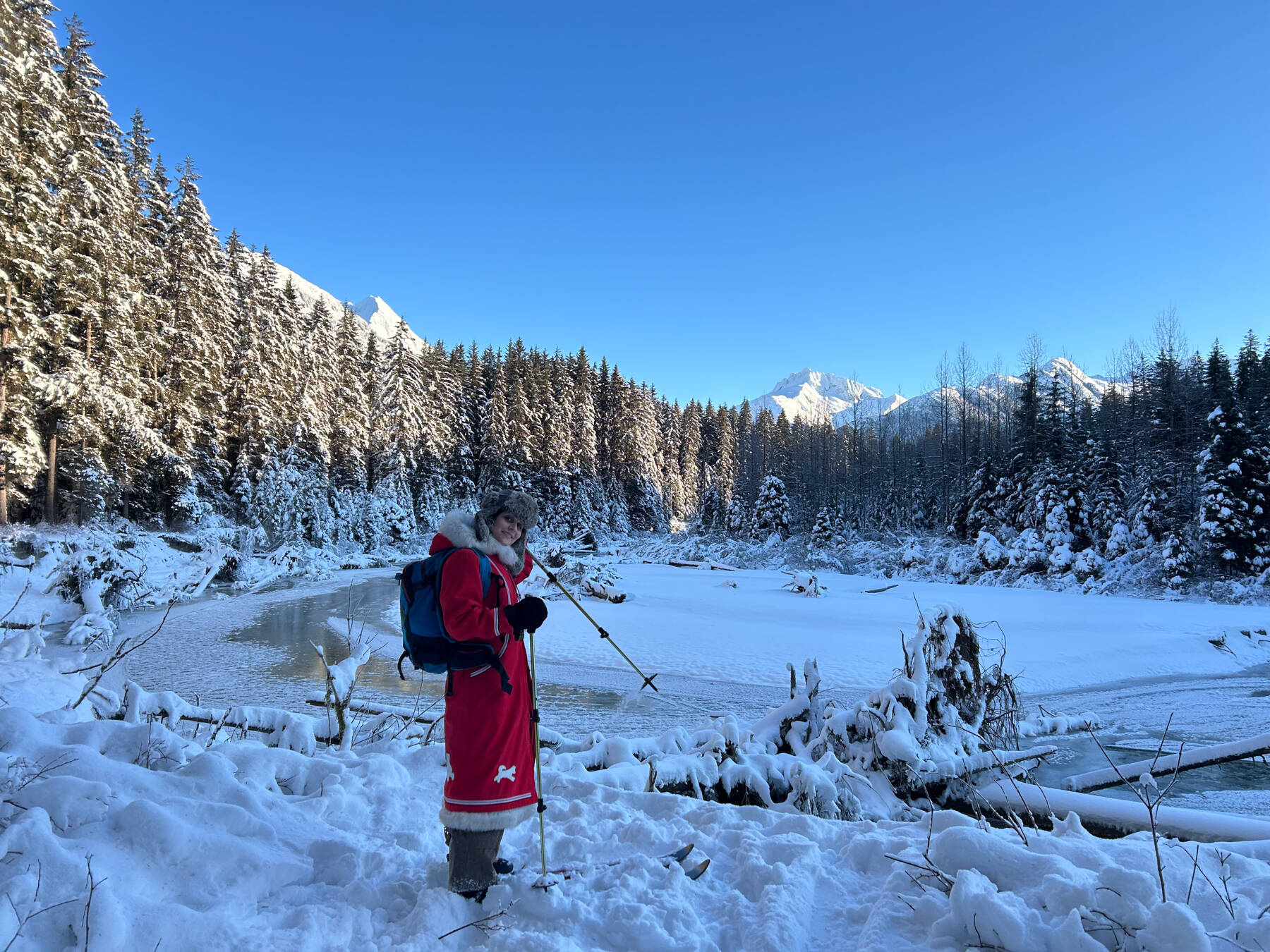
I picked up my friend Kelby, whom I haven’t seen in months, and together we quested out the road to go cross country skiing. I’ve never been cross country skiing, nor do I own any of my own gear, but Kelby graciously offered to outfit and educate me.
My dear friend is the kind who gives a genuine answer when asked “How are you?” and expects one in return. When I asked how she’s been, she said she’s been hibernating. We talked about the ebb and flow from months with 18 hours of daylight to six, and I thought about this as I watched Kelby’s feet, trying to mimic her practiced action of gliding rather than lifting, shuffling instead of lunging.
The scientific definition of hibernation is “the condition or period of an animal or plant spending the winter in a dormant state.” The definition of dormant, in its adjective form, is “having normal physical functions suspended or slowed down for a period of time; in or as if in a deep sleep.”
During the summer, I would charge up a mountain, bike to the end of the road or meet up with friends to climb at the sea cliffs after work. “Work” was hiking and whale watching while teaching folks from all over the world about the ecology surrounding them. Now, I climb in the gym or arrange my body into funny shapes on a yoga mat after I close my computer. Rather than meeting a dozen new people every day, I socialize mostly with people I already know. I spend more time alone and inside than I ever have.
I don’t realize how much it’s wearing on me until I break the cycle.
My physical functions have slowed way down, just like Kelby’s have. And why shouldn’t they? Most warm-blooded creatures are holed up in dens or burrows for the winter right now, doing their best just to survive. We share many mammalian responses with them. (The urge to eat an entire pan of cinnamon rolls and crawl in bed at 7 p.m. is an ancient instinct prompting you to store fat for when food stores are scarce. Plus, the antioxidants in cinnamon are good for you.)
What separates us as humans from most of our hibernating mammal counterparts is our ability to form powerful social bonds. Grabbing dinner with friends instead of having another meal alone, striking up a conversation with a stranger at the gym or playing outside after days of sitting at a desk are unique to the human experience.
There’s a learning curve to every new season and every new sport. In winter and in cross country skiing both, there’s no need to push too hard, but moving a little is better than sitting still.
