
Jill Kaasteen has been beading since she was young, but in recent years, she’s taken that art form to a higher level.
With a project recently accepted by Sealaska Heritage Institute for their collection, and gaining admission for a major Indigenous arts market, the Tlingit beader is gaining momentum.
“I think there’s a lot of aspects of it. Part of it is just using skills I learned when I was young, using skills that were traditionally part of our culture,” Kaasteen said in an interview. “Another part is like, it’s a puzzle- how do i translate this design into beadwork? It doesn’t work all of the time. Sometimes I’ll just completely take it out.”
Kaasteen said she’s been beading for years, though only really focusing on it as an art form in the last several years.
“I’ve always been a crafter by nature. I first learned how to bead in elementary school,” Kaasteen said. “I learned how to bead. I learned how to weave. It’s the method I still use.”
As with many worldwide, Kaasteen took advantage of the pandemic to get into a hobby. Unlike many, she took it and ran with it, polishing her beading skills to a high sheen.
“It was around the time COVID hit. I was working from home, I wasn’t driving to work every day,” Kaasteen said. “I got into beading.”
Now she spends two to three hours on weekdays and closer to six hours a day on weekends working on beading projects, Kaasteen said.
“It does take a lot more patience than you might think. It depends on how complex the piece is, and how big it is,” Kaasteen said. “I do like the seaweed style. They’re so pretty and they’re a concise representation of Tlingit floral designs.”
Kaasteen says she does all kinds of beading, with a variety of inspirations.
“I like to introduce pop culture into my stuff. There’s inspiration everywhere. There’s movies that I like or TV shows that I like,” Kaasteen said. “I’m trying to get my daughter’s regalia ready for Celebration.”
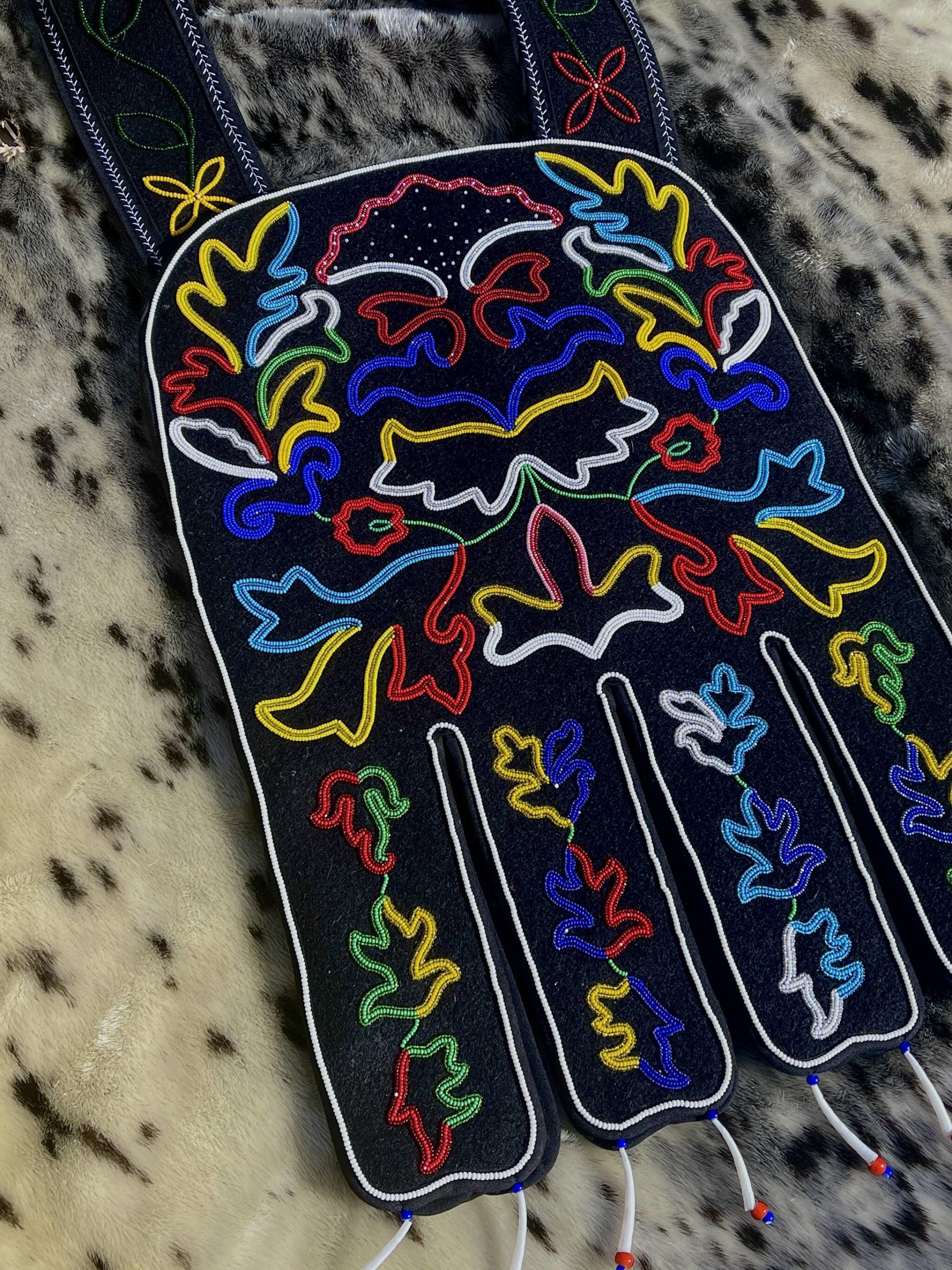
Courtesy photo / Jill Kaasteen Sealaska Heritage Institute has acquired this octopus-style bag of Kaasteen’s for its collection.
One of her pieces, an octopus-style bag, was recently acquired by SHI for its collection, said Emily Pastore, the Archives and Collections Director for the institute. The acquisition was funded by the Alaska Art Fund from Museums Alaska.
“Usually, when this grant comes around, we assess our collections and ask ‘What are we missing, what are we not representing?’” Pastore said in a phone interview. “It’s a really great way to support Alaska artists and especially Alaska Native artists.”
The octopus bag, which has a seaweed motif, is a traditional style, and a good example of beading, which has traditionally been overlooked as a women’s craft and not an art style, Pastore said. “
We didn’t have a good example of a really traditional octopus bag,” Pastore said. “It’s going to be installed in our lobby; it’s our main lobby exhibit. It gets installed later this week.”
Beyond the bag’s inclusion in SHI’s collection, Kaasteen was also recently accepted for the Southwest Association of Indian Arts Indian Market, a major Indigenous art and fashion event in Santa Fe, New Mexico, in August.
“I’m really nervous, but I’m really excited. I’ve never been to the Indian Market before, it’ll be my first time going,” Kaasteen said. “I’m almost fangirling about it.”
Kaasteen said she’s also learning ways to expand her art, such as tanning her own deer hides.
“That was a new thing for me. I know of a lot of artists especially on Instagram that tan their own deer or moose hides, and I wanted to do it myself. It was a lot of fun,” Kaasteen said. “My dream is to have a group of people who we can learn how to tan it together to get it out there in our communities to get out there and use our hides and not just toss them.”
Kaasteen said social media, such as platforms like Instagram and YouTube, are great resources for aspiring beaders. She also recommended reaching out to artists, saying the artist’s community online is vast and full of wonders.
“The internet is a wonderful place with lots of tutorials. I’ve learned a lot from watching YouTube videos on other aspects,” Kaasteen said. “I think it’s a lot more common than people realize. I see people doing all sorts of stuff. I see people doing portraits of Beyonce.”
There’s also always looking inward for inspiration, Kaasteen said.
“I would tell learners, particularly if they are Indigenous and wanting to learn our crafts, to ask those in their family or community for guidance. But also to know that there’s more than one way to do things,” Kaasteen said. “There’s lots methods to beading, there’s no one right or wrong way. I always tell people to try different methods and do what works best for you.”
For now, Kaasteen said she’ll keep working to improve as an artist, while perhaps learning to teach beading in Tlingit. ‘
“Jill’s been doing so amazing,” Pastore said. “She’s an amazing person to work with.”
• Contact reporter Michael S. Lockett at (757) 621-1197 or mlockett@juneauempire.com.
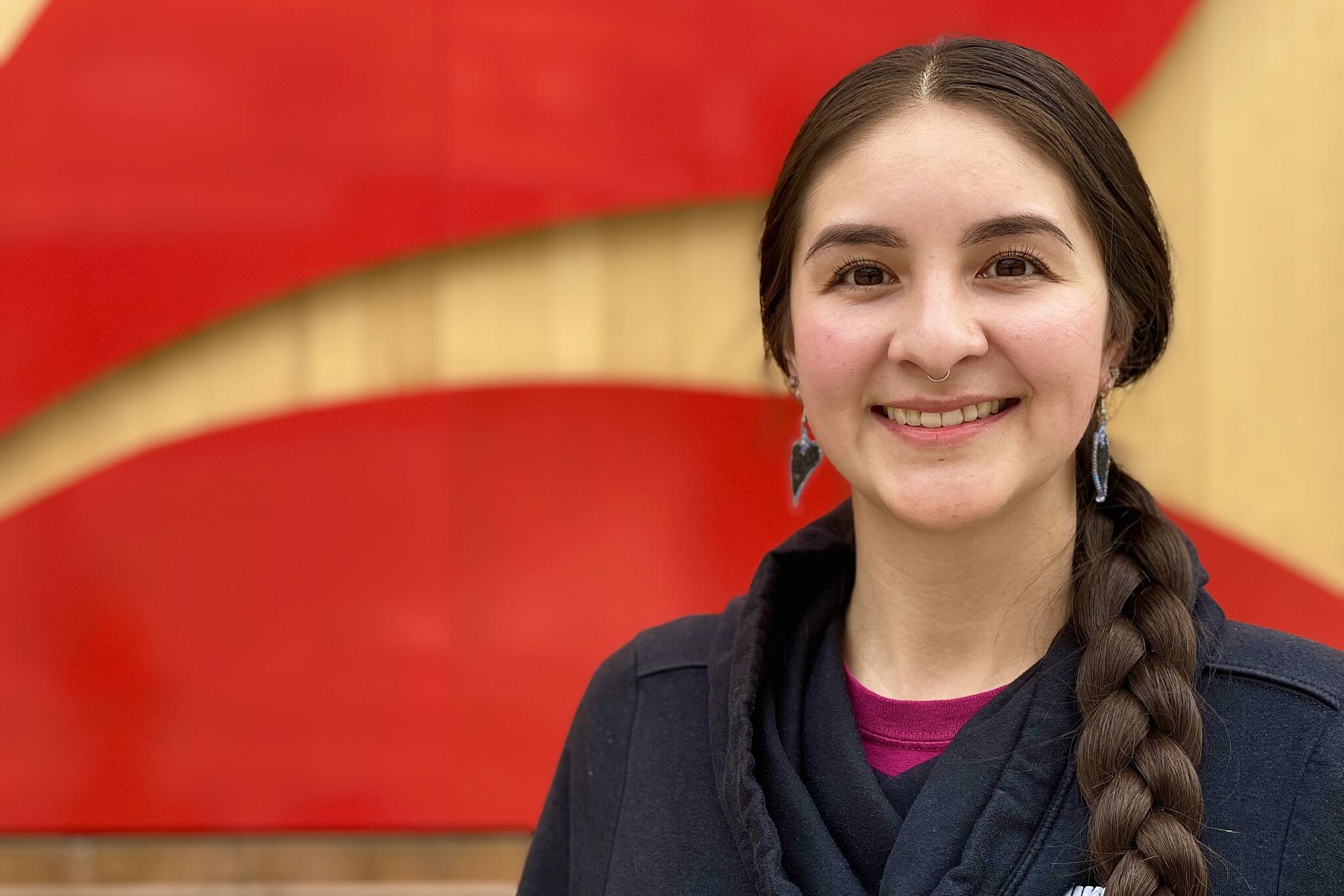
Local Tlingit beader Jill Kaasteen Meserve is making waves as her work becomes more widely known, both in Juneau and the Lower 48. (Michael S. Lockett / Juneau Empire)
