
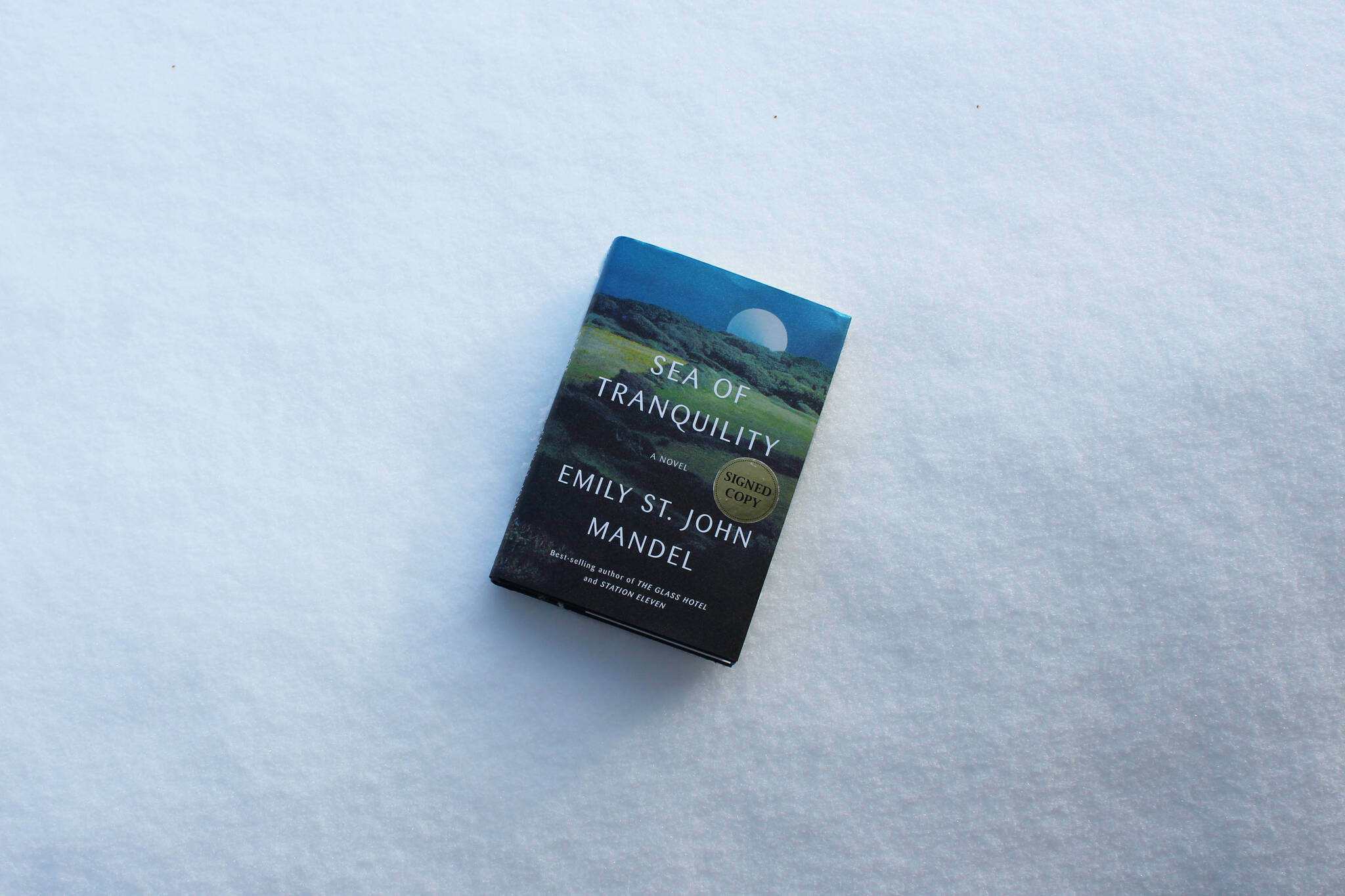
I first added “Sea of Tranquility” to my to-read list after I saw Barack Obama post about it on Instagram. The former president has good taste in books, and he compiles annually a list of his favorite reads from the summer. This year, “Sea of Tranquility” was at the top of the list.
“I’ve read a couple of great books this year and wanted to share some of my favorites so far,” the post is captioned.
The book, published in 2022 and written by Emily St. John Mandel, is broken into parts that each take place in a different century between the early 1900s and the 2400s. The protagonist appears in all, apparently investigating a strange experience in the Canadian woods that binds the different centuries together.
Obama and I may have to disagree on this one, as I found the story largely forgettable. Populated with two-dimensional characters and the narrative arc anticlimactic, what stuck out to me was the repeated appearance of the COVID-19 pandemic — and pandemics generally — as the work’s primary antagonist.
A key plot element is a best-selling book one of the main characters writes about a pandemic — shortly before perishing in a pandemic herself. There are clear parallels between excerpts from the character’s novel and the real-life early pandemic days, from stockpiling necessities to pulling kids out of school.
What will undoubtedly resonate with any readers who remember the early days of the COVID-19 pandemic is the haunting way St. John Mandel describes the transition from pre-pandemic to post-pandemic life.
“Pandemics don’t approach like wars, with the distant thud of artillery growing louder every day and flashes of bombs on the horizon,” she writes in one chapter. “They arrive in retrospect, essentially. It’s disorienting. The pandemic is far away and then it’s all around you, with seemingly no intermediate step.”
There’s also a scene where the book’s time-traveling protagonist lets slip a comment about COVID-19 that indicates he’s from a different time. Someone in 2020 refuses to shake his hand, saying that they’ve “just gotten really into Purell since this thing in Wuhan hit the news.”
The protagonist then says: “‘Fomites aren’t a major mode of transmission with Covid-19’ … ‘Oh, right … it’s only January.’”
There’s something about seeing the COVID-19 pandemic memorialized in fiction that makes my stomach do flip-flops. My brain has a hard time processing that it’s been almost three years since news of a flu-like virus began emerging out of China. Almost three years since my final semester of college was cut short and more than two since I made an impulsive decision to take a job in Alaska.
How can it be possible that that period of time is already making its way into works of fiction as a historical event? It feels like that chapter is still being written! Or at the very least that the ink hasn’t dried yet. I’ve read at least two other books this year where the COVID-19 pandemic makes an appearance, and each time has been equally unsettling.
The use of pandemics in science fiction is assuredly not a new phenomenon and, indeed, “Sea of Tranquility” has many other hallmarks of sci-fi adventure — colonies on the moon and time travel, for example — but it’s undoubtedly the pandemic motif that stands out as the most chilling.
“Sea of Tranquility” was published in 2022 by Alfred A. Knopf.
Reach reporter Ashlyn O’Hara at ashlyn.ohara@peninsulaclarion.com.
Off the Shelf is a literature column written by the staff of The Peninsula Clarion that features reviews and recommendations of books and other texts through a contemporary lens.
