
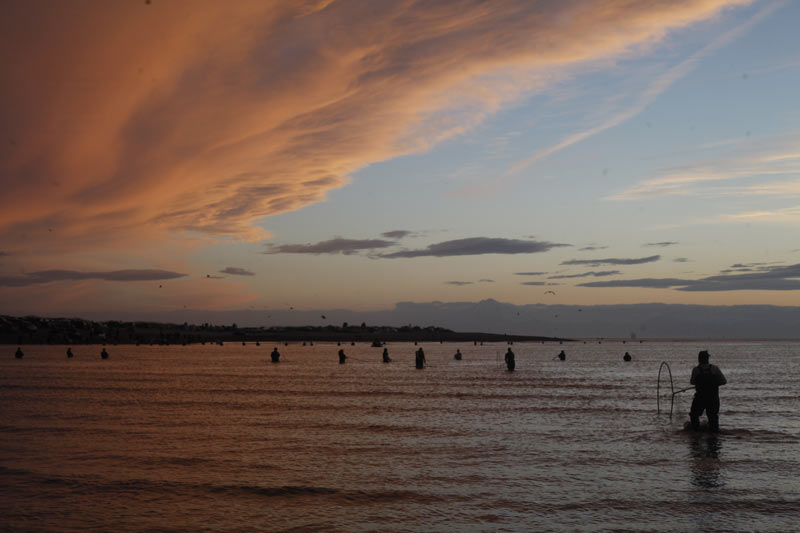
Alaska residents get their fill of "personal-use" fish during the Kasilof dipnet fishery near the mouth of the Kasilof River.

Alaska residents get their fill of "personal-use" fish during the Kasilof dipnet fishery near the mouth of the Kasilof River.

Kasilof

Kasilof, a town of roughly 500 people, is a hub of outdoor activity.

In summer, fishermen float in drift boats or line the banks of the Kasilof River in hope of catching one of several species of salmon that return annually, including mighty early run of chinook salmon in late May and early June, more than a million sockeye in July, and a healthy run of silvers in August.

Common sport fishing access points include the Kasilof River State Recreation Area and the Crooked Creek State Recreation Area.

The natural salmon run is essential not only to recreational fishers, but also to Kasilof’s commercial fishing industry. While driving from Kenai along Kalifornsky Beach Road, notice the salmon harvesting locations marked by fluorescent orange buoys floating in Cook Inlet.

Kasilof beach, located at the end of North Cohoe Loop Road, offers an even better glimpse into the commercial fishing industry, as shoreline “setnetters” can be seen pulling up their nets and picking out the fish before they are iced and shipped to restaurants and dinner tables all over the United States.

Salmon aren’t the only fish in town.

For anglers that like wetting a hook on quieter water, several local lakes offer exceptional trout fishing. Most popular among these are Tustumena Lake, the peninsula’s largest lake, and Johnson Lake in the Johnson Lake State Recreation Area.

Johnson Lake also offers superb canoeing opportunities and has numerous campsites and picnic locations along the shore. Ducks, loons, moose and bears are quite common around Kasilof, and lynx, while rare, are also occasionally spotted by those with keen eyes.

As fishing comes to an end in winter, dog-sledding replaces it as the outdoor activity of choice. Several professional mushers train their teams on Kasilof’s trails, including Dean Osmar, the 1984 Iditarod champion, and his son Tim Osmar, the 2001 champ of the 1,000-mile Yukon Quest. These trails are also home to the Tustumena 200 Sled Dog Race, as well as an entry point for snowmachiners into heading into the Caribou Hills trail region of the lower Kenai Peninsula.

For history buffs, the Kasilof Regional Historical Association’s McLane Center Museum is a must-see. It offers a glimpse into the past with Native and homesteader artifacts and restored cabins once used by trappers and fox farmers.
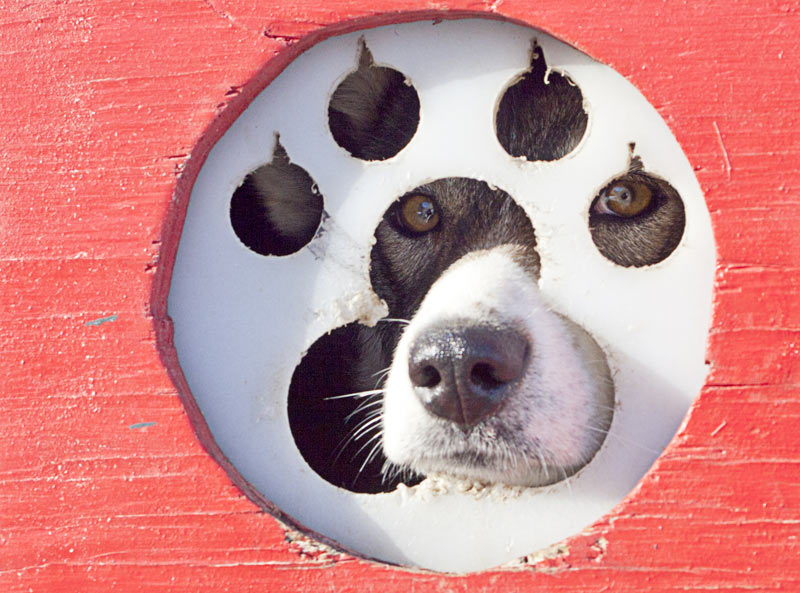
One of Kasilof musher Monica Zappa's dogs peers out from her truck during a trip into Kenai before the 2014 Iditarod race.

One of Kasilof musher Monica Zappa’s dogs peers out from her truck during a trip into Kenai before the 2014 Iditarod race.

More in Life

This 1903 photograph of mostly Kenai residents shows (back, far left) Hans Peter Nielsen, first superintendent of Kenai’s agricultural experiment station. Nielsen began work at the station in 1899 and resigned at the end of the 1903 season. (Photo from the Alaska State Library historical collection)
The experiment: Kenai becomes an agricultural test site — Part 2

AUTHOR’S NOTE: Presidential Executive Order #148, in January 1899, had set aside… Continue reading

Served together on a bed of greens, these pickled eggs and beets make a light but cheerful lunch. Photo by Tressa Dale/Peninsula Clarion
A wealth of eggs for good health

Pickled along with roasted beets and dill, these eggs have a cheerful hue and bright aroma.

This dish, an earthy and herbaceous vegetarian reimagining of the classic beef wellington, is finished nicely with a creamy maple balsamic sauce. Photo by Tressa Dale/Peninsula Clarion
A special dish for a special request

This mushroom wellington is earthy and herbaceous, and its preparation comes with much less pressure.

File
Minister’s Message: Lifelong learning is a worthwhile goal

Lifelong learning. That’s a worthwhile goal. Schools have been in session for… Continue reading

This E.W. Merrill photograph shows Charles Christian Georgeson, special agent in charge of all agricultural experiment stations in Alaska, starting in 1898. (Photo from Alaska History Magazine, July-August 2020)
The Experiment: Kenai becomes an agricultural test site — Part 1

Individuals deciding to explore Kenai’s historic district might start their journey by… Continue reading

File
Minister’s Message: Being ‘thank full?’

As a young dad, I remember teaching my toddler children to say… Continue reading

This virgin blueberry margarita made with blueberry flavored kombucha is perfect for sipping while playing cards.  Photo by Tressa Dale/Peninsula Clarion
Sweet fruit for sober fun

Blueberry kombucha gives this virgin margarita complexity in flavor and a lovely purple hue.

John W. Eddy was already a renowned outdoor adventurer and writer when he penned this book in 1930, 15 years after the mystery of King David Thurman’s disappearance had been solved. Eddy’s version of the story, which often featured wild speculation and deviated widely from the facts, became, for many years, the accepted recounting of events.
King Thurman: An abbreviated life — Part 6

AUTHOR’S NOTE: The fate of King David Thurman, a Cooper Landing-area resident,… Continue reading

Public photo from ancestry.com
James Forrest Kalles (shown here with his daughters, Margaret and Emma) became the guardian of King David Thurman’s estate in early 1915 after Thurman went missing in 1914 and was presumed dead.
King Thurman: An abbreviated life — Part 5

AUTHOR’S NOTE: King David Thurman left his Cooper Landing-area home in late… Continue reading

These heart-shaped chocolate sandwich cookies go perfectly with a glass of milk. (Photo by Tressa Dale/Peninsula Clarion)
Chocolate cookies for a sweet treat

A healthy layer of frosting makes these sandwich cookies perfectly sweet and satisfying.

File photo.
Minister’s Message: Memento mori

In the early centuries of Christianity, the Desert Fathers — Christian monks… Continue reading