Hometown Booster: The W.R. Benson Story — Part 1
Published 10:30 pm Saturday, March 16, 2024


On Nov. 23, 1941—just two weeks before the Japanese bombing of Pearl Harbor—it was bitterly cold in Seward. According to Mary J. Barry’s definitive history of Seward, it was the coldest day of that calendar year: minus-18 degrees, with a 30-mile-per-hour north wind.
At about 11:30 p.m., while attempting to fill and light his oil stove, the proprietor of the Second Chance Barber Shop on Fourth Avenue spilled some fuel onto the floor. The spill ignited when he struck a match.
The proprietor called the fire department, which responded rapidly. Officials declared the fire out by midnight, although some smoldering continued. The wind fanned the flames, and soon the entire building was engulfed. Then a neighboring building ignited, and soon much of downtown was ablaze.
On Nov. 24, the light of dawn revealed the widespread destruction wrought by the massive conflagration. Three hotels had been incinerated. Gone also were the Northern Bar, two barbershops, three cafés, the Alaska Shop, the Pioneer Club, a dry-cleaners, a bakery, a drugstore and the whole Arcade building.
The Arcade itself contained 35 apartments, 20 rooms, the offices of the Alaska Steamship Company, a beauty salon, a doctor’s office, the Alaska Transfer office, and the printing plant for the Seward Gateway newspaper. In the course of one awful night, at least a dozen businesses had been destroyed, and more than 400 people had been left homeless.
Residents of Seward turned toward their city officials for succor.
The mayor of Seward was William Raymond “W.R.” Benson, who had been in office only since July, when the elected mayor (and owner of the Northern Bar), John M. Blase, had resigned. Benson, a member of the Seward City Council since at least 1939, had stepped in to fill the vacancy until another mayoral election could be held the following April.
Benson informed Alaska’s territorial governor, Ernest Gruening, that his town needed financial aid as soon as possible so that rebuilding could take place. He coordinated with businessmen and other city officials, as well as the Red Cross, the U.S. Army and the Alaska Railroad to find housing, keep order, avoid looting, and help the many citizens in need.
Just over two weeks later, with the United States reeling from the Pearl Harbor bombing, Mayor Benson was again responding to unusual circumstances.
On Dec. 10, acting under emergency powers, he held a registration day for all able-bodied men to serve in the Home Guard. He closed liquor dispensaries, limited business hours for bars, and helped craft emergency evacuation plans for families with children.
But in April 1942, Seward voters rejected Benson’s bid serve another year, selecting another resident, businessman Thorwald Osbo, to lead the city as mayor. The balloting was decisive. Osbo received 215 votes to Benson’s 87.
Although no record has yet been discovered documenting his reaction to the loss, Benson certainly was disappointed. But he was hardly deterred.
W.R. Benson was a man almost constantly in motion. Just over a year later, he was hatching plans to move to Homer, where he would immerse himself in one business opportunity after another and spend more than a decade as arguably that community’s biggest booster.
Bay City Beginnings
William Raymond Benson was born in July 1889 and grew up in Bay City, Michigan, with his older sister Edna, younger sister Ruth and their parents, Henry and Katie (Temple) Benson. Henry, who had operated a fishing firm with his father called W.F. Benson and Son, remained in the fishing business in Saginaw Bay throughout young William’s early life.
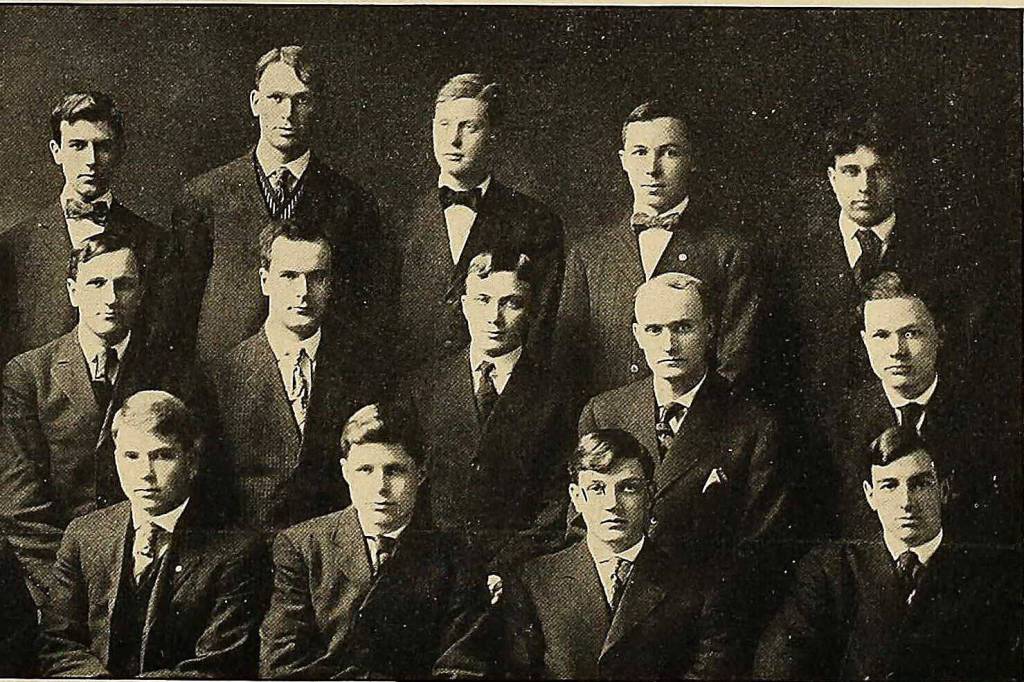
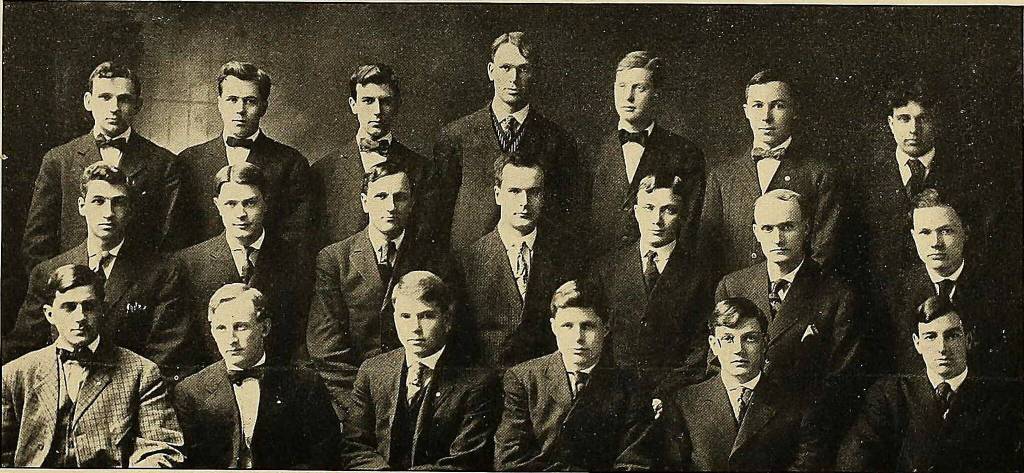
In 1907-08, William began attending Albion College (Michigan). In the 1908 Albion yearbook, he is listed among the freshman class as W.R. Benson and as a member of Gamma Gamma chapter of the Sigma Nu fraternity as W. Ray Benson. From this point forward, most references to Benson would eschew his given name for simply “W.R.”
On April 19, 1917, in Bay City, Benson, then 27, married a petite 22-year-old Western Union Telegraph Company clerk named Mable Marie Sauvage. Mable had been born in Ohio, the youngest of 10 children of Conrad and Elizabeth (Fisher) Sauvage. Her eldest sibling, Emma, was 22 years her senior.
Two months after the Benson-Sauvage nuptials, W.R. signed his draft-registration card, on which he was described as a slender white man of medium height, with brown eyes and dark hair. He was employed by the North American Chemical Company in its Bay City battery-making factory along the Saginaw River. Three years later, he was a wholesale merchant at a fish market.
By 1930, W.R. was a civil engineer, and the Bensons—who never had any children of their own— had become de facto parents, had left Michigan behind, and were residents of Prescott, in Yavapai County, Arizona.
In March 1928, Thomas Lincoln Handy Jr., the husband of W.R.’s sister Ruth, had been killed in an automobile accident, leaving Ruth as a single mother of three children and struggling to survive financially in Flint, Michigan, on a stenographer’s salary.
In April 1930, Ruth sent her middle child, a nine-year-old son named Thomas Lincoln “Ted” Handy III, to live with her brother and his wife. Ted remained with his aunt and uncle even after his mother and siblings moved to Arizona later that year.
The Bensons were registered members of the Republican party. After Ted came to live with them, Mable also became active in the Prescott P.T.A., and W.R. left his city engineering job to work as a dairyman.
By the mid- to late 1930s, the Bensons, including young Ted, had moved again—this time to Seward, Alaska. They quickly became active in their new community.
By 1940, Ted had graduated from public school. Mable was working as an express agent and was a member of the Seward Woman’s Rifle Club; in 1938, she had won the .22-caliber contest in the turkey shoot. W.R. was a Seward city councilman and a salesman in a local hardware store.
W.R. was also investing in real estate and would continue to do so, with great success, for much of his tenure in Alaska. In the Anchorage Daily Times in April 1940, an article about new homes being built in Seward included this note about Benson: “Just north of the schoolhouse, a rustic cabin is being built by W.R. Benson. This is a three-room and bath cottage, built for rental. Cedar shakes are used for siding. The interior is finished in varnished knotty cedar.
“When completed,” the article continued, “the house will be heated by an oil heater and will have a small apartment electric range. Mr. Benson states that the house was rented before the floor was laid.”
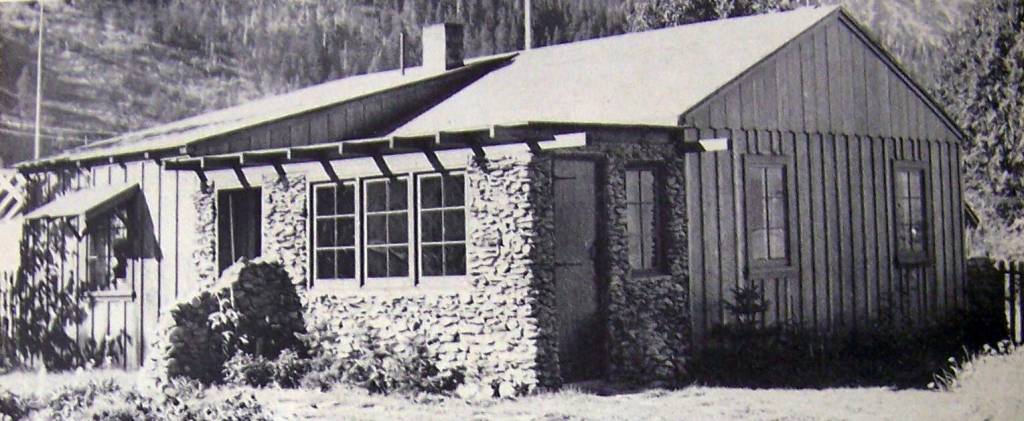
In January 1942, Alaska Life: The Territorial Magazine featured an article by Philip Roanoke entitled “The Mayor of Seward Builds a Dream House for $2,000!” Along with a graphic depicting the general layout of the Bensons’ new home, the article featured photographs of the interior and exterior, and of Mayor Benson and his dog near the front gate to his yard.
In the previous year, Benson had another construction project in the works: a new Seward business he was calling the Kenai Trading Post. Although he originally envisioned the building as a general store, he changed his plans when military personnel and civilian support workers began arriving in town to establish forts McGilivray and Raymond.
According to historian Mary J. Barry, Benson believed that the demand for more local recreation exceeded the demand for another store, so he converted the Kenai Trading Post into a rec center, with a roller rink (that could double as a dance floor) at ground level and an archery and shooting range in the basement. “Sewardites and soldiers took to the skating rink in large numbers,” Barry wrote, “and it was very popular during its existence in the early 1940s.”
In early August 1943, Benson, then the secretary for the Seward Chamber of Commerce, took a brief vacation trip to Homer. By mid-month, he was raving about the opportunities he saw there. The Anchorage Daily Times reported that Benson saw Homer as “a great thriving community of the future, where literally thousands of people will flock from the states.”
By early September, he had purchased land in what is now considered old-town Homer and had announced his plans to relocate there. After a trip to California to see his elderly, widowed mother, he and Mable packed for Homer, where he hit the ground running.
TO BE CONTINUED….