
BEND, Ore. (AP) — Like a fly-fishing veteran, Branson Broderick set the hook, stripped his line in, then bent down to net the flopping rainbow trout at Bend’s Shevlin Pond. He deftly removed the hook from the shiny fish’s mouth and released his catch back into the clear water for another kid to catch on another day.
The 11-year-old from Bend has been fly-fishing for only two years, but one would not know that by watching him.
“I think the coolest part about fly-fishing is trying to replicate the fly that’s in the water, and what you’re actually fishing with,” Branson said. “Rather than just using a worm or PowerBait, you’re using an actual replica of a fly that would be swimming in here right now.”
He seemed to get the idea and the lure of fly-fishing. That might be because Branson was taking part in the Next Cast Flyfishers three-day camp at Shevlin Park last week. The program, run by the Central Oregon Flyfishers through the Bend Park & Recreation District, teaches youth ages 10 to 14 all about fly-fishing.
Branson caught eight fish in about 40 minutes on the first day of the camp, according to Cliff Price, a COF volunteer.
“He’s my new idol,” Price said of Branson. “Most of the time by the end of the three-day session, they will have caught fish on a fly that they tied, and that’s a pretty neat experience. It’s good for them to achieve that in three days. It took me about three years.”
Next Cast is headed up by Karen Kreft, a COF board member who organizes the camp lessons and the volunteers. The program was started in 2011, and this year the COF received a grant of $3,860 from Kokanee Power, another Oregon fishing group. The money is being used to help with gear for the camp, which is limited to 12 kids but might expand to Sisters and Prineville soon, according to Kreft.
While a primary aim of COF is just having fly-fishing partners with whom to fish all the blue-ribbon waters of Central Oregon, another focus of the group is passing on a love of fly-fishing and conservation to the next generation.
“A lot of these kids’ moms and dads don’t fish, but they’ll bring them,” Kreft said. “So then we just mentor them with some of our adults and help them out on the rivers and stuff.”
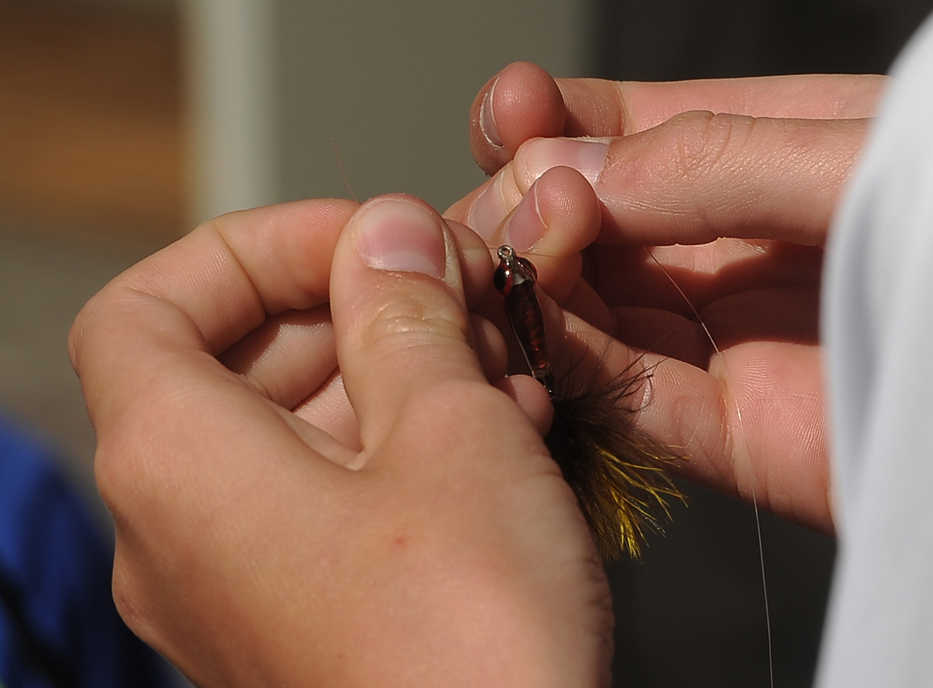
Next Cast is sort of an extension of Kokanee Karnival, a springtime program in which COF teaches fourth- and fifth-graders all about fishing, rivers and conservation. Next Cast takes that a step further and teaches the youth about entomology (insects), fly-tying, regulations and safety, catch and release, and how to safely handle fish.
Kreft said getting kids hooked on fly-fishing while they are fairly young is crucial.
“We find that once they start skiing and playing soccer, it really takes away from the time they have to fish,” Kreft explained. “This area, it’s really a destination fly fishery. So many people come here and want to fish, know they should fish, but with jobs and kids and everything it’s so hard to make that happen. And a lot of the dads truly say (to their kids), ‘Learn everything and then we’ll go out and you can teach me.’ And if the kid can tie on their fly, and tie their line, and get rigged, they can fish. And we’re trying to give them that much independence here so they can try it.”
Price, 70, noted the steady decline in fishing license sales in Oregon and throughout the country. Fewer Americans are fishing, and those who do fish are getting older. Next Cast, though a relatively small camp, is a way to help buck that trend, at least in Central Oregon, and bring a splash of youth into an outdoor activity that sometimes seems is alluring only to retirees.
Price expressed his desire to expose the younger generation to fly-fishing and build the future of the sport.
“There’s a lot of us who are on the downside, and let’s get some upside here,” Price said. “Let’s face it. Life gets in the way and people don’t have time to fish like they used to. Life has changed from what it was 50 or 60 years ago, quite dramatically. These kids don’t all have that opportunity.”
Back on the pond, young Branson continued to catch and release fish after fish. His setup of two chironomid flies appeared to be working wonders on Shevlin Pond.
“I think this camp is awesome, because as a beginner fly-fisherman I came here and they helped me so much, so I’ve always wanted to keep coming back to this camp time after time,” Branson said.
Across the pond from Branson, 10-year-old Casey Klump, also of Bend, was catching a few fish of his own. The day before, the group had netted bugs out of Tumalo Creek, and on this day they would tie flies to match those bugs.
“They teach you about special types of insects and the creek,” Casey said. “We caught bugs in nets, and we studied them. And yeah, it’s really interesting. It’s just really fun.”
Kreft noted that fly-fishing is a way to get kids away from their phones, televisions and video games. In a world in which we are already staring at screens all day long, she observed, this experience is extremely important for youngsters.
The kids at the camp, Kreft said, are so focused that they forget about their phones.
“They don’t do that (look at their phones) when they’re here,” Kreft said. “They’re out there fishing.”
COF volunteers and others concerned about the future of fly-fishing hope these youngsters will develop a lifelong love of the sport.
“We do it because we have a passion for it,” Kreft said, “and we really want to share that with the next generation.”
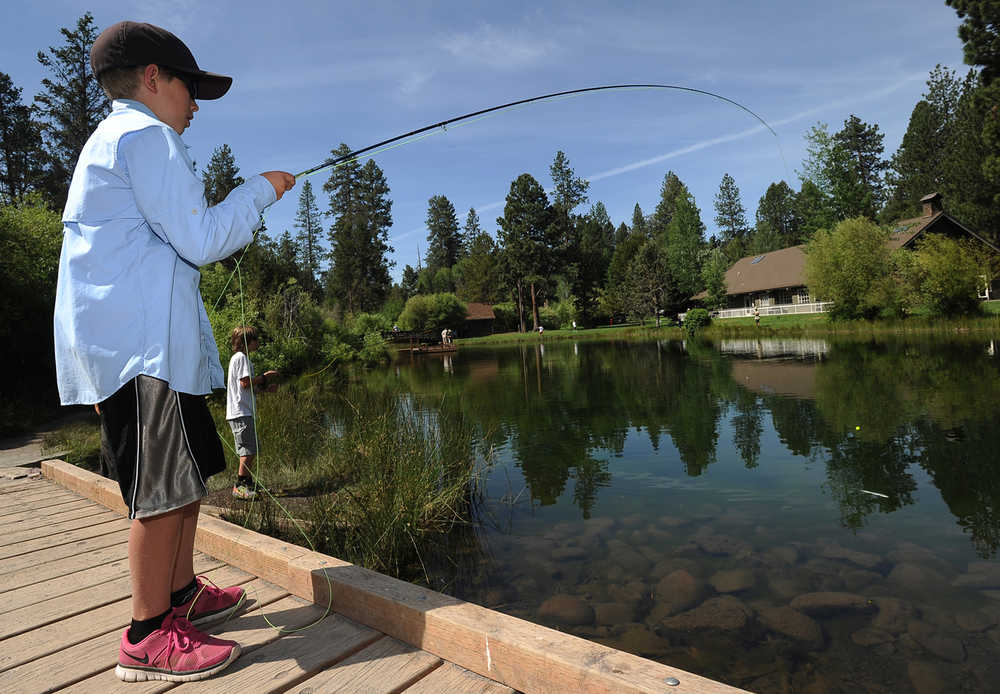
In this photo taken on June 16, 2015, Branson Broderick, 11, of Bend, fights a rainbow trout he hooked on a chironomid pattern while participating in the Next Cast Flyfishers camp at Shevin Park pond, in Bend, Ore. (Ryan Brennecke /The Bulletin via AP)
