
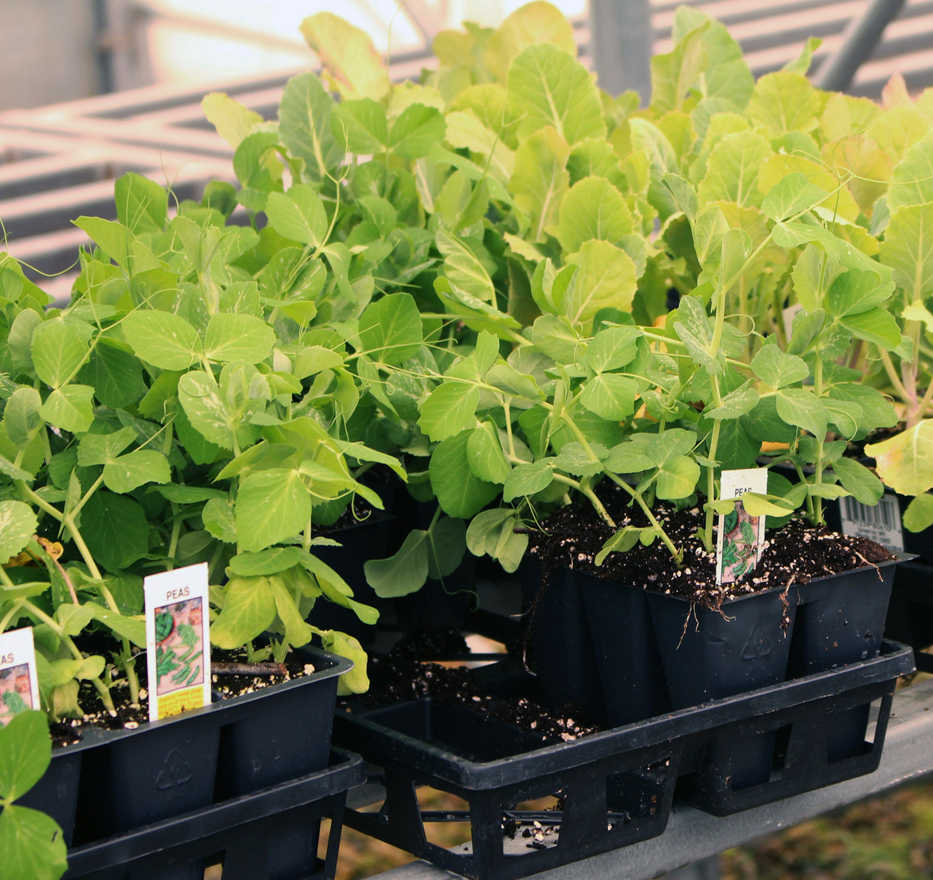
“Plant seeds” may seem like an inane suggestion for a gardening column. But I’m serious. More and more people who garden these days put plants rather than seeds into the ground.
In the old days, the arrival of warm weather would have us all dropping bean, beet, marigold and zinnia seeds into moist soil, then eagerly waiting for those first green sprouts. Go into any garden center these days, though, and you can buy “cell packs” of robust bean, beet, marigold and zinnia plants. And these are what many folks are planting.
Buying transplants does, of course, give you a jump on the season. You’ll taste your first beans and smell your first marigolds sooner if you set out plants that were jump started in a greenhouse. And many annuals — tomatoes, peppers, impatiens and pansies, to name a few — must have growth well underway in spring if they are going to put on a reasonable performance in summer. But a lot of plants — including nasturtiums, bachelor buttons, corn and peas — don’t really need that jump start.
The main reason fewer people plant seeds these days is, I think, more serious: a lack of faith. People have trouble believing that dry, apparently lifeless specks the size of a comma or this letter “o’’ will grow into fat, juicy carrot roots or 6-foot-high hollyhock towers.
Once you have the faith and plant seeds, however, you reap practical benefits. Most obviously, seeds are cheap. For the same price as a single delphinium plant you could buy enough seeds to create a garden full of delphiniums. Most flowers look better planted in abundance anyway.
With some vegetables, it’s just not practical to grow transplants. Beans, for instance: At the recommended spacing of 2 inches apart, a modest, 10-foot row of beans would require about 60 plants, which is hardly a packet of bean seeds. So a cell pack of six bean plants, even a few cell packs, won’t put many beans on your plate.
Another plus for planting seeds is the much greater selection offered. Rather than planting Tendercrop, the one bean variety you might find as transplants, you could plant seeds of Blue Lake or Kentucky Wonder or any one of a number of other, better varieties available from the same establishment that sells you the transplants.
Connecticut Yankee is the delphinium variety that you’ll probably find potted up, and plants might be white, lavender or blue. If you wanted only white delphiniums, sow a packet of Galahad seeds; for only dark blue flowers, sow a packet of Black Knight.
By circumventing that seed-sowing step, you miss out on one of the great things about gardening. As wondrous as gardening is, it is more so when you see a seed sprout.
So how do you get the faith that plants will grow from seed? Realize, first of all, that over 3 million years of evolution — the amount of time seed plants have been around — have been geared to making seeds better and better at sprouting. If that doesn’t convince you, then just plant extra seeds wherever you want plants. Seeds are cheap, and you can remove excess plants once they’re all up and growing.
Success is further assured by starting with good seeds, planting them in soil that is moist and well aerated, and timing your plantings accordingly.
Most of the seeds that gardeners grow — or used to grow — are of vegetables, and annual or perennial flowers. Once you believe in seeds, there’s no reason not to set your sights higher.
A few years ago, in fall, I dropped some pea-size seeds into soil in flower pots. When the plants were a couple of feet high, I transplanted them into the ground, and those plants are now about 7 feet tall.
These sprites will one day become full-size black tupelo (Nyssa sylvatica) trees, soaring over 50 feet tall, with leaves that are among the first to color up — to an intense scarlet — in fall. And all from seeds!
